
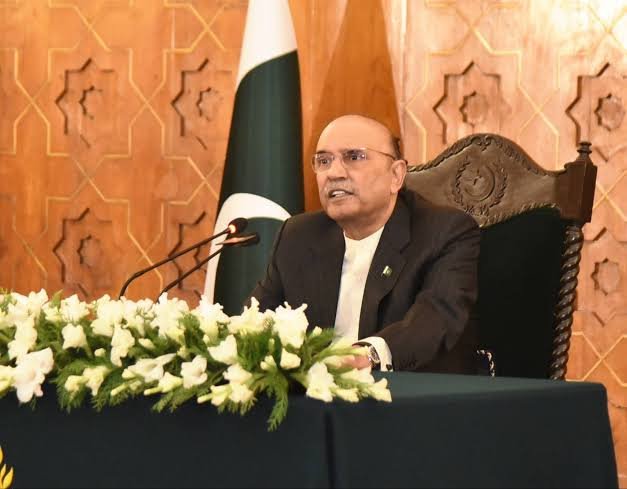

Government legal experts are reviewing possible options after President Asif Ali Zardari delayed approval of the Judicial Commission’s recommendations for 19 additional high court judges.
ISLAMABAD: The appointment of 19 additional judges to four of Pakistan’s high courts remains on hold after President Asif Ali Zardari has yet to approve the Judicial Commission of Pakistan’s (JCP) recommendations, creating uncertainty over the judicial selection process.
The JCP approved the nominations during meetings held on July 20 and 21 for appointments to the Lahore High Court, Sindh High Court, Balochistan High Court and Islamabad High Court. Despite nine days passing since the commission finalized its recommendations, the presidential assent is still pending.
The delay has reportedly raised concerns within the federal government. Senior officials argue that the summary originated from the Judicial Commission rather than the prime minister’s office, meaning it cannot be returned to the government for reconsideration under the executive process. Officials also fear that continued inaction could increase tensions within the superior judiciary.
The government’s legal team is said to be examining constitutional and legal options to address the impasse if the appointments remain delayed.
The issue has also highlighted reported differences between the ruling coalition and the Pakistan Peoples Party (PPP). According to government officials, the PPP was dissatisfied with the outcome of the JCP meetings after two of its preferred candidates for the Sindh High Court were not selected.
Sources said both judicial and executive members of the commission agreed not to endorse nominees below the age of 45, a decision that reportedly affected those candidates.
PPP Senator Farooq H. Naek, a member of the Judicial Commission, had proposed 33 candidates for vacancies across the four high courts, including 16 for the Sindh High Court, 10 for the Lahore High Court, five for the Balochistan High Court and two for the Islamabad High Court.
According to commission sources, the party might have secured appointments for other candidates from interior Sindh, but its continued support for two preferred nominees ultimately weakened its broader position during deliberations.
The developments come amid broader judicial changes following the 27th Constitutional Amendment. Judicial members of the JCP have also reviewed the performance of constitutional benches in the Sindh High Court and reportedly opposed confirming Additional Judge Syed Fiaz ul Hassan Shah.
About The Author