

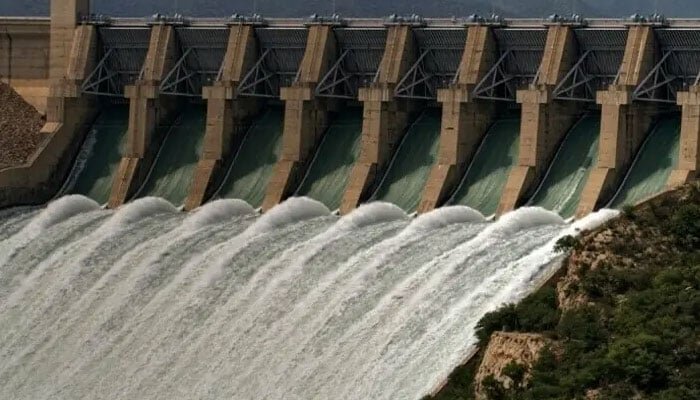

Strong monsoon inflows have lifted Pakistan’s major reservoirs to 72% of their total storage capacity, improving water security and supporting agricultural demand.
Pakistan’s major water reservoirs have reached 72% of their total storage capacity following a significant rise in inflows across the Indus River system, providing a welcome boost to the country’s water resources.
According to official data released on Sunday, Pakistan’s key reservoirs now hold a combined 9.466 million acre-feet (MAF) of water against a total storage capacity of 13.149 million acre-feet. The increase reflects strong monsoon-driven inflows that have exceeded water outflows, allowing reservoirs to recover steadily.
The improved water levels are expected to strengthen irrigation supplies for the agriculture sector, which remains heavily dependent on reliable water availability during the growing season. Higher reservoir storage also supports more efficient water management and helps improve preparedness for future demand.
Officials said the continued rise in water storage is largely due to increased flows in the Indus River system during the ongoing monsoon season. Authorities are closely monitoring reservoir levels and river inflows to ensure effective management of the country’s water resources.
Pakistan frequently experiences fluctuations in water availability because of seasonal rainfall patterns, glacier melt, and changing climatic conditions. Adequate reservoir storage plays a vital role in supporting crop production, hydropower generation, and long-term water security.
About The Author