
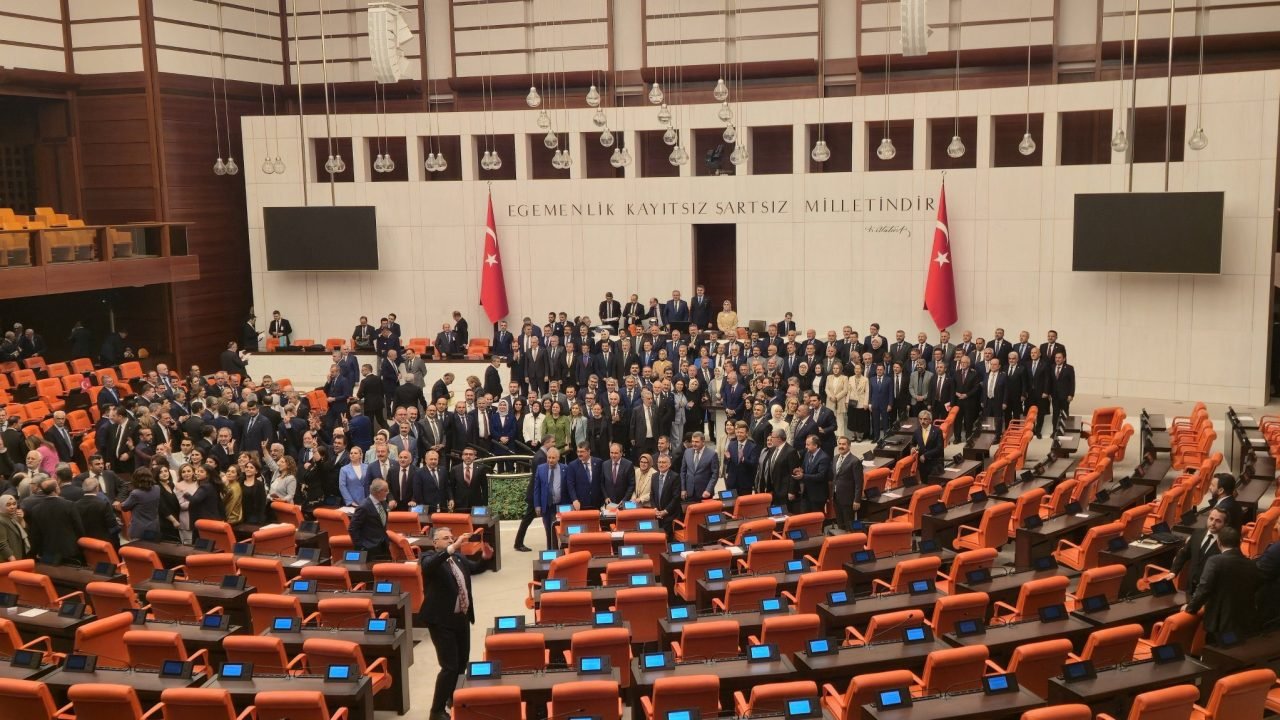

Turkey’s parliament has approved a legal framework for PKK disarmament and reintegration, marking the most significant institutional step yet in Ankara’s latest peace initiative.
Turkey’s parliament has approved legislation designed to provide a legal framework for the disbandment of the Kurdistan Workers’ Party, or PKK, and the reintegration of eligible former militants, marking a major development in Ankara’s latest effort to end a conflict that has lasted for more than four decades.
The legislation passed with 468 votes in the 600-seat parliament, receiving backing from President Recep Tayyip Erdogan’s ruling AK Party, its nationalist MHP allies and the pro-Kurdish DEM Party.
The law provides legal protections for former PKK members who have not been involved in specified crimes and allows prison sentences to be suspended in certain cases involving people convicted of PKK membership. The measures are intended to support the transition from armed conflict toward civilian reintegration.
The development follows a series of steps that began after jailed PKK leader Abdullah Ocalan called in February 2025 for the group to lay down its arms and dissolve. The PKK announced several months later that it would end its armed campaign, followed by a symbolic ceremony in northern Iraq during which militants burned their weapons.
The PKK began its insurgency in 1984. The conflict has killed more than 40,000 people and contributed to significant economic, political and social disruption, particularly in southeastern Turkey.
The latest peace initiative gained momentum in October 2024 when MHP leader Devlet Bahceli unexpectedly suggested that Ocalan could address parliament and call for the organisation’s dissolution. A parliamentary commission formed in August 2025 later gathered testimony from political figures, government officials and civil society representatives before recommending a legal framework for disarmament and reintegration.
However, the new legislation does not settle all of the issues surrounding Turkey’s Kurdish question. Political and cultural rights, changes to counterterrorism laws and Ocalan’s detention status remain among the broader issues facing the peace process.
About The Author