

Brent crude climbs sharply as renewed Middle East tensions raise concerns over energy supplies, inflation and pressure on central banks.
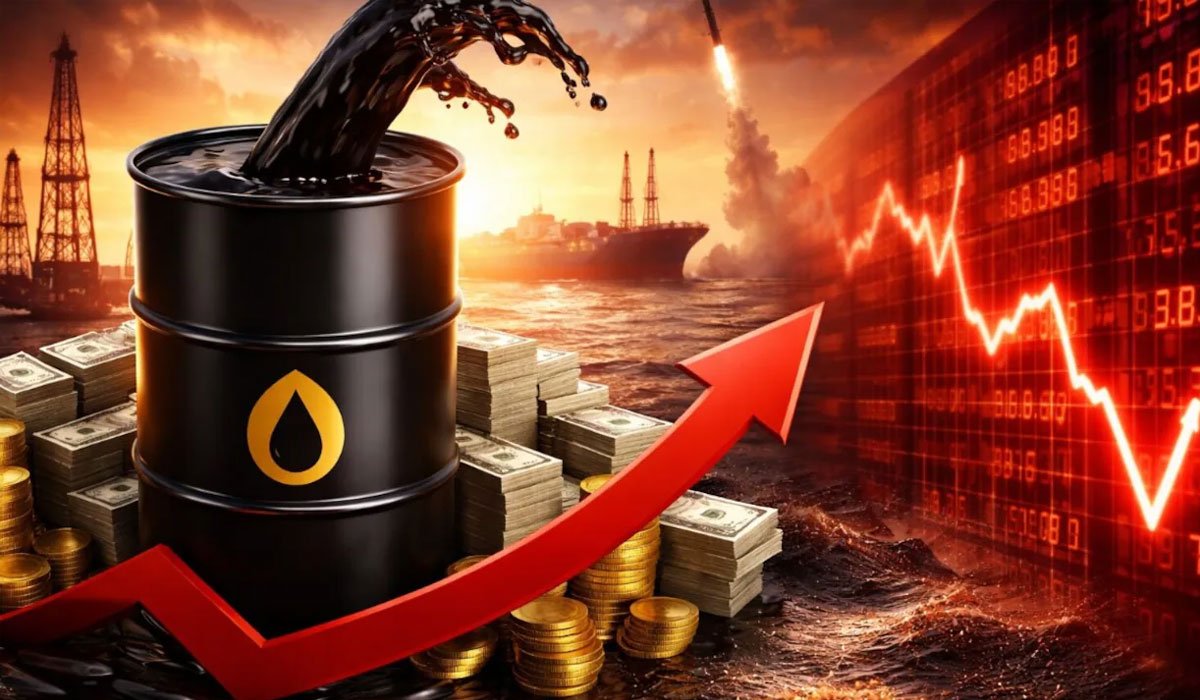
ISLAMABAD: Global oil prices surged sharply, with Brent crude rising above $107 a barrel, as renewed tensions in the Middle East heightened concerns over energy supplies and added to uncertainty surrounding inflation and economic growth.
According to market data, Brent crude rose $4.67, or 4.53%, to $107.75 per barrel. West Texas Intermediate (WTI) also gained 4.47% to reach $96.28 per barrel.
WTI Midland increased 4.78% to $97.98 per barrel, while Murban crude rose 3.53% to $117.07 per barrel.
The latest increase came amid renewed geopolitical tensions in the Middle East, raising concerns that a prolonged escalation could disrupt energy supplies further and add to global inflationary pressures.
The developments followed reports that a Saudi-led coalition had intercepted six ballistic missiles launched by Iran-aligned Houthi forces in Yemen. The missiles were reportedly aimed at the Saudi cities of Taif and Yanbu.
Coalition spokesman Brig. Gen. Turki Al-Malki said the attacks would receive a firm response, according to the report, adding to concerns about a possible escalation in the region.
A sustained rise in crude prices could increase costs across transportation, manufacturing and other energy-intensive sectors. Economies that depend heavily on imported oil could face additional pressure as higher energy costs feed into consumer and business expenses.
The increase in oil prices also presents a challenge for central banks in the United States, Europe and Asia. Policymakers could face a difficult balance between containing inflation and supporting economic growth if higher fuel costs begin to weigh on businesses and consumers.
Financial markets have also faced uncertainty linked to developments in the Middle East. Investors are closely watching the situation for signs of potential disruptions to global oil supplies and their possible effects on inflation and interest-rate policy.
About The Author