


President Asif Ali Zardari and Prime Minister Shehbaz Sharif agree to consult Bilawal Bhutto Zardari on new provinces and a possible referendum.
ISLAMABAD: President Asif Ali Zardari and Prime Minister Shehbaz Sharif have reportedly agreed to take Pakistan Peoples Party (PPP) Chairman Bilawal Bhutto Zardari into confidence over discussions about creating new provinces and holding a possible referendum, as efforts continue to address differences between coalition partners.
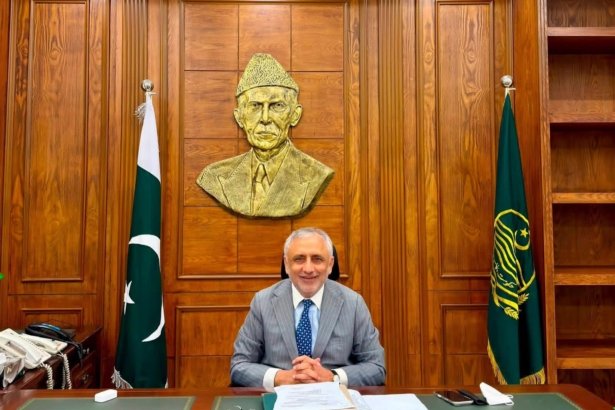
The understanding emerged during a high-level meeting at Aiwan-e-Sadr attended by President Zardari, Prime Minister Shehbaz Sharif and Interior Minister Mohsin Naqvi. According to sources, the participants agreed to pursue the matter through mutual consultation and political consensus rather than public exchanges of criticism.
Sources said President Zardari assured the prime minister and interior minister that he would consult Bilawal on the issue. The discussions come amid differences between the Pakistan Muslim League-Nawaz (PML-N) and PPP over proposals for establishing additional provinces.
During the meeting, Bilawal’s reservations were also discussed. He had reportedly conveyed to the president that several federal ministers, ministers of state, special assistants, coordinators and the Punjab Assembly speaker belonging to the PML-N government had publicly discussed the creation of new provinces without first taking up the matter in the Federal Cabinet or Parliament.
Bilawal maintained that such a significant constitutional issue should be handled through the procedures prescribed by the Constitution and the parliamentary framework.
Coalition partners agree to end public criticism
According to sources, the meeting participants agreed to end the exchange of criticism and adopt a more consultative approach. Minister of State for Interior Talal Chaudhry also indicated that the PML-N, PPP and other coalition partners would maintain a united position on the matter.
The prime minister and interior minister reportedly asked President Zardari to help bring Bilawal on board and prevent further disagreements. The president, meanwhile, stressed that federal ministers should avoid publicly criticising the PPP chairman.
The participants also discussed arranging an early meeting between Prime Minister Shehbaz Sharif and Bilawal. Interior Minister Mohsin Naqvi may attend the proposed meeting, which could take place at the Prime Minister’s House or Aiwan-e-Sadr.
Referendum questionnaire under consideration
Separately, preparations have reportedly begun for questions that could be included in a referendum concerning the creation of new provinces.
Prime Minister’s Coordinator Rana Ehsan Afzal confirmed that consultations were underway on the proposed questionnaire. He said the questions would first be presented to the Federal Cabinet for consideration. After approval, the matter would be taken to a joint sitting of Parliament to seek the required approval.
Constitutional procedure for creating new provinces
Pakistan’s Constitution establishes a specific procedure for changing provincial boundaries or creating new provinces.
Under Article 239(4), a constitutional amendment affecting provincial boundaries requires approval from the relevant Provincial Assembly by a two-thirds majority. The amendment must subsequently secure two-thirds majorities in both the National Assembly and Senate before being presented to the president for assent.
This means approval by Parliament alone is insufficient. The consent of the concerned Provincial Assembly is also constitutionally necessary.
Is a referendum compulsory?
Article 48(6) empowers the president to refer a matter of national importance to the public through a referendum when considered necessary. However, a referendum is not a compulsory constitutional requirement for establishing a new province.
It could provide an opportunity to gauge public opinion, but the legal creation of a province would still require the constitutional amendment process under Article 239(4).
For a proposed South Punjab province, for example, approval by a two-thirds majority in the Punjab Assembly would be necessary, followed by the required two-thirds majorities in the National Assembly and Senate.
About The Author