Explosions in Tehran and Karaj, missile attacks across Israel, and global warnings signal a dangerous expansion of the Middle East conflict.
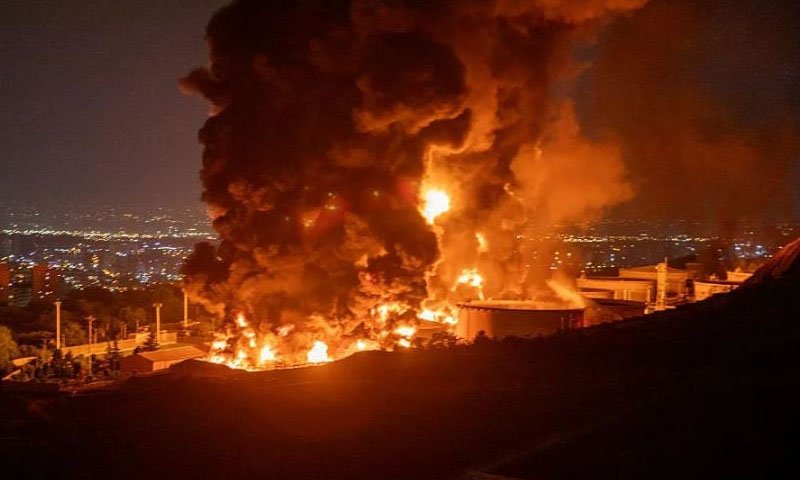
TEHRAN: Powerful explosions shook Iran’s capital Tehran late Tuesday as heavy bombardment reportedly carried out by United States and Israeli forces intensified an already volatile conflict across the Middle East.
Witnesses and regional media reported multiple blasts lighting up the night sky over Tehran and the nearby city of Karaj. Early reports suggested dozens of casualties, making it one of the most intense waves of strikes since the war began.
Iran’s Foreign Minister Abbas Araqchi said negotiations with Washington were impossible under current conditions and warned that Tehran would continue missile attacks for as long as necessary.
“As long as necessary, Iran will continue missile attacks,” Araqchi said.
The conflict widened further as Lebanon’s Hezbollah announced missile launches toward Israeli targets, including a drone control base in Safed and the Yiftah Barracks. Israel confirmed injuries after missile strikes, while additional rockets targeted central areas.
Regional tensions spread beyond Israel and Iran when a drone reportedly struck a hotel building in Bahrain, causing a fire.
Meanwhile, Russian President Vladimir Putin urged US President Donald Trump during an emergency phone call to seek a rapid end to the war. According to the Kremlin, the leaders discussed the Iran conflict along with global energy markets and the war in Ukraine.
The Washington Post reported that the United States used about $5.6 billion worth of weapons and ammunition in the first two days of operations. US Central Command said American forces had struck nearly 5,000 targets inside Iran, damaging military infrastructure and aircraft.
Iran’s Revolutionary Guards warned that continued attacks could disrupt oil exports through the strategic Strait of Hormuz, a key global energy route.
At the same time, Iran claimed it had launched roughly 2,000 drones and 500 missiles across the region since the conflict began, signaling its military capabilities remain operational despite heavy strikes.
Analysts warn the escalating war, combined with leadership changes in Tehran and widening regional involvement, could trigger major geopolitical and energy market consequences worldwide.
About The Author