
The first 24 hours of the 1965 India-Pakistan war saw Indian forces cross the international border, advance toward Lahore and face Pakistani military and air force resistance.
ISLAMABAD: Sept. 6, 1965, marked a decisive turning point in the India-Pakistan conflict as fighting expanded from the Kashmir front to the international border, opening major battlefronts around Lahore, Kasur and Sialkot.
In the early hours of Sept. 6, Indian forces crossed the international border at several points in Punjab and began advancing toward Pakistani positions. The Lahore sector quickly emerged as one of the principal fronts, with Indian troops moving along the Wagah-Dograi, Khem Karan-Kasur and Khalra-Burki axes.
One of the key objectives in the Lahore sector was to advance toward the BRB, also known as Ichhogil Canal, an important defensive water obstacle east of Lahore. Indian military accounts also indicate that the offensive was intended to place pressure on Pakistan by forcing its military leadership to divert attention from the Kashmir front.
Fighting begins at Jassar
By around 3 a.m., heavy artillery fire had begun in the Jassar area, followed by an Indian advance. Historical accounts indicate that Indian troops temporarily established positions in the area before Pakistani forces launched a counterattack within hours.
The fighting at Jassar demonstrated that the offensive was not confined to a single point but had developed into a wider battle along the Punjab frontier.
Indian advance toward Lahore
On the main Lahore axis, Indian forces moved from the Wagah area toward Lahore, pushing against Pakistani border defenses. The initial offensive made significant progress, with Indian troops reaching Dograi and Batapur.
According to Indian military accounts, a formation from the 15th Infantry Division advanced as far as Batapur. However, the advance did not continue uninterrupted.
Pakistan Air Force enters the battle
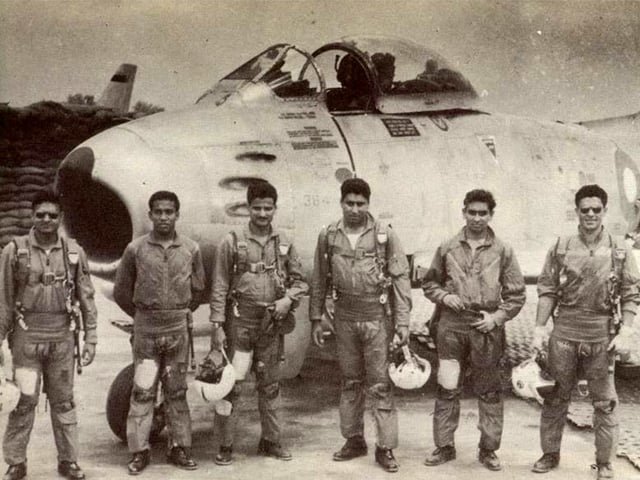
Around 9:30 a.m., the Pakistan Air Force began playing a major role in efforts to slow the Indian advance.
According to historical accounts of the war, No. 19 Squadron was initially assigned a mission against Indian artillery near Jassar. The mission was subsequently redirected toward Indian forces advancing toward Lahore.
Aircraft attacked advancing troops, vehicles and tanks, helping disrupt the momentum of the Indian ground offensive.
Pakistani forces launch counterattacks
After reaching Batapur, Indian forces faced a pause as additional support was awaited, giving Pakistani forces time to reinforce defensive positions around Lahore.
At Jassar, Pakistani troops launched a counterattack at about 10 a.m., according to available historical accounts. By the afternoon, Pakistani forces had pushed Indian troops back from some positions.
As the day progressed, fighting intensified around Wagah and Bedian, where Pakistani troops attempted to consolidate the city’s defenses and halt further advances.
By Sept. 6, it was clear that the conflict had expanded into a full-scale war. President Ayub Khan briefed the U.S. ambassador on Indian military activity around Lahore, Jassar, Mukabalpura, Bedian and other areas, while Pakistan also intensified diplomatic contacts abroad.
Fighting spreads beyond Lahore
The first day was not limited to the Lahore sector. Heavy fighting also took place around Kasur and other areas, while the major tank battles around Sialkot developed more prominently during the following days.
The first 24 hours therefore established the basic pattern of the war: an Indian offensive across the international border, initial advances toward Lahore, followed by Pakistani ground resistance and air operations aimed at slowing the offensive.
The conflict continued across multiple fronts, including Lahore, Sialkot, Kasur, Chawinda and Khem Karan, before a ceasefire took effect on Sept. 23, 1965.
About The Author