

Brief detention of Aurat March activists near Karachi Press Club raises legal and human rights concerns amid growing debate over civic freedoms in Pakistan.
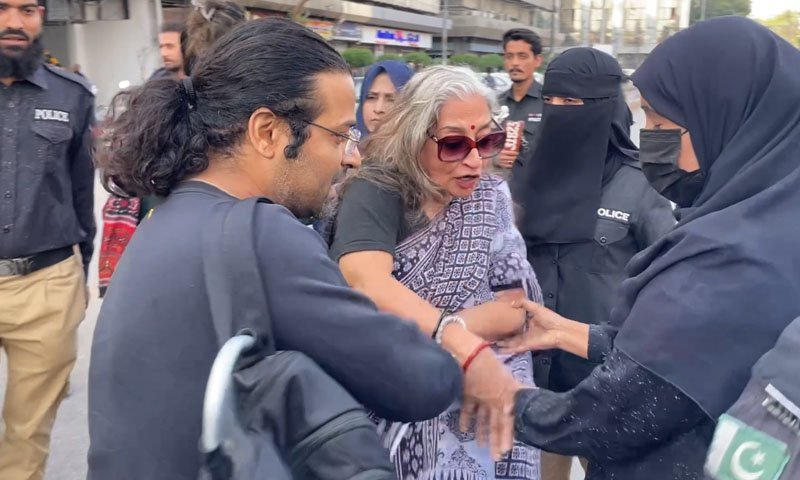
KARACHI: Tensions flared in the city on Tuesday after police briefly detained several Aurat March activists, including prominent artist and activist Sheema Kirmani, near the Karachi Press Club, triggering criticism from rights groups and civil society.
The activists had gathered at the press club ahead of a scheduled 4pm press conference, where they planned to demand a no-objection certificate (NOC) for their upcoming annual Aurat March. However, before the event could begin, police took at least seven organisers and volunteers into custody, according to organisers.
“We will NOT back down from our politics, and we will continue to demand an NOC.”
The situation shifted rapidly after Sindh Home Minister Ziaul Hasan Lanjar intervened, directing South Zone police to release the detainees. All individuals were subsequently freed, an Aurat March organiser confirmed.
In a statement posted on the social media platform X, Aurat March Karachi condemned the detentions as “scare tactics” and reaffirmed its resolve. “We will NOT back down from our politics, and we will continue to demand an NOC,” the group said, while also calling for a public explanation from the Sindh government.
It later said seven organisers and volunteers had been detained.
Organisers alleged that authorities had blocked access to the press club and detained participants before the press conference could commence. They questioned the legality of the move, arguing that holding a press conference within the premises should remain permissible even under Section 144 restrictions.
The incident drew swift condemnation from the Human Rights Commission of Pakistan, which described the detentions as part of a broader trend of shrinking civic space. In its statement, the commission warned that such actions could foster self-censorship and undermine democratic discourse.
“Preventing citizens, particularly women and marginalised groups, from even convening a press conference reflects an increasingly repressive approach to governance,” the commission said, adding that dissent should be treated as a democratic necessity rather than a threat.
Digital rights activist Nighat Dad placed responsibility on the provincial government, while lawyer and activist Jibran Nasir questioned the legal grounds for restricting access to the press club under Section 144.
The episode has intensified debate over the balance between public order and fundamental freedoms in Pakistan, particularly as activists continue to push for space to organise and express dissent in an increasingly constrained environment.
About The Author