
Washington says it seeks a broader agreement with Iran but insists Gulf security, unrestricted navigation through the Strait of Hormuz, and regional stability cannot be compromised.
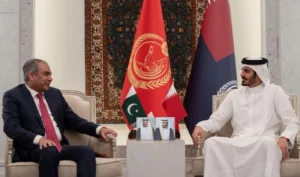
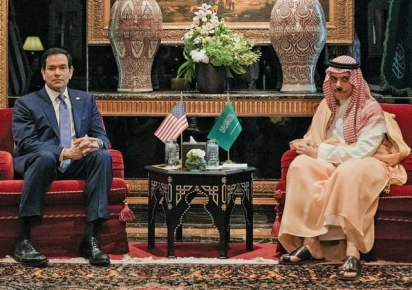
The United States has reaffirmed its commitment to negotiating a comprehensive agreement with Iran while making clear that any final deal must protect the security and strategic interests of Gulf allies. Speaking in Bahrain, US Secretary of State Marco Rubio said Washington wants an agreement with Tehran, but “not at any price.”
Rubio stressed that no settlement would be accepted if it undermines the stability, prosperity, or security of Gulf partners. He also rejected any proposal that would allow Iran to impose transit charges on commercial vessels using the Strait of Hormuz, describing the waterway as an international passage that must remain open to all.
The renewed negotiations follow a preliminary framework agreement intended to end months of conflict that began after a major US-Israeli military campaign against Iran on February 28. The talks are expected to focus on Iran’s nuclear program, sanctions relief, and the future of energy shipments through the Strait of Hormuz.
However, major disagreements remain. During a visit to Pakistan, Iranian President Masoud Pezeshkian said Iran’s ballistic missile program is not open for negotiation because it was excluded from the initial Islamabad Memorandum of Understanding.
Meanwhile, Gulf Cooperation Council foreign ministers urged that any lasting agreement must also address Iran’s ballistic missiles, drones, and support for regional proxy groups. They added that future trade and investment with Iran should depend entirely on Tehran’s compliance with any final agreement and an end to destabilizing activities across the Middle East.
About The Author