
By Rehan Naseer
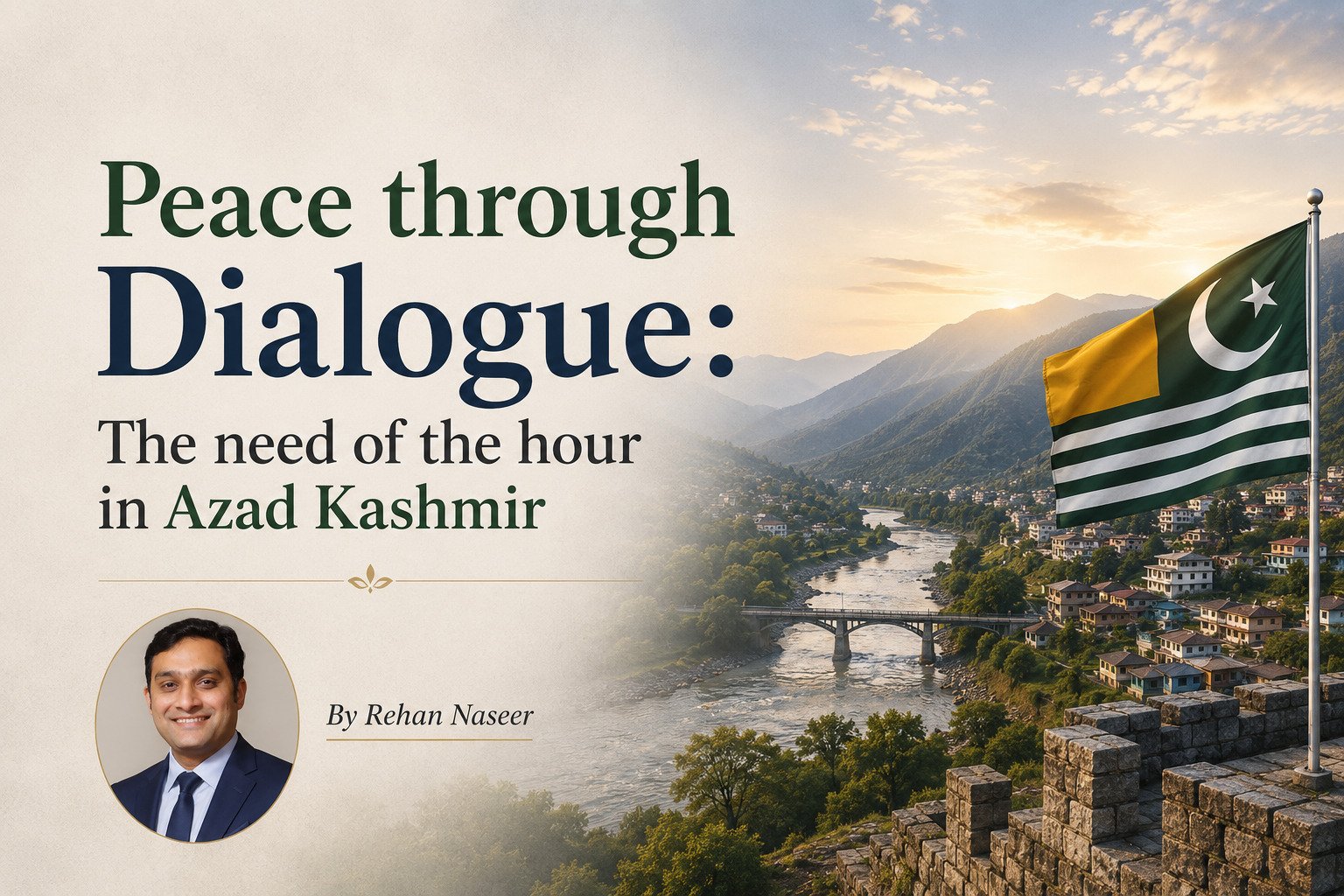
The peaceful and hospitable land of Azad Jammu and Kashmir has long been known for its resilience, brotherhood, and unwavering love for Pakistan. Yet today, one cannot help but ask: what has happened to this land once celebrated for its peace? The recent violence in Rawalakot, Mirpur, and other areas, where lives have been lost during protests, has deeply saddened not only the people of Kashmir but Pakistanis across the country.
Regardless of political differences, the use of live fire against citizens demanding their rights can only be described as a tragic and deeply regrettable development. The loss of innocent lives and the suffering of families affected by these incidents demand serious reflection from all stakeholders.
Reacting to the situation, Jamaat-e-Islami Pakistan Ameer Hafiz Naeem ur Rehman strongly condemned the firing on protesters. He stated that if the government had accepted offers of mediation and engaged in meaningful dialogue, the bloodshed could have been avoided. According to him, while political attention remains focused on elections, protesters have been met with force instead of negotiations. He further warned that such short-sighted decisions risk undermining the historic struggle for the freedom of Kashmir and urged the authorities to abandon confrontation in favour of immediate dialogue.
Similarly, Jamiat Ulema-e-Islam (F) chief Maulana Fazlur Rehman condemned the firing and violence against civilians, describing the use of force against unarmed citizens as unacceptable. He emphasized that peaceful protest is a constitutional right and regretted that efforts to prevent the situation from escalating had not received the attention they deserved. He also expressed solidarity with the people of Kashmir and called for an immediate end to the violence.
However, concern over the unfolding crisis is not limited to political leaders alone. Every Pakistani who values peace and justice is disturbed by the current situation. There is a growing national consensus that the Government of Azad Kashmir and the Joint Public Action Committee must immediately resume negotiations and seek a peaceful resolution to the dispute.
Whether responsibility lies with government authorities or protest organizers, one principle must remain non-negotiable: the protection of human life. No political objective, administrative decision, or public demonstration should result in the loss of innocent lives. Any casualty—whether among civilians or law enforcement personnel—is a tragedy that should compel all sides to exercise maximum restraint.
This crisis also highlights a deeper reality. The unrest in Azad Kashmir extends beyond a specific set of demands or demonstrations. It reflects broader concerns relating to economic hardship, governance, public services, and a growing sense of deprivation among sections of the population. When citizens choose peaceful protest as a means of expressing their grievances, it becomes the state’s foremost responsibility to listen, engage, and address those concerns through dialogue rather than coercion.
History has repeatedly shown that force may suppress unrest temporarily, but it rarely resolves the issues that gave rise to it. Lasting peace can only be achieved through trust, communication, and political wisdom.
For decades, Azad Kashmir has symbolized peace, hospitality, and an enduring emotional bond with Pakistan. Its people have consistently demonstrated their commitment to the national cause, often making immense sacrifices. That is precisely why reports of bloodshed from this region resonate so deeply across the country. Such developments not only cause grief but also risk weakening public confidence between the people and state institutions.
The path forward is neither confrontation nor escalation. Across the democratic world, differences are addressed through dialogue, consultation, and respect for citizens’ rights. Bringing together government representatives, the Public Action Committee, civil society, and other stakeholders to develop a comprehensive roadmap could help restore stability and prevent similar crises in the future.
Equally important is the need to reject inflammatory rhetoric and irresponsible behaviour, particularly on social media, where misinformation and rumours can rapidly worsen an already fragile situation. Responsible communication and restraint from all sides are essential for preventing further polarization.
The peace and stability of Azad Kashmir carry significance beyond the region itself. They are closely linked to Pakistan’s internal cohesion and the country’s long-standing diplomatic position on the Kashmir dispute. Any prolonged instability creates opportunities for those who seek to exploit divisions and weaken the historic relationship between Pakistan and the people of Kashmir.
At this critical moment, political leaders, religious scholars, civil society, and state institutions all share a collective responsibility to promote calm rather than confrontation. Leadership must be measured not by rhetoric, but by the ability to protect lives and preserve peace.
It is equally imperative that the families of those who lost their lives receive every possible support, that the injured are provided with the best available medical care, and that any allegations of excessive use of force or abuse of authority are investigated through a transparent, impartial, and credible process. Justice must not only be done—it must also be seen to be done. Public confidence can only be restored when accountability is pursued without fear or favour.
Today, more than ever, all parties must set aside political interests, personal egos, and hardened positions in favour of the greater public good. Dialogue must replace force, reconciliation must replace confrontation, and compassion must triumph over hostility.
If every stakeholder approaches this crisis with sincerity, patience, and a genuine commitment to peace, Azad Kashmir can once again reclaim its identity as a land of harmony, brotherhood, and hope. That would not merely be a political success, it would be a victory for humanity, justice, and the generations that will inherit this beautiful land.
About The Author