
An opinion on Pakistan’s evolving global role, diplomatic ambitions, economic opportunities and the national unity needed to build a stronger future.
By Waqas Aziz
Pakistan’s creation on Aug. 14, 1947, was more than the birth of a new state. It represented a historic aspiration for freedom, sovereignty, justice and national dignity. As Pakistan marks its 79th Independence Day in 2026, it is worth reflecting not only on where the country has come from, but also on the role it can play in an increasingly uncertain world.
In my view, Pakistan’s greatest strength is not limited to its strategic geography or defence capabilities. Its ability to maintain diplomatic space, engage different partners and advocate dialogue is equally important.
The world today is facing wars, economic uncertainty and growing geopolitical tensions. In such an environment, Pakistan has an opportunity to strengthen its image as a country that supports dialogue, cooperation and peaceful solutions rather than prolonged confrontation.
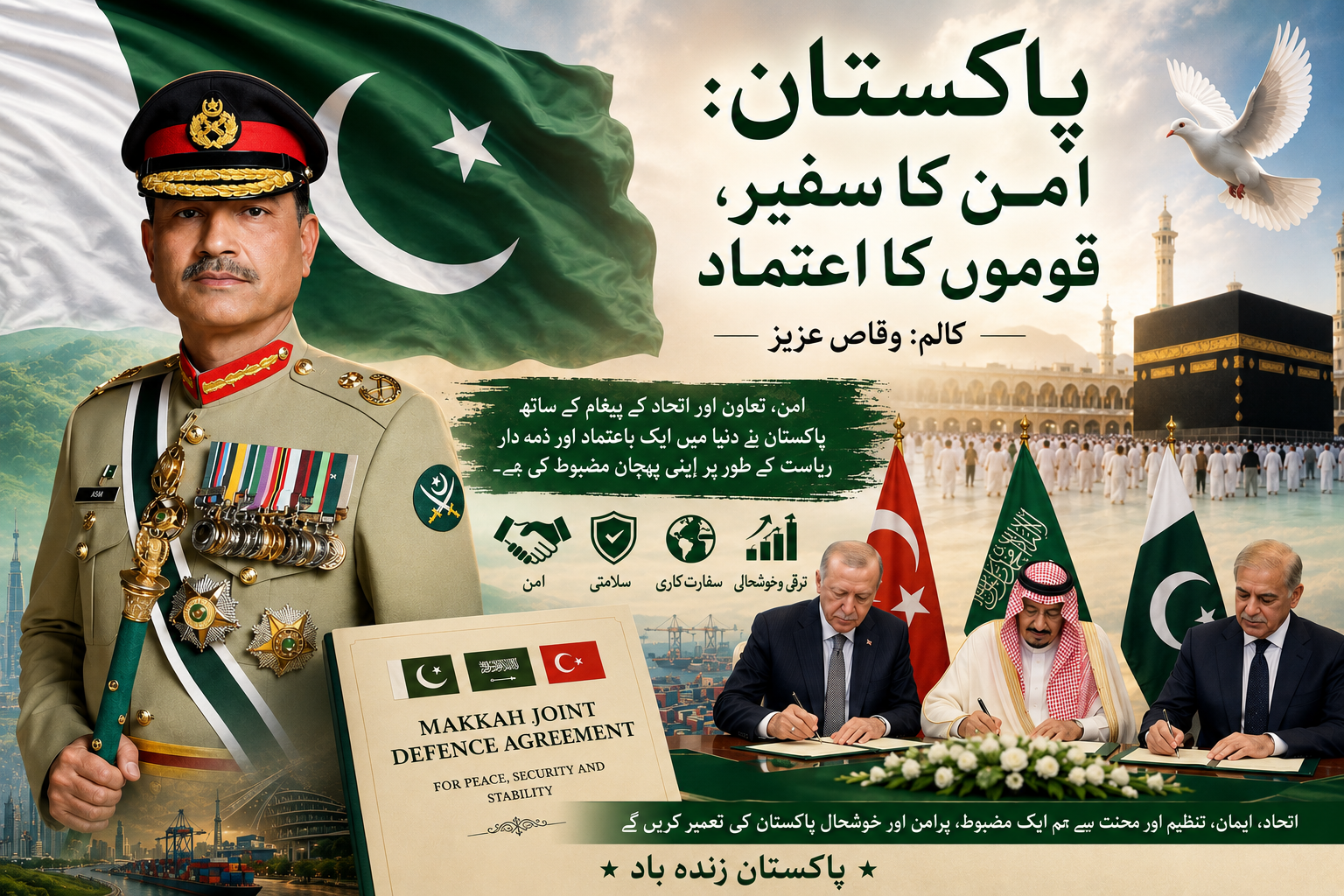
Relations with the Muslim world have traditionally been an important pillar of Pakistan’s foreign policy. Its partnerships with Saudi Arabia, China, Türkiye and other friendly countries demonstrate Islamabad’s continuing effort to expand diplomatic and strategic cooperation.
Recent defence cooperation has also renewed discussion about Pakistan’s potential role in regional security. For Islamabad, however, greater influence must be accompanied by responsible diplomacy and a clear commitment to regional stability.
Pakistan’s armed forces remain an important part of the country’s national security framework. Pakistani personnel have also made significant contributions to United Nations peacekeeping missions over the decades. Yet national strength cannot be measured through defence alone. Economic stability, political continuity, institutional capacity and human development are equally essential.
Prime Minister Shehbaz Sharif’s government has placed economic diplomacy and foreign investment among its priorities. Pakistan’s relationship with China, growing engagement with Gulf countries, the China-Pakistan Economic Corridor and its strategic geographical location all offer opportunities.
But opportunities do not automatically become prosperity. Pakistan must create the economic and institutional conditions necessary to convert its strategic advantages into sustainable development.
The country’s young population could prove to be its greatest long-term asset. With quality education, technical training, digital skills and meaningful employment opportunities, Pakistan’s youth can become a powerful engine of economic growth.
Independence Day, therefore, should not be limited to celebrating the achievements of the past. It should also be a reminder of the responsibilities of the present.
Pakistan faces serious challenges, including economic pressure, security concerns and political divisions. But it also possesses considerable potential.
If national unity, discipline, education, economic reform and responsible diplomacy become enduring priorities, Pakistan can build a more stable, prosperous and respected future.
Pakistan is more than a geographical territory. It is the identity, hope and future of millions of people.
Pakistan Zindabad.
Disclaimer: The views, opinions, and analyses expressed in this article are solely those of the author and do not necessarily reflect or represent the views, policies, or position of the organization, its management, or its editorial policy.
About The Author