
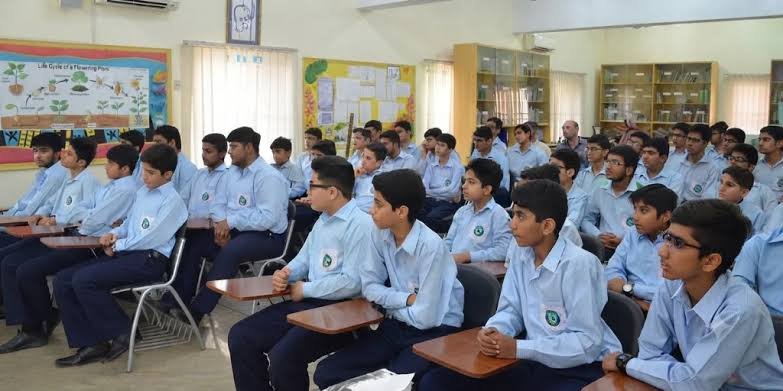

More than 550,000 students reportedly chose colleges or other institutions after matriculation, raising concerns over the future role and utilization of government higher secondary schools in Punjab.
A sharp decline in admissions to Class 11 at government higher secondary schools across Punjab has raised questions about student preferences and the effectiveness of the province’s public education system at the intermediate level.
According to available figures cited in the report, more than 600,000 students were studying in Class 10 at government schools across Punjab this year. However, after completing matriculation, only about 56,000 students enrolled in Class 11 at government higher secondary schools.
The figures indicate a substantial gap between the number of students completing Class 10 and those continuing their education at government higher secondary schools. On the reported numbers, the decline is roughly 91%, although the figures represent students enrolled at two different stages rather than a direct measure of individual student retention.
According to the report, more than 550,000 students opted for colleges and other educational institutions after matriculation instead of joining government higher secondary schools.
The trend presents a significant challenge for government higher secondary schools, where lower enrollment could affect the utilization of classrooms, laboratories and other educational facilities. It could also prompt authorities to reassess staffing and resource requirements at these institutions.
Education circles say students and parents traditionally associate colleges more closely with intermediate education and the transition toward higher education. Colleges also offer programs such as FA, FSc and ICS, which may provide students with a wider range of subject choices depending on the institution.
The preference for colleges appears to be particularly significant in areas where they are viewed as more attractive than government higher secondary schools. However, the available figures alone do not establish the specific reasons behind individual students’ choices.
Education experts say authorities need to examine why students are leaving the government school system after matriculation rather than focusing solely on declining admissions to higher secondary schools.
The review could include student and parental preferences, the availability of science and computer facilities, teaching standards, academic programs, infrastructure and the overall learning environment at government higher secondary schools.
Improving science and technology facilities, strengthening teaching quality and expanding educational opportunities could help make these institutions more competitive and attractive to students.
The reported gap between more than 600,000 Class 10 students and about 56,000 Class 11 admissions in government higher secondary schools highlights a major policy question for Punjab’s education authorities: how can the public school system retain more students beyond matriculation?
About The Author