
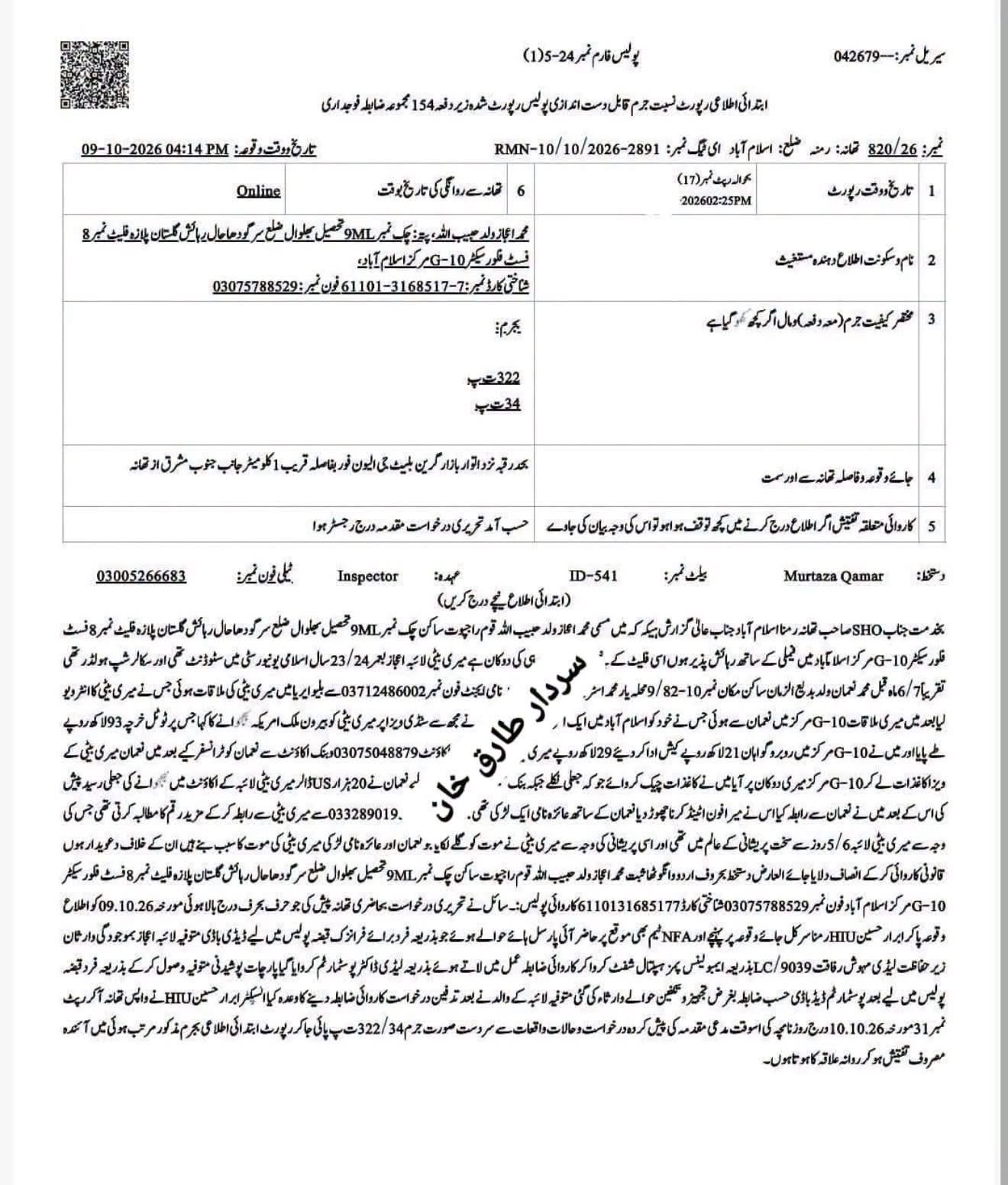

Police reopen the sealed FIR and record the father’s statement as the investigation into gold medalist student Laiba Ejaz’s alleged suicide case continues in Islamabad.
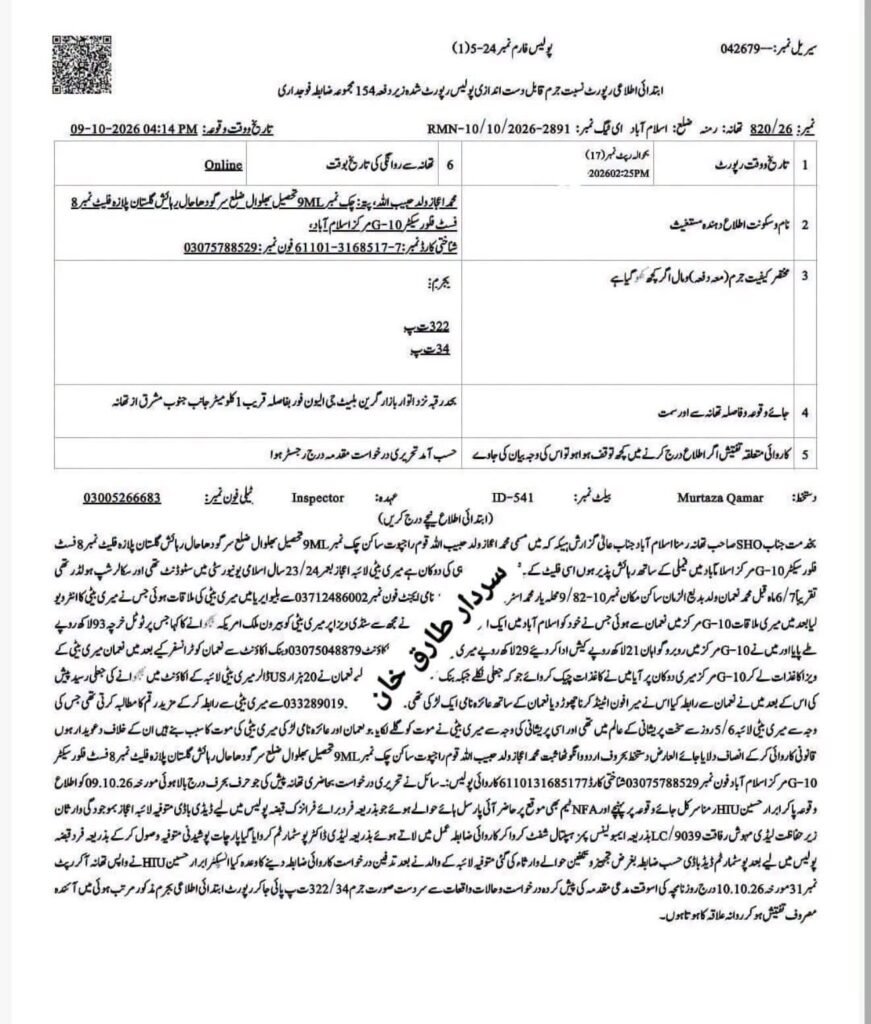
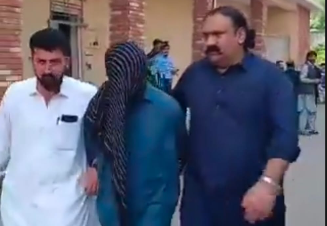
Islamabad police have reopened a sealed first information report (FIR) and recorded the statement of Laiba Ejaz’s father as part of the investigation into the gold medalist student’s alleged suicide case involving suspected visa fraud.
According to the father’s statement, Laiba met a man identified as Nauman in Islamabad’s Blue Area. He alleged that Nauman presented himself as a senior government officer in Islamabad and promised to arrange a U.S. study visa for his daughter.
The father told police that Nauman allegedly agreed to arrange the visa for Rs 9.3 million. He claimed that Rs 2.1 million was paid to the suspect in cash in Islamabad’s G-10 sector, while another Rs 2.9 million was transferred to Nauman from his daughter’s bank account.
The statement also alleged that the suspect provided fake receipts showing the transfer of $20,000 into Laiba’s bank account to meet bank statement requirements.
Father alleges involvement of another woman
Laiba’s father further alleged that a woman identified as Aiza was also involved in the suspected fraud. According to his statement, Aiza remained in contact with his daughter and demanded money from her.
The father told investigators that Nauman eventually stopped answering the family’s phone calls. He said his daughter remained under mental distress for five to six days during this period.
Police have recorded the father’s statement as they continue investigating the circumstances surrounding the case. The sealed FIR was reopened to facilitate further investigation, according to the information provided.
Investigation continues
The case has raised questions about the alleged promises made to Laiba regarding a U.S. study visa, the financial transactions described by her father and the suspected roles of the individuals named in his statement.
The allegations against Nauman and Aiza have not been independently verified, and their responses were not included in the available information. The claims should therefore be treated as allegations rather than established findings.
Further investigation is expected to examine the reported financial transactions, the alleged receipts and the communications between the parties to establish the facts of the case.
Author