
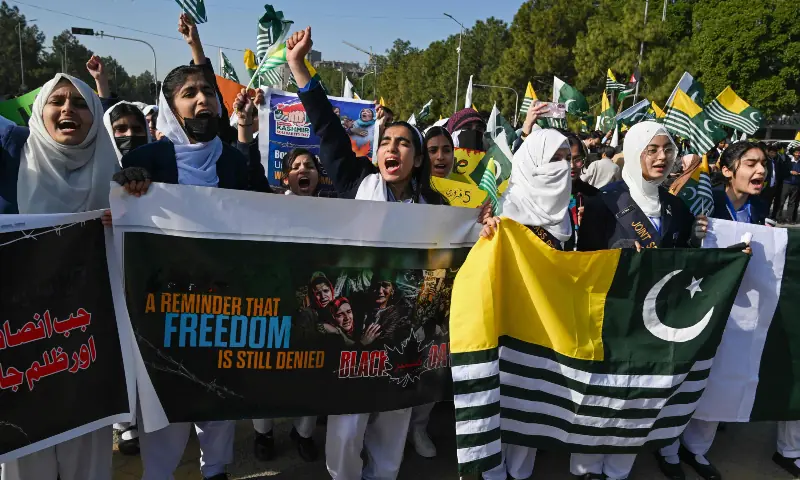

Pakistan’s leadership has renewed calls for a peaceful settlement of the Kashmir dispute as Kashmiris observe Black Day with rallies, demonstrations and seminars.
ISLAMABAD: Kashmiris in Jammu and Kashmir, Azad Jammu and Kashmir (AJK) and across the world are observing Black Day on Tuesday to mark 79 years since Indian troops entered Srinagar on Oct. 27, 1947, with rallies, demonstrations and seminars planned to highlight the long-running dispute and demand the right to self-determination.
President Asif Ali Zardari, Prime Minister Shehbaz Sharif and senior government officials have renewed Pakistan’s support for Kashmiris, calling for a just and peaceful settlement in accordance with relevant United Nations Security Council resolutions and the aspirations of the Kashmiri people.
According to Kashmir Media Service, Indian troops entered Jammu and Kashmir on Oct. 27, 1947, in violation of the partition plan and against the wishes of the Kashmiri people. The All Parties Hurriyat Conference (APHC), in a statement issued in Srinagar, urged Kashmiris in Indian-administered Jammu and Kashmir, AJK and elsewhere to observe Black Day and called for a complete shutdown in the territory.
The APHC also appealed to the international community to help resolve the dispute in line with the aspirations of Kashmiris and relevant United Nations resolutions.
Rallies and seminars planned across AJK
In AJK, protest rallies and seminars are scheduled at district and tehsil headquarters to condemn the events of Oct. 27, 1947, and India’s revocation of Jammu and Kashmir’s special status on Aug. 5, 2019.
Deputy commissioners are to lead rallies in their respective districts under directives from the AJK president and prime minister, according to the supplied statement.
In Muzaffarabad, the Kashmir Liberation Cell has arranged a protest demonstration followed by a rally to be led by AJK Prime Minister Iftikhar Gilani. Pasban-e-Hurriyat Jammu and Kashmir, Kashmiri refugees, other Hurriyat organisations, and political and religious parties have also arranged rallies and seminars.
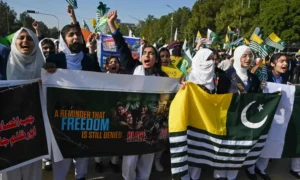
A rally was held on Constitution Avenue in Islamabad, where participants from different walks of life carried banners and posters expressing solidarity with Kashmiris and condemning alleged human rights violations and repression in the territory.
Pakistan reiterates support for Kashmiris
In separate messages, Zardari and Shehbaz said lasting peace and stability in South Asia depended on a just and peaceful resolution of the Jammu and Kashmir dispute. Both reaffirmed Pakistan’s political, diplomatic and moral support for Kashmiris.
Zardari urged the international community, particularly the United Nations and international human rights organisations, to take note of the human rights situation in Indian-administered Jammu and Kashmir. Shehbaz said Pakistan would continue advocating for Kashmiris’ rights at national and international forums.
Interior Minister Mohsin Naqvi said Kashmiris had not bowed to what he described as Indian oppression and continued their struggle for freedom. He paid tribute to those who had lost their lives and described the events of 1947 as a dark chapter in history.
Naqvi also criticised what he called the international community’s silence over alleged Indian atrocities, saying a fair settlement was necessary for lasting regional peace. He referred to Quaid-e-Azam Muhammad Ali Jinnah’s description of Kashmir as Pakistan’s “jugular vein.”
Dar calls Kashmir dispute a diplomatic priority
Deputy Prime Minister and Foreign Minister Ishaq Dar said Pakistan had consistently raised the Kashmir dispute at international forums, adding that “Kashmir will become Pakistan” remained the voice of every Kashmiri and Pakistani.
Speaking at a Black Day event in Islamabad, Dar said raising the issue internationally was Pakistan’s primary responsibility. He said Islamabad had highlighted Kashmiris’ rights at the United Nations General Assembly and would continue supporting their cause.
Dar accused India of unilaterally changing Jammu and Kashmir’s status on Aug. 5, 2019, and violating laws in the territory. He added that Shehbaz regularly raised the dispute in international speeches.
Earlier, Kashmir Affairs Minister Amir Muqam said Oct. 27, 1947, marked the beginning of India’s occupation of Jammu and Kashmir. APHC convener Ghulam Muhammad Safi said Kashmiris had been promised self-determination and a plebiscite, while questioning Indian claims that conditions in the territory were normal.
About The Author