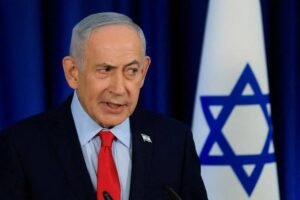

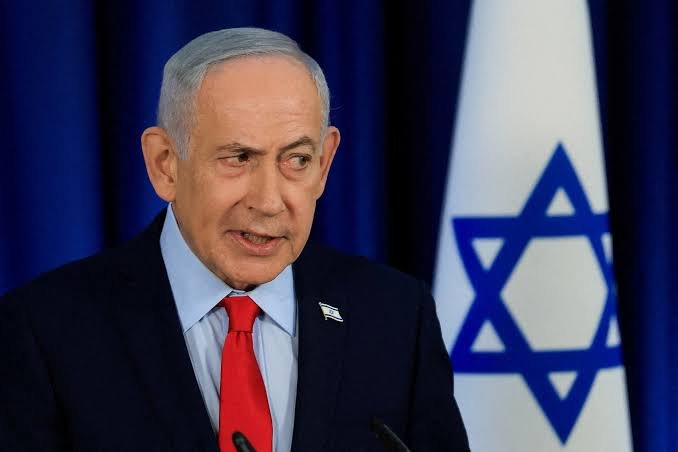

Benjamin Netanyahu faces a close election against rival Gadi Eisenkot as Israeli voters weigh the Oct. 7 attacks, regional wars and the country’s political future.
JERUSALEM: Israeli Prime Minister Benjamin Netanyahu faces a critical test of his political future as voters head to the polls Tuesday, with the election shaped by the Oct. 7, 2023, Hamas-led attacks, subsequent wars and growing international isolation.
Netanyahu, Israel’s longest-serving leader with 19 years in office, remains a formidable political contender despite criticism of his government’s handling of security failures and the country’s wartime policies. Israel’s fragmented political system could again give him a path to power, even if his Likud party and its allies fall short of a decisive victory.
Opinion polls indicate a close contest between Netanyahu’s Likud party and its right-wing allies and a rival alliance led by Gadi Eisenkot, a former military chief of staff who has attracted support from both right-wing and centrist voters.
Polling stations opened at 7 a.m. (0500 GMT) and were scheduled to close at 10 p.m. (2000 GMT). The Israeli Central Election Committee said 7.3 million citizens were eligible to vote, including about 330,000 first-time voters.
Netanyahu has campaigned on his wartime leadership and relationship with U.S. President Donald Trump, who has endorsed him. Netanyahu said Sunday that Trump was prepared to act again to “finally” remove the Iranian threat, but only if he remained in power.
Eisenkot accused Netanyahu of “relying on a campaign of fear-mongering, lies and threats.” He said Trump would work “in full cooperation with any leader chosen by the people.”
October 7 attacks dominate election debate
The election follows one of Israel’s most turbulent periods since its establishment in 1948. The Hamas-led attacks on Oct. 7, 2023, killed 1,200 people and resulted in 251 others being taken hostage, according to the figures cited in the report.
For many Netanyahu opponents, the central issue is accountability for the security failures that preceded the attacks. Some voters have called for a national inquiry into the events.
Mali Hajaj, an Education Ministry employee who supports Eisenkot, said an inquiry was essential to national recovery.
Lisa Tortor said she hoped Netanyahu would leave office so a new government could repair damage to Israel’s international image and its standing among Jewish communities worldwide.
However, 18-year-old Likud supporter Nof Gabay rejected criticism of Netanyahu’s role in the attacks, calling him “the right man for the state of Israel.”
“Netanyahu managed the war in the best possible way,” Gabay said.
Wars and coalition negotiations shape the contest
Israel’s military campaign in Gaza has devastated large parts of the territory. Gaza health authorities say Israeli attacks have killed 74,000 people.
Israel has also inflicted major losses on Hezbollah in Lebanon and exchanged strikes with Iran. In 2025, Israel conducted a 12-day aerial campaign against Iranian nuclear sites, followed by a joint U.S.-Israeli war against Iran this year.
Eisenkot has said Israel’s next government must prevent Iran from developing a military nuclear capability, either through military action or a diplomatic arrangement backed by the United States.
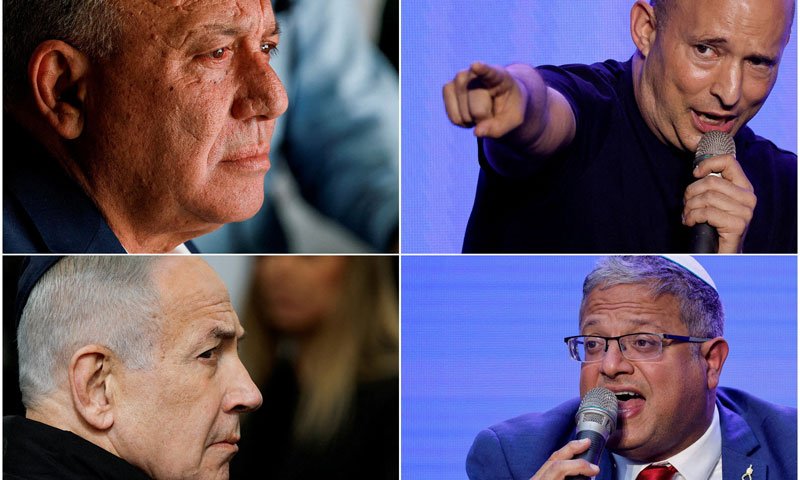
Neither leading contender has a clear route to a parliamentary majority. Netanyahu may depend on far-right allies Itamar Ben-Gvir and Bezalel Smotrich, whose positions on Palestinians have drawn sanctions from some Western countries over accusations of inciting violence.
Eisenkot opposes Netanyahu’s far-right coalition partners and has criticized settler violence against Palestinians in the occupied West Bank. However, like nearly all Jewish-led Israeli parties, he opposes the two-state solution that has underpinned decades of peace negotiations.
Arab minority voters could influence the coalition arithmetic. Although Eisenkot has ruled out partnering with Arab parties, analysts say they could support a minority government led by him to prevent Netanyahu from returning to office.
Netanyahu is also facing corruption charges that he denies. If neither camp can form a governing coalition in the 120-seat parliament, he could remain caretaker prime minister until another election is held next year.
Israeli political analyst Amotz Asa-El of the Shalom Hartman Institute predicted a narrow outcome, saying he expected “only a slight majority either way. No landslide.”
About The Author