

WMO warns that a developing 2026-27 El Niño could intensify global warming and extreme weather, while UN officials highlight rising climate-related health risks.
ANTALYA: A potentially exceptional El Niño event could push global temperatures to another record high in 2027, as the United Nations warned that worsening climate change is already creating a major global public health emergency at the opening of COP31 on Monday.
The 31st Conference of the Parties to the UN Framework Convention on Climate Change (UNFCCC) opened in Antalya, bringing together world leaders, scientists and climate experts for two weeks of negotiations on rising temperatures, extreme weather and urgent climate action.
On the opening day, the World Meteorological Organization (WMO) released its State of the Climate Update 2026, warning that a powerful El Niño was developing in the Pacific Ocean and could intensify global warming and extreme weather over the coming months.
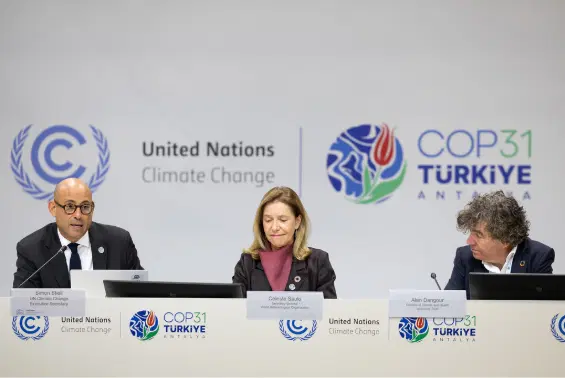
WMO Secretary-General Celeste Saulo said greenhouse gas concentrations had reached unprecedented levels as climate records continued to be broken. She described the developing 2026-27 El Niño as unlike any event previously monitored by the organization.
“We have no time to lose,” Saulo said, warning that the phenomenon could have far-reaching consequences for global temperatures.
According to the WMO report, the period from 2015 to 2026 has seen the warmest years on record, while the four-year period ending in 2026 is expected to rank as the hottest ever recorded. Global average temperatures between January and September 2026 stood approximately 1.47 degrees Celsius above the pre-industrial average.
Saulo explained that El Niño typically has its strongest influence on global temperatures during the year following its development, raising concerns that 2027 could surpass the previous temperature record set in 2024.
The report also highlighted record ocean heat for the 10th consecutive year and a new high in global mean sea levels since satellite monitoring began in 1993. Rising seas are increasing risks for an estimated 900 million people living in low-lying coastal areas.
Extreme weather events are also becoming more intense, with heatwaves, tropical cyclones and heavy rainfall placing growing pressure on communities. Tens of thousands of excess deaths were reported in Europe during extreme heat, while Pakistan, India and large parts of Asia and North America experienced dangerous heatwaves.
UN Climate Change Executive Secretary Simon Stiell described the situation as a global public health emergency, saying extreme heat, pollution and climate-related disasters were placing mounting pressure on health systems.
“The climate crisis is now a global health crisis of pandemic proportions,” Stiell said, citing an estimated 50,000 deaths across Europe during northern summer heatwaves and extreme heat exposure among hundreds of millions of people in southern Asia.
He highlighted particular risks to pregnant women, newborns and maternal health, linking worsening climate conditions to continued fossil fuel consumption and deforestation.
Stiell urged governments to accelerate electrification and the transition to clean energy, warning that continued reliance on coal, oil and gas would increase costs for households, businesses and public services.
Alan Dangour, director of Climate and Health at the Wellcome Trust, said climate change was already damaging health and livelihoods worldwide. He cited research estimating that fossil fuel-related air pollution and extreme heat cause more than three million deaths annually.
Dangour also said extreme drought affected nearly 52% of the world’s land for at least one month in 2025, making it the second-highest level on record.
Meanwhile, he announced that the Climate and Health Funders Coalition had allocated more than $225 million during its first year to projects addressing extreme heat, air pollution, climate-sensitive infectious diseases and data systems. A further $150 million had been pledged.
Despite the worsening outlook, Saulo highlighted progress in early-warning systems, noting that the number of countries reporting multi-hazard warning capabilities had increased from 56 in 2015 to 136 in 2025.
“We cannot afford to fly blind,” she said, urging governments to take urgent decisions at COP31 and strengthen global climate monitoring and early-warning capabilities.
About The Author