

Pakistan hosts a two-day trilateral meeting on November 27-28 to discuss Yemen, regional security and implementation of the Makkah Joint Defence Agreement.
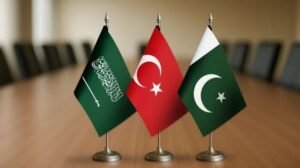
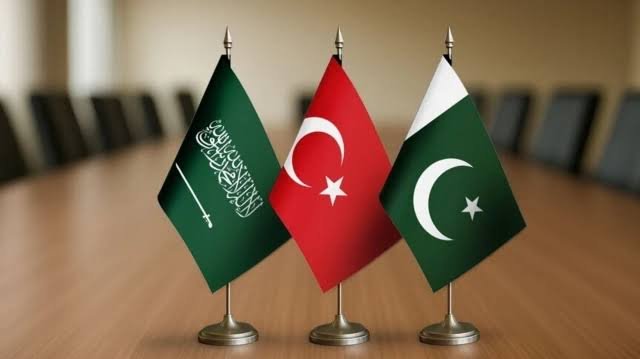
ISLAMABAD: Pakistan, Saudi Arabia and Turkiye are holding a high-level meeting in Islamabad on November 27-28 to discuss regional security, the conflict involving Saudi Arabia and Yemen’s Houthi fighters, and arrangements for implementing their trilateral defence agreement.
The two-day meeting is being held under the Makkah Joint Defence Agreement, signed by the three countries on August 7. Foreign and defence ministers, along with senior military officials, are expected to discuss ways to translate their collective defence commitments into practical arrangements.
Senior defence and military officials held preparatory consultations in Islamabad on Thursday to finalise the agenda and documents for the Strategic Political and Defence Committee meeting, the highest decision-making forum established under the agreement.
The discussions come amid continuing instability in the Middle East, particularly tensions involving Saudi Arabia and Yemen’s Iran-backed Houthi movement.
Speaking to AFP ahead of the meeting, Defence Minister Khawaja Asif confirmed that developments in Yemen would feature prominently in the discussions.
“The continuous turmoil south of Saudi Arabia will obviously be one agenda point in the meeting and it is very important,” he said.
Asif emphasised that the trilateral agreement requires the three countries to respond collectively to security threats.
“Any threat to Saudi Arabia is a threat to Pakistan and Turkey according to the pact, which is absolutely clear,” he said.
Islamabad introduces special security arrangements
Authorities have announced a local holiday in Islamabad on Friday, November 27, because of the visiting foreign delegations. Special security and traffic arrangements have also been introduced across Islamabad and Rawalpindi.
Security personnel have been deployed along important routes, including those connecting Islamabad International Airport with the capital’s Red Zone, which houses major government institutions and diplomatic missions.
According to an Islamabad Traffic Police advisory, heavy vehicles have been prohibited from entering Islamabad and Rawalpindi from 6 p.m. on November 26 until 12:30 a.m. on November 28.
The restriction also applies to heavy transport vehicles entering through the Motorway and Grand Trunk Road. The Faizabad Bus Terminal has been closed during the same period, while selected Metrobus and electric bus services have been temporarily suspended.
Metrobus and electric bus services between 7th Avenue station and Pak Secretariat are suspended from 10 p.m. on November 26 until 12:30 a.m. on November 28.
The district administration has also closed hiking Trails 3 and 5 in the Margalla Hills from 6 a.m. to 11 p.m. on Friday.
Federal government ministries and offices within the Red Zone have been directed to work from home. Essential services, including hospitals, police, electricity and gas providers, will continue operating.
Makkah defence agreement moves towards implementation
The Islamabad meeting is expected to focus on developing the institutional and operational framework required to implement the trilateral agreement.
Under the pact signed on August 7, an armed attack against any one of the three countries would be treated as an attack against all, with assistance provided through available means, including military support.
The countries have already held consultations to strengthen cooperation. At their first Strategic Political and Defence Committee meeting in Istanbul, they agreed to institutionalise their partnership, including through a permanent secretariat in Saudi Arabia.
Subsequent consultations among military chiefs in Riyadh focused on practical cooperation and collective defence commitments.
Asif described the agreement as being at a “nascent stage” and said frequent meetings were necessary to establish its framework.
“Initially we need to have frequent meetings to steer what is being formulated, in a way that in the next couple of months we have everything in place so that we can move forward,” he told AFP.
Yemen conflict and wider regional tensions
The talks are also taking place against the backdrop of tensions involving Saudi Arabia and the Houthis, who control Yemen’s capital, Sanaa, and large parts of the country’s north.
The group has carried out attacks targeting Saudi territory and regional shipping routes. Pakistan has previously condemned Houthi missile attacks targeting Saudi Arabia’s Makkah and Madina regions.
Asif also raised concerns about possible Israeli military action, calling for greater regional coordination.
“The possibility of some conflict, or aggression from the Israeli side exists, so we need to close our ranks, the countries of this region,” he said.
The defence minister also discussed Pakistan’s diplomatic efforts to facilitate communication between Washington and Tehran following regional tensions. He described Islamabad’s role as “very, very constructive”, while acknowledging that prospects for lasting peace remained uncertain.
The November 27-28 meeting is expected to help the three countries develop more concrete arrangements for defence and security cooperation under the Makkah agreement.
About The Author