

The Trump administration is preparing country-specific tariffs on 16 major trading partners, including China, India and the European Union, over alleged excess industrial capacity.
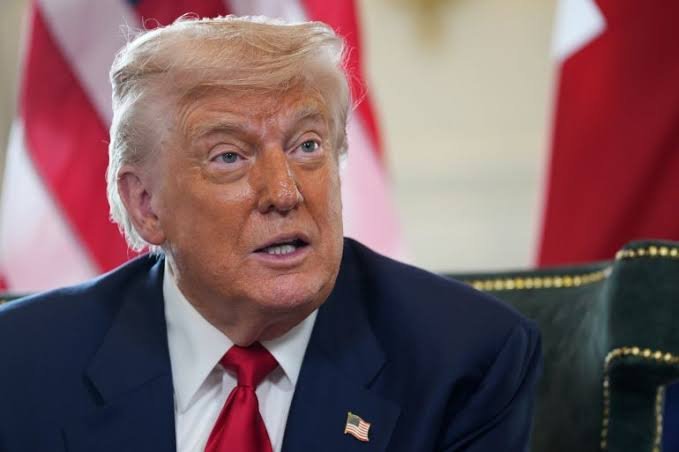
WASHINGTON: US President Donald Trump is preparing to impose new tariffs on 16 major trading partners, threatening to reignite global trade tensions despite significant Republican losses in the US midterm elections, according to sources familiar with the matter.

The Trump administration is expected to announce the measures imminently, targeting what Washington describes as excess industrial capacity among major trading partners. Three people familiar with the issue told Reuters on Tuesday that the proposed tariffs would be tailored to individual countries.
China is among the economies under scrutiny and is expected to record a trade surplus exceeding $1 trillion in 2026. However, the proposed tariff rate on Chinese goods is expected to remain within the limits agreed under the existing trade truce between Trump and Chinese President Xi Jinping.
Beijing reiterated its opposition to trade wars on Wednesday, rejecting Washington’s claims of industrial overcapacity and warning against using the issue for political purposes.
“The so-called ‘overcapacity’ is a false issue, and China opposes using it as an excuse for political manipulation,” Chinese Foreign Ministry spokesperson Guo Jiakun said.
He urged Washington and Beijing to implement the consensus reached by their leaders and maintain stable economic and trade relations.
Democrats face limits on Trump’s tariff policy
The proposed measures come despite the Democratic Party securing majorities in both houses of Congress earlier this month. However, analysts believe the election results are unlikely to significantly change the direction of US trade policy.
Higher tariffs have contributed to rising consumer goods prices in the United States, becoming a source of voter dissatisfaction.
ING analysts said Democrats would struggle to dismantle Trump’s tariff policies without the two-thirds majority required to override a presidential veto.
They also argued that the election results would not necessarily signal a return to free trade, noting that tariffs in strategically important sectors have attracted support across political parties.
Existing US-China trade agreement
The current US-China trade truce is scheduled to remain in place until January 10, although expectations are growing that both countries will extend it.
Trump and Xi are expected to meet again at a G20 gathering in Miami, potentially as early as next month. A renewed escalation of reciprocal tariffs similar to those introduced in 2025 could significantly affect both economies.
Under the existing arrangement, Trump’s second-term tariffs on Chinese goods are capped at 20%, in addition to duties of approximately 25% imposed during his first term.
The United States has also imposed a 12.5% anti-forced labour duty on all Chinese imports, leaving 7.5 percentage points before reaching the agreed second-term tariff ceiling.
Washington and Beijing are separately working to reduce tariffs on $30 billion worth of non-strategic imports from each country.
Country-specific tariff rates
According to one source, the proposed duties will be adjusted for individual trading partners, with Mexico and Norway unlikely to face immediate new levies.
The White House is expected to honour tariff ceilings established under completed trade agreements, including 15% for goods from the European Union, Japan and South Korea, and 19% for Malaysia.
The 20% ceiling for Chinese goods is also expected to remain in place if the trade truce is extended. Otherwise, tariffs linked to the alleged excess capacity could increase.
16 trading partners under investigation
The countries and trading blocs covered by the investigation include China, India, Japan, South Korea, Mexico, Vietnam, Taiwan, Thailand, Malaysia, Indonesia, Switzerland, Norway, Singapore, Bangladesh, Cambodia and the European Union.
The US Trade Representative launched the excess industrial capacity investigation in March under Section 301 of the Trade Act of 1974. A separate investigation examines the enforcement of anti-forced labour laws in 59 countries and the European Union.
The measures are intended to rebuild Trump’s global “Liberation Day” tariffs, which were struck down by the US Supreme Court in February.
Washington has identified China as the largest source of excess industrial capacity, alleging that its exports of steel, aluminium, electric vehicles, appliances and solar products are flooding international markets.
Beijing, however, maintains that its exports reflect competitive advantages. The US investigation also examines Chinese investments in Southeast Asian countries, including Vietnam, Indonesia and Cambodia, where goods are manufactured for the American market to avoid previously imposed US tariffs.
About The Author