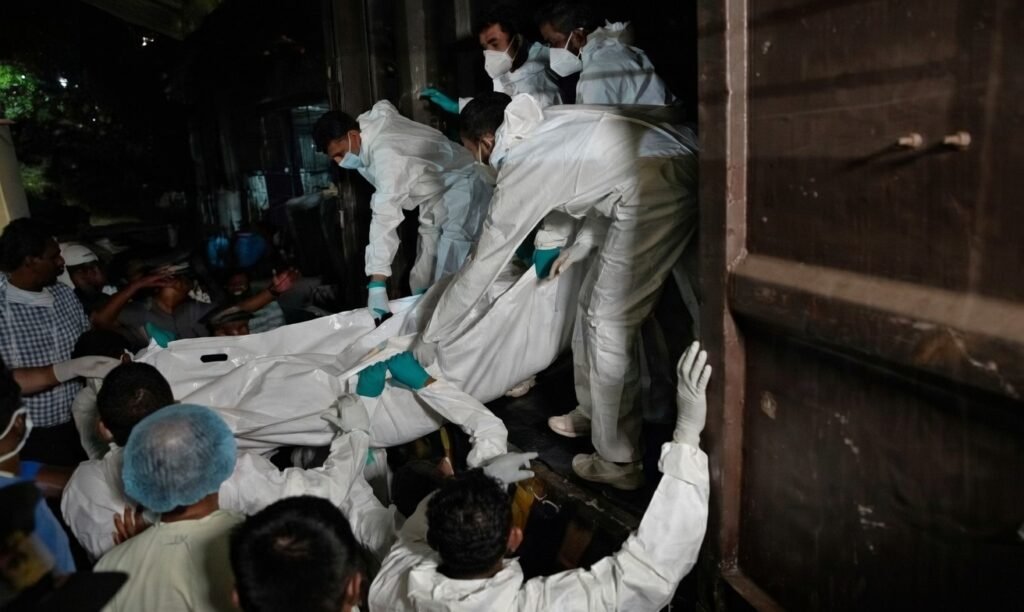

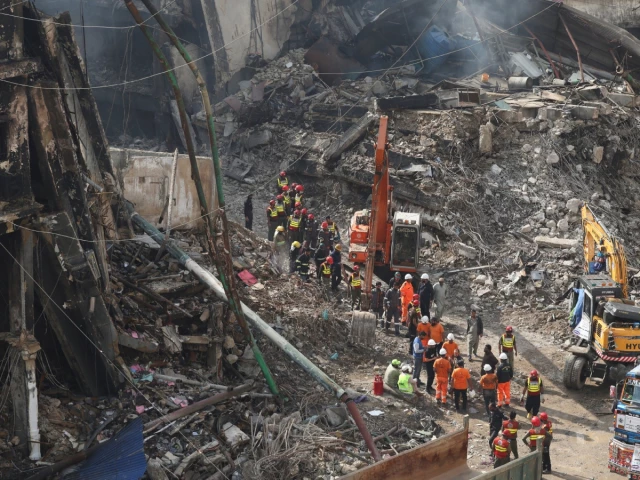
KARACHI: DNA examinations of victims from the Gul Plaza fire reveal the blaze reached temperatures as high as 1,200°C incinerating bodies to the extent that in some cases only bones or powdered remains were recovered.
The findings were shared by Prof Dr Raza Shah Director of the International Centre for Chemical and Biological Sciences (ICCBS) and Prof Dr Ishtiaq Ahmed head of the Sindh Forensic and Serology Laboratory. Prof Ahmed stated that 48 post mortem samples were received, allowing full identification of 24 victims and partial identification of eight while DNA extraction was impossible in some cases due to extreme burning.
Prof Shah explained that the intensity of the fire was worsened by plastics and chemically treated materials sold at the plaza which produce oil like substances that sustain flames. He noted that conventional water-based firefighting is often ineffective for chemical based fires and foam would have been more suitable to control the blaze and possibly reduce casualties.
The scientists announced that ICCBS intends to use the Gul Plaza disaster as a case study planning a research workshop and symposium to examine fire dynamics forensic challenges and safety measures aiming to improve preparedness for similar future incidents.