
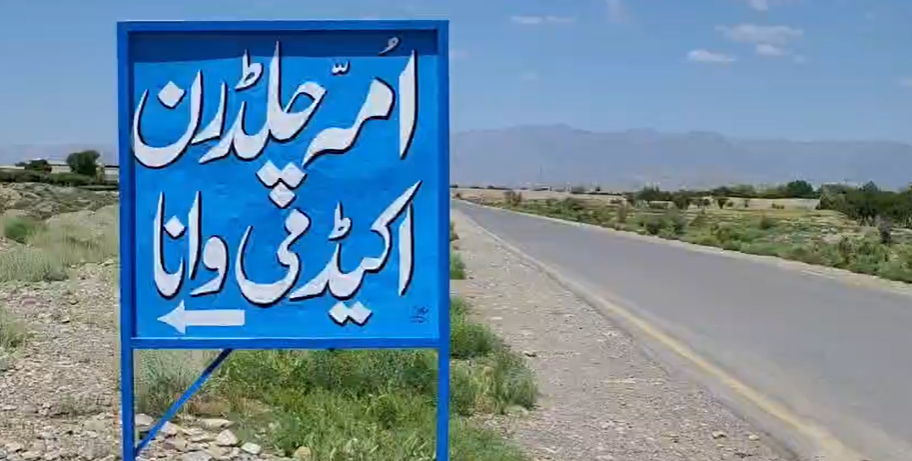

A free welfare-driven academy in Wana is emerging as a model of inclusive education, offering orphaned and underprivileged children academic learning, moral training, and essential life support under one roof.
In a region often challenged by limited educational opportunities, a quiet transformation is underway in Wana, South Waziristan Lower, where a welfare-based educational institution is reshaping the future of vulnerable children.
The Umma Children Academy Wana, operating under the Wana Welfare Association, has become a symbol of hope for orphaned and underprivileged students who otherwise face barriers to quality education. The institution is offering completely free education along with essential living support.
Students enrolled at the academy receive textbooks, notebooks, uniforms, clothing, shoes, and daily meals without any financial burden. The initiative aims to ensure that poverty does not stand in the way of learning or personal development.
Alongside modern academic instruction, the academy places strong emphasis on moral and Islamic education. A dedicated mosque within the campus provides structured learning of the Holy Quran, prayers, and ethical values, helping students build a balanced spiritual and academic foundation.
The institution also focuses on physical development and mental well-being. Sports fields, exercise routines, and recreational activities are integrated into daily life, encouraging students to grow into healthy and confident individuals.
For students from remote areas, residential facilities have been arranged in the form of a well-managed hostel. The environment ensures safety, discipline, and proper care, allowing students to focus entirely on their studies without domestic concerns.
Transportation is another key facility provided by the academy. A secure pick-and-drop system ensures that children travel safely between home and school, easing concerns for parents and guardians regarding daily commuting.
More than just a school, the Umma Children Academy Wana is being viewed as a comprehensive development center. It is nurturing children academically, socially, physically, and spiritually, while building a structured environment for long-term growth.
Local observers describe the initiative as a rare example of sustainable welfare education in the region, highlighting its potential to contribute not only to individual success stories but also to broader social stability and development.
As the academy continues its mission, it stands as a powerful reminder that education, when paired with care and commitment, can transform even the most difficult circumstances into opportunities for progress.
About The Author