

Iranian Foreign Minister Abbas Araghchi says Tehran is awaiting Washington’s final position through Qatari mediators while urging negotiations to end the conflict.
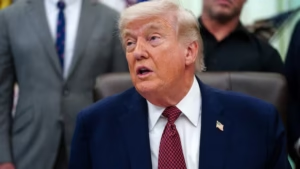
Iran has renewed its call for diplomacy to resolve its conflict with the United States and Israel after US President Donald Trump said Washington had rejected an Iranian proposal linked to reopening the Strait of Hormuz and ending hostilities.
Iranian Foreign Minister Abbas Araghchi said Tehran had clearly communicated its conditions and that reopening the strategic waterway would depend on those conditions being accepted. He said a negotiated settlement was necessary to break the current deadlock.
Iran presented the proposal during the United Nations General Assembly in New York last week, with the plan reportedly conveyed to Washington through Qatari mediators.
Trump said Saturday that he had rejected the proposal, claiming Iran was seeking an immediate agreement over the Strait of Hormuz because of pressure caused by the conflict.
Araghchi, however, said Iranian officials had not received an official rejection through the mediators. He said Tehran was waiting for the mediators to communicate Washington’s final position before deciding its next step.
Under the proposed arrangement, a US agreement would trigger a seven-day period leading to the reopening of the Strait of Hormuz and a pause in regional fighting. Araghchi said broader negotiations could then begin on issues agreed upon by both sides.
The proposed talks could include Iran’s nuclear program. Tehran has maintained that it will not surrender its right to enrich uranium or accept demands it considers coercive.
Iranian President Masoud Pezeshkian said Tehran was prepared to discuss its nuclear program and other issues, but stressed that Iran would not accept pressure or threats. He also said Iran was not seeking war but would defend itself against attacks and pressure.
Pezeshkian maintained that Tehran had already agreed that it should not develop nuclear weapons.
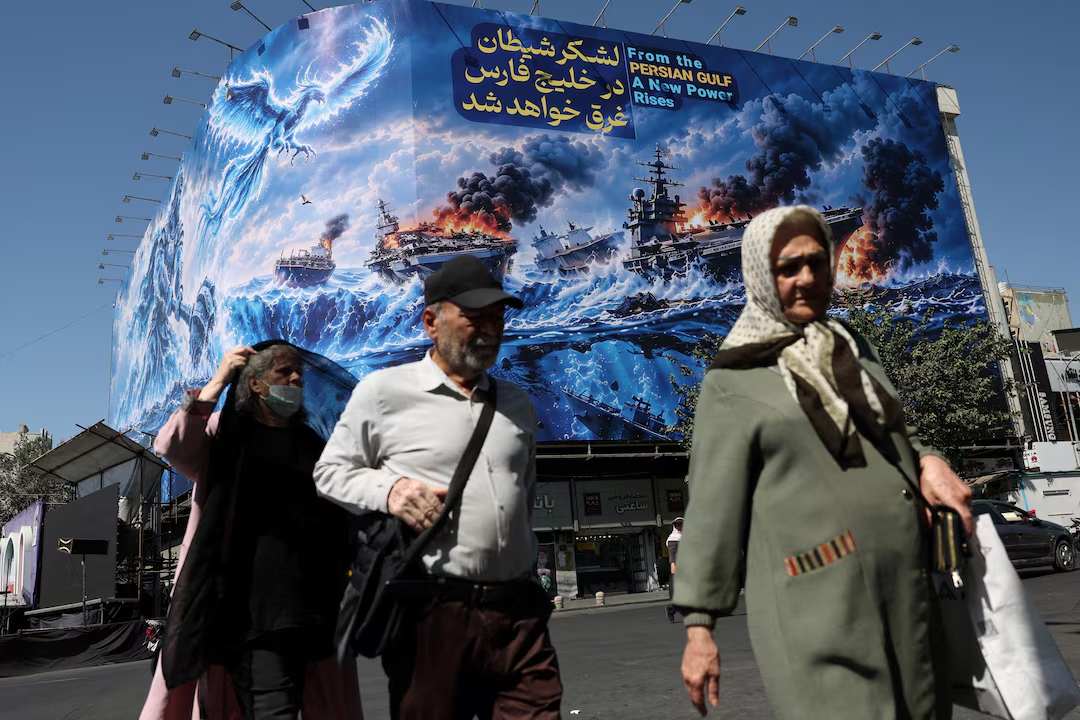
The dispute has added pressure on shipping and energy markets as restrictions and attacks in and around the Strait of Hormuz have affected maritime traffic through the strategic waterway. The disruption has also affected oil supplies and increased concerns about the global economy.
The conflict began on Feb. 28 following US and Israeli attacks on Iran. Fighting has since been interrupted by temporary pauses before renewed strikes.
About The Author