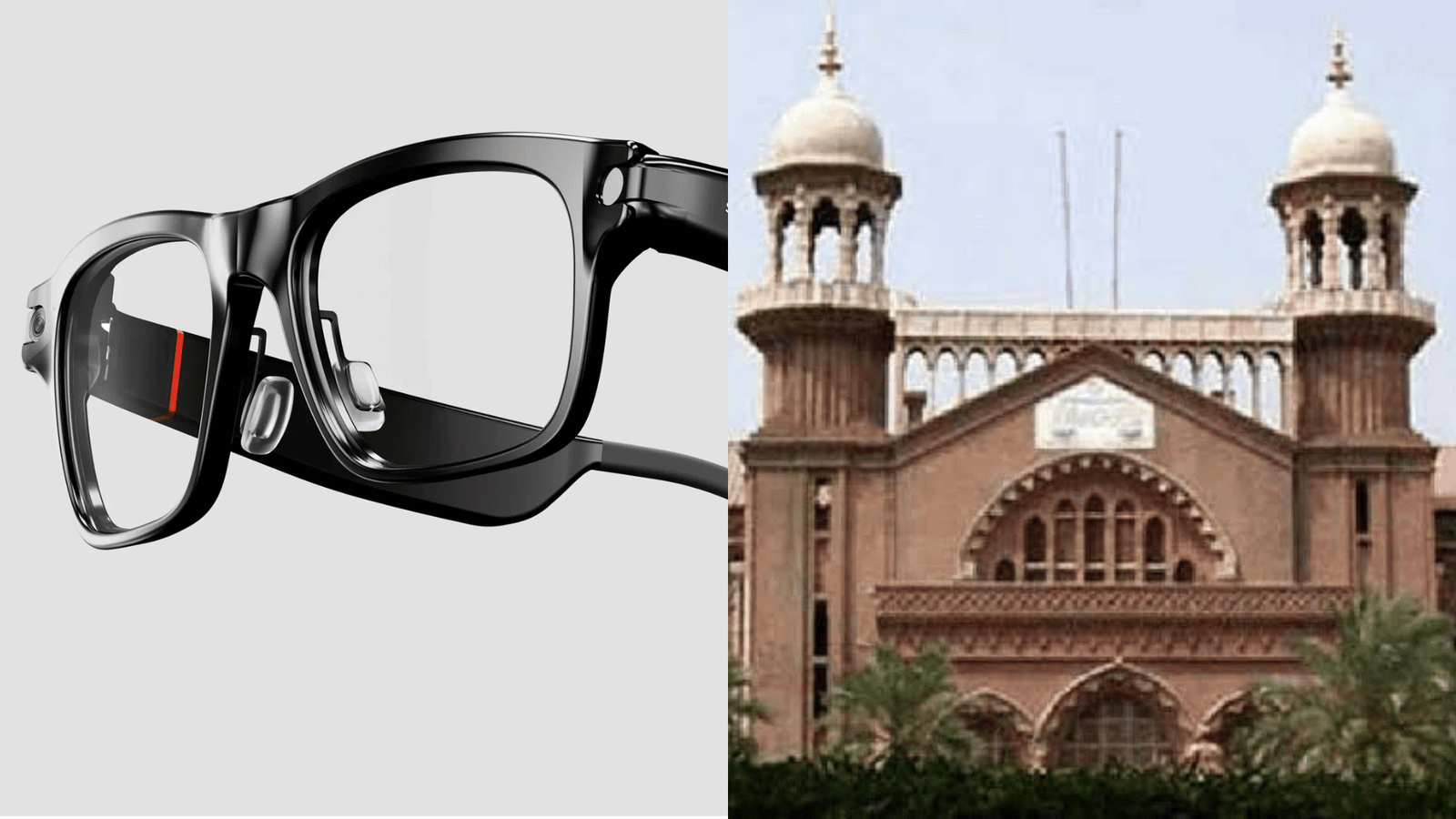

The Lahore High Court has sought responses from the federal government and regulators over concerns about the privacy and security implications of camera- and microphone-equipped smart glasses.
The Lahore High Court has sought responses from the federal government and regulatory authorities over the alleged unregulated import and sale of camera- and microphone-equipped smart glasses in Pakistan, with the next hearing scheduled for Oct. 8.
Chief Justice Aalia Neelum issued notices to the federal government, the Pakistan Telecommunication Authority, the Ministry of Commerce and other respondents after hearing a petition filed by citizen Husnainul Abideen through advocate Shahram Saqi.
The petition challenges the availability of smart glasses, including Ray-Ban Meta-style devices, which can capture photographs, record audio and livestream content without the people being recorded necessarily realizing it.
Saqi told the court that such devices can resemble ordinary eyewear while incorporating cameras and microphones capable of recording people within the wearer’s field of view. He argued that the discreet nature of the technology raises privacy concerns that differ from those associated with conventional smartphones.
The petition invokes Articles 9 and 14 of the Constitution, relating to life and liberty and the dignity of individuals. It argues that unrestricted circulation and use of covert recording devices could undermine constitutional privacy protections.
According to the petitioner’s counsel, Meta has not formally launched the product in Pakistan, but similar smart glasses are reportedly available in Lahore markets, including Hafeez Centre.
The petition also points to regulatory developments in other countries, where authorities and courts have raised concerns about the use of camera-equipped smart glasses. Restrictions have been introduced in some courtrooms and other sensitive settings, while privacy regulators have examined the collection of personal data involving people captured by the devices.
In Pakistan, the petition argues, there is no specific regulatory framework addressing camera-equipped eyewear. Such devices may fall within broader procedures governing the import and approval of telecommunications and information technology equipment, raising questions about whether existing rules adequately address their privacy implications.
The petitioner has asked the court to examine the import, approval and retail-sale chain of the devices. The requested relief includes reviewing any PTA approvals, stopping further imports and customs clearance, and restricting the use of such devices in courts, airports and government buildings.
The petition also seeks information from Pakistan’s cybercrime authorities about complaints involving the alleged unauthorized recording of people through such devices.
National security concerns have also been raised, with the petitioner arguing that discreet recording and livestreaming near sensitive installations or gatherings could create additional risks.
The respondents have until Oct. 8 to submit their replies. The court’s proceedings could bring further clarity on whether Pakistan’s existing regulatory framework is sufficient for emerging wearable devices that combine conventional eyewear with recording and livestreaming capabilities.
About The Author