

Malik Muhammad Ahmad Khan cites parliamentary resolutions on South Punjab and questions Bilawal Bhutto Zardari’s positions on provincial boundaries, the 27th Amendment and political prisoners.
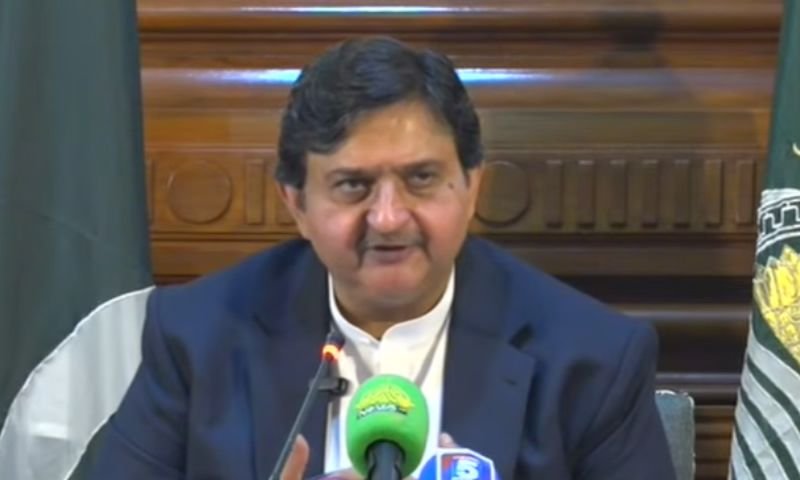
Punjab Assembly Speaker Malik Muhammad Ahmad Khan has challenged Pakistan Peoples Party (PPP) Chairman Bilawal Bhutto Zardari over his opposition to dividing Sindh, questioning why the party previously supported the creation of a separate South Punjab province but now rejects similar proposals for Sindh.
Speaking to journalists in Lahore on Wednesday, Malik responded to Bilawal’s remarks at the Karachi Press Club a day earlier, defending the proposal for a referendum on new provinces and questioning the PPP chairman’s warning that forcibly dividing Sindh could trigger violence.
“Why does the PPP believe Sindh cannot be divided while Punjab can?” Malik asked, arguing that the party’s differing positions warranted political and constitutional debate.
Bilawal had warned that any attempt to divide Sindh by force could lead to bloodshed in Karachi. He also maintained that creating additional provinces would deepen social divisions rather than address Pakistan’s governance problems.
Speaker cites parliamentary history on South Punjab
Malik referred to parliamentary proceedings in May 2012, when the PPP-led federal government supported a National Assembly resolution calling for the creation of a separate South Punjab province.
He recalled that the Pakistan Muslim League-Nawaz (PML-N) had opposed the resolution and walked out of the proceedings. The National Assembly passed the resolution on May 3, 2012.
However, the PML-N subsequently proposed creating four new provinces, including South Punjab and Bahawalpur, while calling for constitutional amendments and political consensus.
On May 9, 2012, the Punjab Assembly unanimously adopted two resolutions supporting the creation of South Punjab and the restoration of Bahawalpur’s provincial status.
Malik said the parliamentary record demonstrated the positions previously adopted by political parties and offered to provide journalists with copies of the relevant resolutions and proceedings.
He also questioned the significance of resolutions passed by assemblies whose constitutional terms had since expired.
Questions over the 27th Constitutional Amendment
The Punjab Assembly speaker also challenged Bilawal’s criticism of the 27th Constitutional Amendment, which the PPP chairman had described as having been passed through a “brute majority” rather than political consensus.
Malik recalled Bilawal’s National Assembly speech during the amendment’s passage, particularly his support for restructuring the military command system and establishing the position of Chief of Defence Forces.
He said Bilawal had justified the changes by referring to modern warfare and Pakistan’s military confrontation with India in May 2025.
While praising Bilawal’s diplomatic role following the confrontation, Malik questioned his subsequent criticism of the amendment.
“To which position should I agree? Bilawal sahib’s position on the floor of parliament, or his public remarks yesterday?” he asked.
The 27th Amendment, passed in November 2025, established the Federal Constitutional Court and restructured the armed forces’ command system.
Malik challenges Bilawal over Imran Khan
Malik also questioned Bilawal’s description of former prime minister and Pakistan Tehreek-e-Insaf founder Imran Khan as a political prisoner.
Referring to the May 9, 2023, violence following Khan’s arrest, he argued that individuals accused of attacking military installations and damaging private property could not automatically be regarded as political prisoners.
“How can burning my house be someone’s political right? And how can a person imprisoned for burning my house be a political prisoner?” Malik asked.
He alleged that the attacks on military installations were coordinated and premeditated, describing them as acts of espionage rather than legitimate political protest.
Bilawal, meanwhile, has called for restoring PTI’s confidence in parliament, arguing that Pakistan’s political system cannot function effectively without the participation of major opposition parties.
“Whether I like it or not, this country cannot function without the PTI,” Bilawal said.
Debate over governance and new provinces
Malik acknowledged that military interventions, hybrid political arrangements and judicial decisions had weakened Pakistan’s democratic institutions. He also cited the execution of former prime minister Zulfikar Ali Bhutto as one of the gravest injustices in the country’s constitutional history.
However, he maintained that political leaders must also examine their own decisions and positions when discussing institutional failures.
The debate over new provinces has gained momentum following Interior Minister Mohsin Naqvi’s proposal to hold a referendum on creating smaller administrative units. Information Minister Attaullah Tarar has also defended the proposal as a democratic way to gauge public opinion.
However, Article 239(4) of Pakistan’s Constitution requires a two-thirds majority in the provincial assembly concerned for any constitutional amendment changing provincial boundaries, alongside the required parliamentary approval.
A referendum could indicate public opinion but would not, by itself, satisfy these constitutional requirements.
About The Author