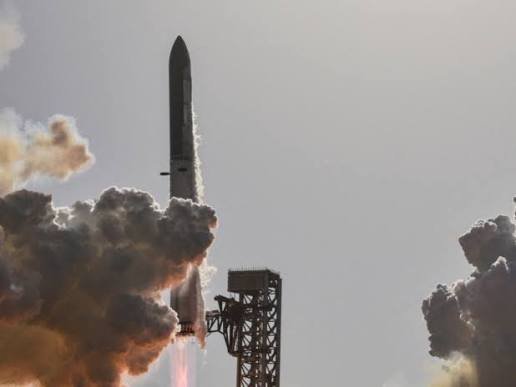

NASA says the uncontrolled Falcon 9 upper stage poses no threat to Earth, but the incident highlights the growing challenge of managing space debris as lunar exploration accelerates.
A SpaceX Falcon 9 rocket’s upper stage has crashed into the Moon after becoming uncontrollable following the completion of its mission, renewing concerns about the increasing amount of human-made debris in space and the need for more sustainable space operations.
The roughly 4,000-kilogram rocket stage had successfully completed its primary task of launching a lunar lander before remaining in space without active control. Over time, its orbit gradually shifted, leading to an unavoidable impact with the lunar surface.
According to available reports, the collision struck the Moon with a force estimated to be comparable to nearly three tons of TNT, creating another artificial impact site. NASA confirmed that the incident poses no danger to Earth or its population, emphasizing that the event has no immediate safety implications for the planet.
Scientists say the collision nevertheless highlights a growing challenge facing both government space agencies and commercial operators. As the number of lunar and deep-space missions increases, retired rocket stages, inactive satellites and mission hardware are accumulating in space, raising concerns about the long-term sustainability of exploration.
Experts note that impacts on the Moon are common because natural meteoroids have bombarded its surface for billions of years, creating countless craters. Several spacecraft have also intentionally or accidentally crashed into the Moon during past missions, providing valuable scientific data in some cases.
While the Falcon 9 impact is unusual because it involved an uncontrolled commercial rocket component, researchers stress that it should not be viewed as a cause for immediate alarm. Instead, they say it underscores the importance of improved end-of-mission disposal strategies, international cooperation and responsible spaceflight practices to reduce future space debris.
About The Author