


PTA’s new licensing framework aims to boost broadband access, support small operators, and strengthen last-mile connectivity across underserved districts.
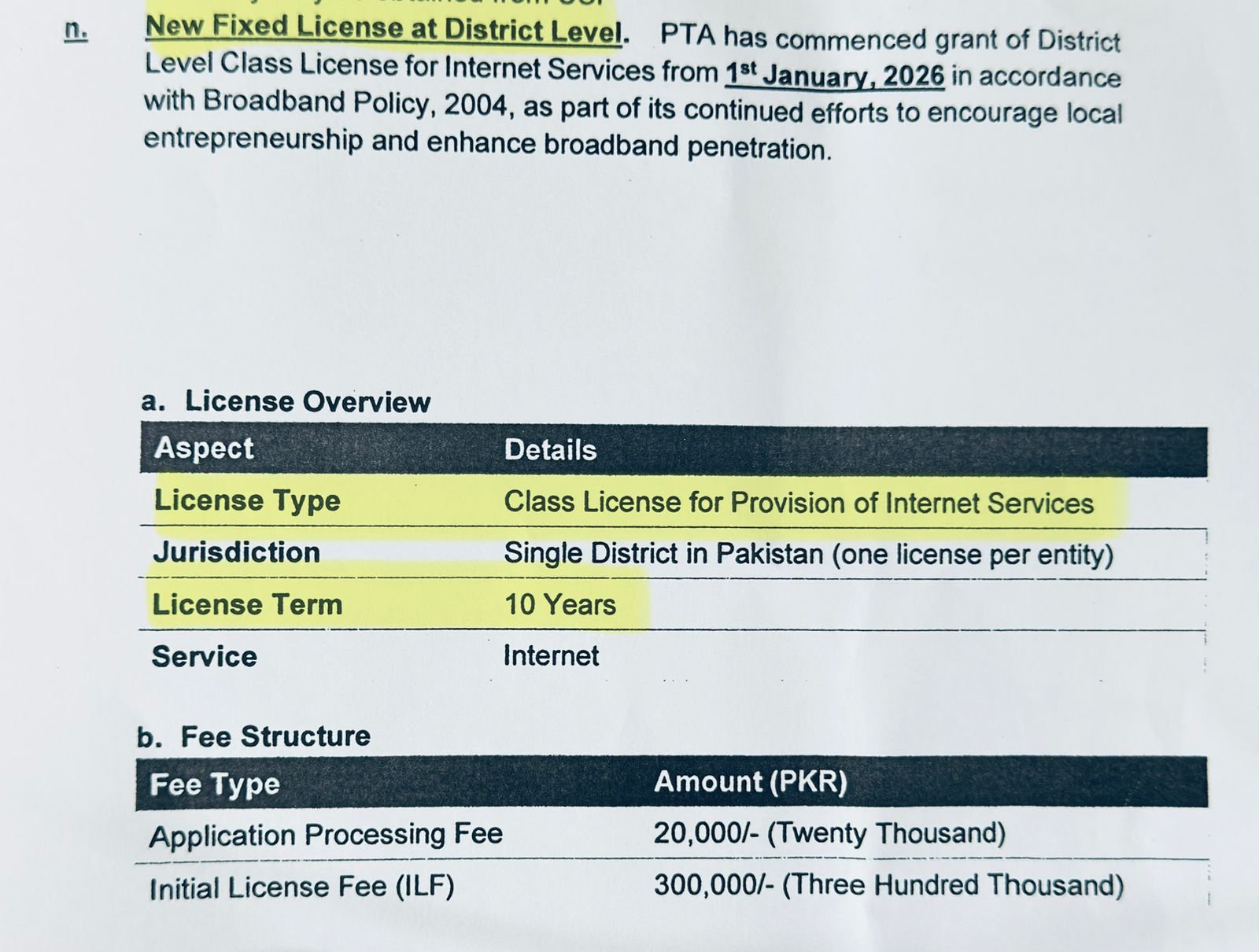
Pakistan has taken a significant step toward expanding its digital infrastructure as the Pakistan Telecommunication Authority (PTA) has begun issuing Class Licenses for district-level internet services, marking a major shift in how broadband connectivity will be delivered across the country.
The initiative is designed to open the market for small and medium-sized operators, enabling them to provide internet services at the district level. Officials say the move is aimed at improving last-mile connectivity, especially in remote and underserved regions where reliable internet access remains limited.
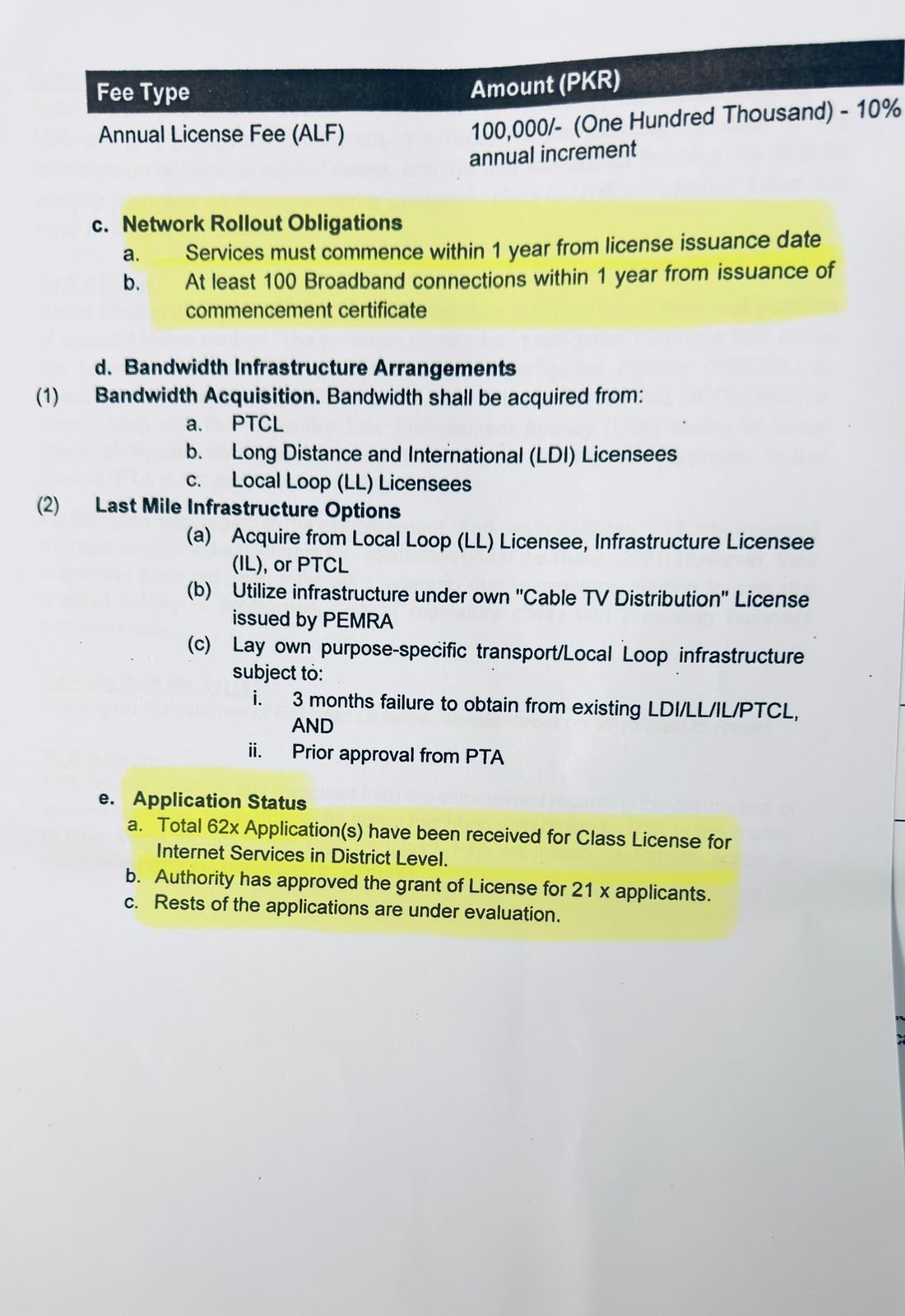
According to PTA, the newly introduced Class License will remain valid for ten years. Applicants are required to pay a one-time initial fee of Rs300,000, along with an annual license fee of Rs100,000 for the first year. The fee must be deposited before the license becomes operational.
The authority further stated that the annual license fee for subsequent years will be paid in advance and will increase by 10 percent each year, forming part of a structured regulatory framework intended to ensure sustainability and compliance.
In addition to financial requirements, service providers will be bound by operational conditions. License holders will be required to establish and activate at least 100 broadband connections within one year of receiving the license, ensuring that services are actively delivered and not merely registered on paper.
PTA officials confirmed that applications are being processed through an online portal, with templates and guidelines made available on the authority’s official website. So far, 62 applications have been received for district-level licensing, out of which 21 have been approved while 41 remain under review.
The regulatory body reiterated that the initiative reflects its broader commitment to expanding broadband penetration and promoting digital inclusion across Pakistan. It is expected to encourage competition, reduce service gaps, and support the growth of the telecommunications sector at the grassroots level.
Analysts suggest the move could play a crucial role in bridging Pakistan’s digital divide, particularly in rural districts where internet access has historically lagged behind urban centers. If effectively implemented, the policy may also open new opportunities for local entrepreneurs and technology-driven service providers.
About The Author