

US Vice President JD Vance says Washington wants concrete reductions in Iran’s uranium enrichment capacity before agreeing to end the seven-month conflict.
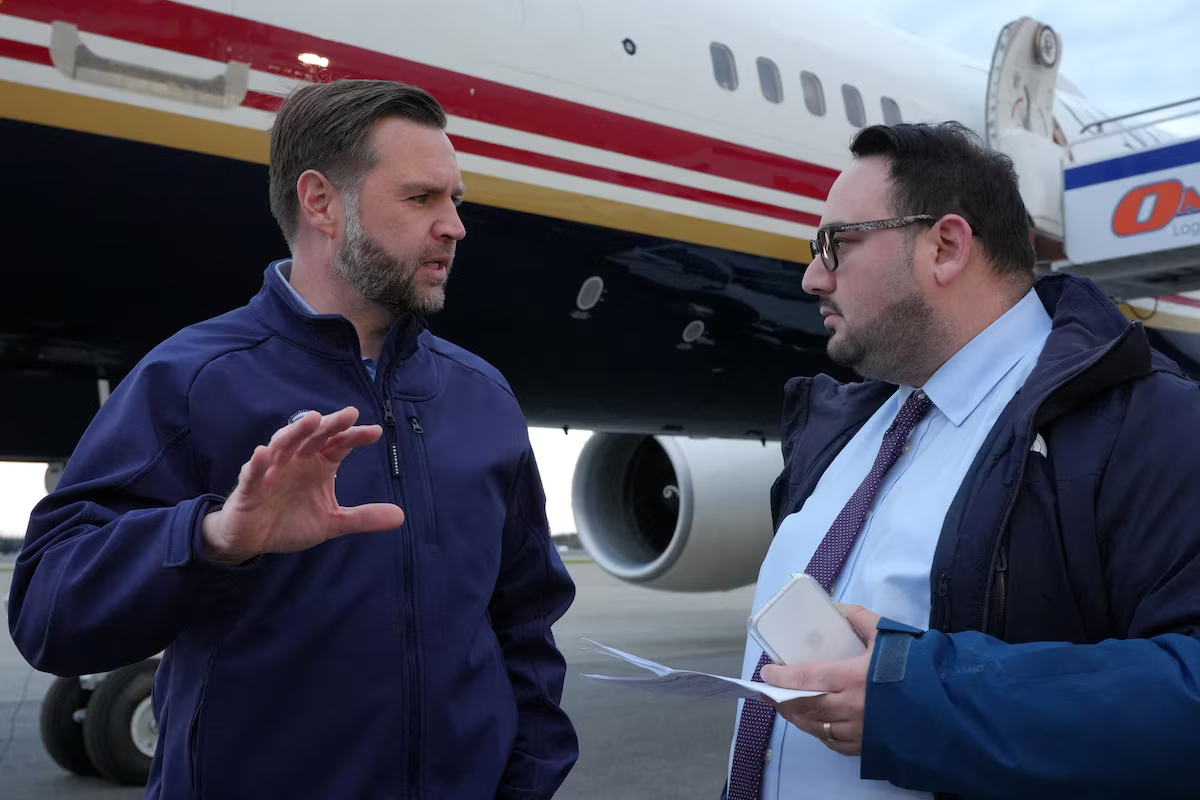
WASHINGTON: US Vice President JD Vance has said Iran must make a meaningful reduction in its nuclear enrichment capacity if it wants to reach an agreement with Washington and end the seven-month war between the two countries.
In an interview with Reuters, Vance said the United States was seeking concrete action rather than assurances from Tehran. He questioned why Iran would need uranium enriched to 60% if it did not intend to develop a nuclear weapon, saying a significant reduction in enrichment capacity would demonstrate a commitment to limiting its nuclear program.
Vance said Washington remained open to an agreement but would require tangible nuclear concessions from Tehran. The United States and Iran have exchanged proposals in recent weeks aimed at ending the conflict and reopening the Strait of Hormuz, a vital route for global energy shipments. US President Donald Trump has rejected Iran’s latest proposal and warned that military operations could intensify after the November midterm elections.
Negotiations have also been complicated by uncertainty in Washington over Iran’s decision-making structure. Vance said US officials had been communicating with Iranian President Masoud Pezeshkian and Foreign Minister Abbas Araqchi but remained uncertain about how much authority they exercised within Iran’s political system.
According to Vance, the uncertainty followed the killing of Supreme Leader Ayatollah Ali Khamenei in joint US-Israeli strikes at the beginning of the conflict. Iranian Foreign Ministry spokesperson Esmaeil Baghaei rejected the suggestion that Washington was unclear about Iran’s political system, saying the real problem was contradictory positions and mixed messaging from US officials.
Vance also said he had personally spoken with field commanders to assess battlefield conditions. He dismissed concerns about critical ammunition shortages and said Iranian forces could periodically strike commercial vessels in the Strait of Hormuz but were largely unable to prevent energy exports through the waterway.
The vice president declined to say whether he was personally leading the peace negotiations, saying the United States was involved in the process but that Trump was ultimately directing it.
The conflict has also created economic and political pressure in the United States. Vance said the war was costing about $3 billion a month, while higher energy prices have emerged as a major issue ahead of the November congressional elections.
Author