

Saudi Arabia reports missile interceptions and a fire near the Ras Tanura oil complex as Houthi attacks and fighting in Yemen intensify regional tensions.
RIYADH: Saudi Arabia said it intercepted two ballistic missiles launched toward its capital on Tuesday, while a fire was reported near the Ras Tanura oil complex following an attack, as Houthi missile and drone strikes and fighting in Yemen added to regional tensions.
Saudi authorities said shrapnel from the intercepted missiles struck a building, a construction project and a car. Residents in Riyadh received a text message alert advising them to seek shelter, while explosions rattled windows in the city centre.
The Saudi-led military coalition fighting the Houthis said three missiles launched toward the Eastern Province were also intercepted.
A resident of Al Khobar, south of the Ras Tanura complex, told AFP that explosions were heard around dawn.
“We got the alert on the mobile and then heard a very loud bang,” the resident said.
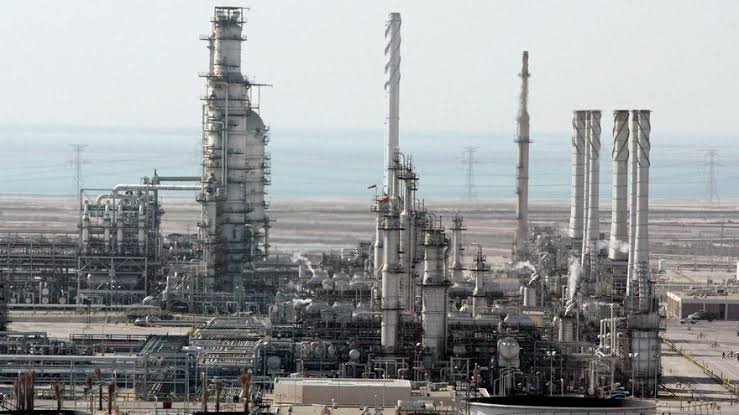
Maritime security agency Vanguard reported a fire in the Ras Tanura area in the early hours of Tuesday following an attack. The blaze had been contained, the agency said.
The Ras Tanura facility, located along Saudi Arabia’s Gulf coast, houses one of the Middle East’s largest refineries and is a major part of the kingdom’s energy sector. The complex has a refining capacity of 550,000 barrels per day and has repeatedly been targeted in strikes blamed on Iran. A drone attack in March forced a partial shutdown of the refinery.
The Houthis also said on Tuesday that they had launched ballistic missiles at two military transport aircraft in southern Saudi Arabia and sent a drone toward Abha airport.
Fighting intensifies in Yemen
Meanwhile, 97 fighters were killed in southwestern Yemen as Saudi-backed government forces attempted to recapture territory seized by the Houthis last month.
According to an AFP tally compiled from military sources on both sides, at least 63 Houthi fighters and 34 pro-government combatants were killed, mostly near the Bab al-Mandab strait, a strategic passage connecting the Red Sea with the Gulf of Aden.
The clashes, which began with Saudi airstrikes late on Monday, were described as the fiercest since the Houthis seized swathes of territory in a rapid offensive in September.
The renewed fighting has added to regional instability amid the wider Middle East war, which began with US-Israeli strikes on Iran in February.
Houthis criticise Egypt’s decision
Separately, the Houthis criticised Egypt’s parliament for authorising defensive military support for Saudi Arabia, describing the decision as a declaration of war against Yemen.
“It is truly remarkable that while these people go to discuss what they call ‘peace in the region’, Egypt and its parliament declare support for the so-called defence of the Kingdom of Saudi Arabia, and in doing so, declare war against the Republic of Yemen,” Mohammed Ali al-Houthi, a member of the Houthi political bureau, said in a Telegram post.
Egyptian lawmakers approved the measure on Monday. The precise nature of the proposed support was not immediately clear. Egypt has the Arab world’s largest military.
Al-Houthi also referred to Monday’s visit to Tehran by the Saudi defence minister, Pakistan’s army chief and Turkiye’s intelligence chief, which was aimed at de-escalating tensions in the Middle East war.
He said the Houthis were “not afraid of any alliance that may be formed”.
Saudi Arabia, Turkiye and Pakistan recently signed a NATO-style defence pact in Makkah, pledging to consider an attack on one country as an attack on all three.
The Houthis have declared a maritime blockade of Saudi Arabia and begun targeting its ships, territory and oil facilities. They have also reported frequent Saudi strikes. Late Tuesday, Houthi spokesman Saree said Saudi aircraft had carried out 81 airstrikes in the preceding 24 hours.
About The Author