
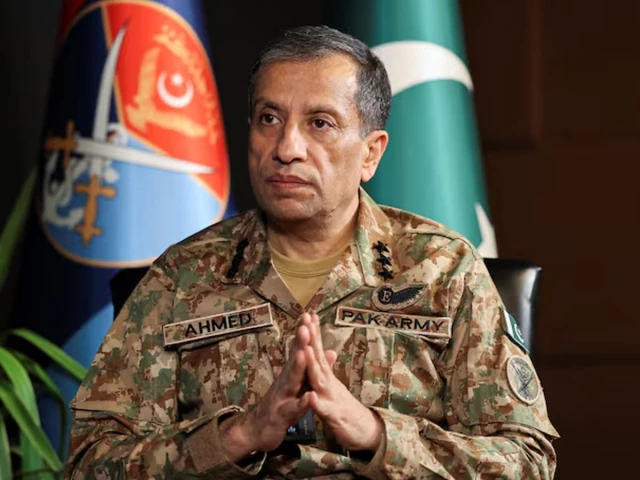

ISPR chief Lt. Gen. Ahmed Sharif Chaudhry says Field Marshal Asim Munir’s repeated visits to Tehran indicate progress in Pakistan’s efforts to mediate between Washington and Tehran.
Pakistan’s military has expressed cautious optimism about Islamabad’s efforts to mediate between Iran and the United States, with the military’s spokesperson saying repeated high-level diplomatic engagements could indicate progress toward ending the eight-month-long conflict.
Inter-Services Public Relations (ISPR) Director General Lt. Gen. Ahmed Sharif Chaudhry said Friday that Chief of Defence Forces and Chief of Army Staff Field Marshal Asim Munir’s two visits to Tehran this month reflected positive signs in Pakistan’s mediation efforts.
“Why would the field marshal be going twice if it is not for some positivity? So yes, of course,” Chaudhry said during an interview in Rawalpindi, the headquarters of Pakistan’s armed forces.
However, he cautioned that Islamabad remained “cautiously optimistic” about the outcome, noting that influential groups opposed to peace continued to pose challenges to diplomatic efforts.
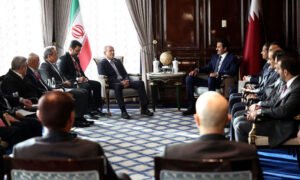
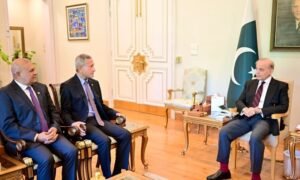
Munir visited Tehran twice this month as Pakistan intensified its diplomatic efforts to ease tensions between Washington and Tehran. During his latest visit on Monday, he was accompanied by Saudi Defence Minister Prince Khalid bin Salman and Turkish intelligence chief Ibrahim Kalin.
Chaudhry declined to disclose details of the discussions or confirm whether the United States had endorsed the delegation’s visit.
Pakistan-Saudi Arabia-Türkiye defence agreement
The ISPR chief also discussed the Makkah Joint Defence Agreement signed by Pakistan, Saudi Arabia and Türkiye on August 7. He said the arrangement did not prevent other countries from joining, provided they shared its commitment to collective deterrence and regional peace.
Asked whether Iran could become a member, Chaudhry said the decision to expand the agreement rested with the political leadership of its three signatories.
Under the pact, an attack on any one of the three countries would be treated as an attack on all of them.
The agreement has gained significance amid the wider regional consequences of the Iran-US conflict and concerns about a broader confrontation in the Middle East.
Following Monday’s discussions, Mohsen Rezaei, secretary of Iran’s Supreme National Security Council, said regional countries should take responsibility for maintaining security in their neighbourhood without foreign intervention.
Pakistan’s military commitments to Saudi Arabia
Chaudhry said any decision to deploy additional Pakistani troops to Saudi Arabia would depend on the evolving security situation and consultations between the two countries’ political leadership.
He reiterated Pakistan’s commitment to defending Saudi Arabia and the holy sites in Makkah and Madina but clarified that Pakistan was not involved in the conflict in Yemen.
Renewed fighting involving Saudi Arabia and Yemen’s Iran-aligned Houthi movement has further raised concerns about the possibility of regional tensions spreading.
Military operations in Khyber-Pakhtunkhwa
Turning to domestic security, Chaudhry defended the military’s counterterrorism strategy in Khyber-Pakhtunkhwa, where the federal government suspended the provincial administration led by Pakistan Tehreek-e-Insaf (PTI) on October 11 and detained Chief Minister Sohail Afridi.
The government accused the provincial administration of failing to contain militancy. The PTI rejected the allegations, saying its government had supported counterterrorism efforts and describing the move as an attempt to suppress political opposition.
Asked whether the situation could lead to larger military-led campaigns, Chaudhry said the armed forces relied on intelligence-based operations rather than conventional military approaches.
“Our counter-terrorism operations are based on what we call IBOs, intelligence-based operations,” he said, adding that the military would further increase the pace of such operations.
The PTI has faced sustained political and legal challenges since its founder, former prime minister Imran Khan, was jailed in 2023. Khan’s supporters have accused the military of influencing political developments and his continued imprisonment, allegations the armed forces have repeatedly denied.
In the February 2024 general elections, PTI-backed candidates won the largest number of directly elected National Assembly seats but failed to secure a parliamentary majority. Khyber-Pakhtunkhwa remained the only province governed by the party before the federal government suspended its administration.
Pakistan’s military leadership has maintained that national security remains its primary responsibility as the country navigates diplomatic challenges abroad and security concerns at home.
About The Author