

Netanyahu reportedly urged Trump to resume military action against Iran after the US midterm elections, while Tehran warned that another conflict could be longer and extend beyond geographical boundaries.
TEHRAN: Israeli Prime Minister Benjamin Netanyahu has urged US President Donald Trump to launch fresh strikes against Iran immediately after Tuesday’s US midterm elections, as Tehran warns that another conflict could last longer than the previous war, Axios reported.
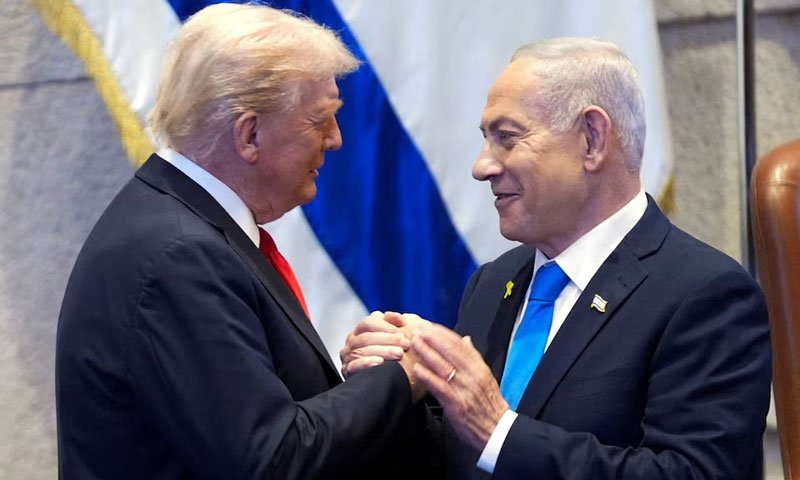
The two leaders discussed the status of negotiations with Iran during a phone call on Saturday. Netanyahu reportedly pressed Trump to attack Iran after the elections, while the US president favoured allowing diplomatic efforts to continue, according to Axios, which cited one US and one Israeli official.
The Israeli official described the conversation as “tough”, while the US official called it “direct”, the publication reported.
Trump confirmed on Sunday that he had discussed Iran with Netanyahu but declined to provide further details.
The reported disagreement comes amid renewed threats from Washington and Tel Aviv to resume military operations as diplomatic efforts to end the Middle East conflict continue.
Iranian army spokesman Mohammad Akraminia warned that any renewed fighting could last longer than the previous conflict.
“A potential future war could last longer than previous conflict, and the American president would not be in a position to dictate the timing or the conditions of its conclusion,” he said, according to Iranian state television.
His remarks followed Trump’s suggestion that the United States could quickly strike its remaining targets in Iran.
“We still have to take care of, I would say one or two sites, but we can do that in 10 minutes,” Trump told reporters.
He also referred to Pickaxe Mountain, a suspected underground nuclear complex, saying the United States could deal with it quickly.
Trump repeated his warning at a campaign rally in Iowa on Sunday, saying he might have to give Tehran “the hammer” at an unspecified time.
Iran warns of wider conflict
Iranian military and political officials have continued to warn Washington and Tel Aviv against launching another attack.
Revolutionary Guards spokesman Hossein Mohebbi echoed a warning issued a day earlier by Iran’s new supreme leader, Ayatollah Mojtaba Khamenei, in a written message.
“In a conflict with America, there are no geographical limitations; a vast theatre has been defined for inflicting damage upon the enemy,” Mohebbi said, according to Iranian state television.
Iranian Foreign Minister Abbas Araghchi, meanwhile, urged Washington to prioritise diplomacy.
“We hope the other side will exercise rationality and choose diplomacy,” he said, adding that Iran “remains prepared for both defence and diplomacy”, according to the official IRNA news agency.
Tehran outlines conditions for negotiations
Iran’s security chief Mohsen Rezaei disclosed on Saturday that he had received a letter from US Vice President JD Vance seeking to revive negotiations.
Rezaei acknowledged what he described as a positive change in Washington’s tone but said he had not yet responded.
He said Tehran had previously informed Washington that unless its conditions were met, “neither would the Strait of Hormuz be reopened nor would there be any negotiations”.
Iran’s demands include the unfreezing of its assets held abroad, an end to the US naval blockade of Iranian ports, the lifting of longstanding sanctions and a conclusion to the war on all fronts.
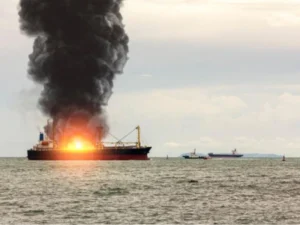
The conflict began on February 28 with US-Israeli strikes on Iran. Tehran has since claimed control of the Strait of Hormuz, a major global energy shipping route, and repeatedly targeted vessels attempting to cross without its authorisation.
Iran has also launched missile and drone attacks across the region, while armed groups aligned with Tehran have joined the fighting in Lebanon and Yemen. The United States has imposed a naval counter-blockade on Iranian ports.
Gulf states prepare for renewed fighting
Anwar Gargash, diplomatic adviser to the UAE president, said on Sunday that the United Arab Emirates hoped diplomatic exchanges would produce a breakthrough but was preparing for a possible escalation.
“It is not the interest of the region to go through another round… But I think we’re also, as we’ve shown before, braced for the worst,” he told a conference in Manama.
Meanwhile, residents in Tehran expressed differing views about the possibility of renewed fighting.
Mohadese, a 27-year-old health inspector, told AFP that the latest developments were worrying but that she felt unable to influence the situation.
Others appeared less concerned. Ebrahim, a 48-year-old vendor in downtown Tehran, said: “We do not fear another war; we have been at war for 48 years now — we are always at war.”
About The Author