
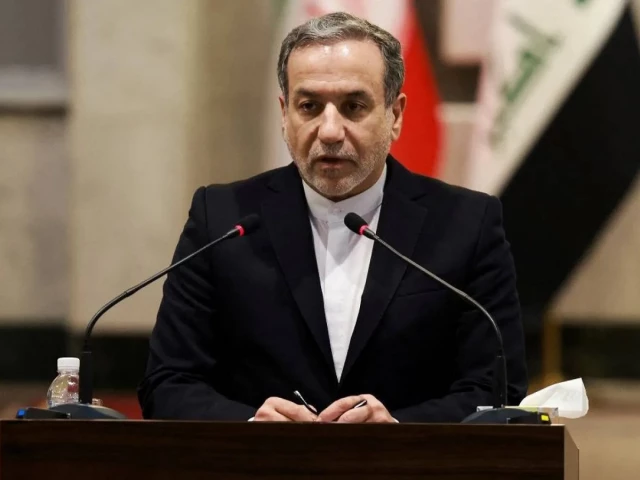

Iranian Foreign Minister Abbas Araghchi backs regional security cooperation without foreign military forces as Washington maintains military pressure while pursuing a possible diplomatic settlement with Tehran.
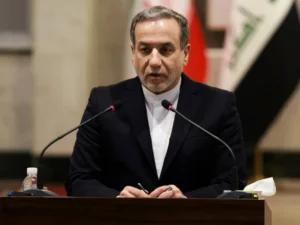
WASHINGTON/ISLAMABAD: Iranian Foreign Minister Abbas Araghchi has said Iran has no hostility towards Gulf Cooperation Council (GCC) countries and remains committed to dialogue with Saudi Arabia, calling for regional security arrangements led by countries in the region without foreign military presence.
In a post on X on Tuesday, Araghchi praised the roles of Qatar and Oman in regional diplomacy and said Tehran wanted to strengthen cooperation with neighbouring Gulf states.
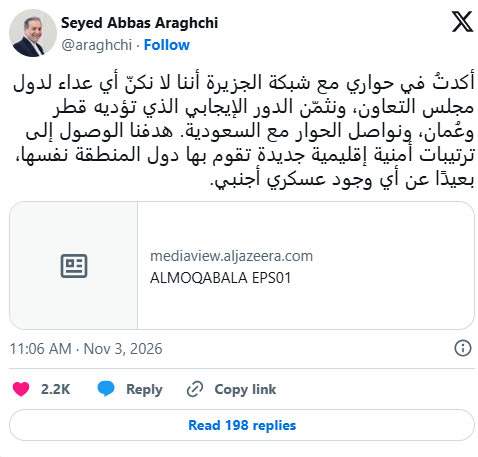
“In my interview with Al Jazeera, I affirmed that we harbour no hostility towards the countries of the Gulf Cooperation Council, and we appreciate the positive role played by Qatar and Oman, and we continue the dialogue with Saudi Arabia,” he wrote.
He added that Iran’s objective was to establish regional security arrangements managed by countries in the region themselves, without foreign military forces.
The statement came amid reports of US strikes on Iran’s Qeshm Island near the strategically important Strait of Hormuz, while US Vice President JD Vance expressed optimism about the possibility of reaching a negotiated settlement with Tehran.
Araghchi’s remarks also followed diplomatic efforts involving Qatar and Pakistan to advance a proposal aimed at restoring normal shipping through the Strait of Hormuz and creating conditions for wider negotiations between Iran and the United States. He told Al Jazeera that consultations with mediators had helped shorten the proposed implementation period for reopening the waterway.
US carries out strikes on Qeshm Island
US forces carried out limited strikes on Qeshm Island on Monday, according to US officials cited by Reuters and The Wall Street Journal.
One US official told Reuters that the operation did not amount to a resumption of major combat operations. Another said the strikes targeted Iranian forces using surface-to-air missiles against US assets.
The Wall Street Journal reported that Washington had conducted limited attacks on Iran in recent weeks, with an unnamed US official saying the campaign had been kept low-profile to avoid signalling preparations for a wider conflict.
Iran’s state news agency IRNA also reported several explosions on Qeshm Island on Monday. Fox News, citing officials, said the US strikes were defensive and followed Iranian fire targeting an American aircraft.
The Pentagon referred requests for comment to US Central Command (CENTCOM), which oversees American military operations in the Middle East. CENTCOM did not respond to requests for comment, Reuters reported.
Vance expresses hope for diplomatic settlement
The reported military action came as Vance told CNN that he and President Donald Trump remained hopeful of resolving the conflict through negotiations.
“The president and I both feel really good about the prospect of potentially coming to a negotiated settlement,” Vance said.
However, he described Iran as unpredictable and said Trump retained both “kinetic and non-kinetic” options. Vance added that the administration had not set a deadline for reaching a peace agreement.
Qeshm Island’s strategic importance
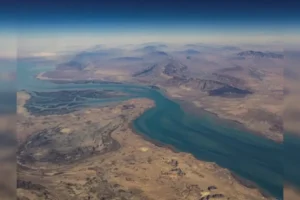
Qeshm, the largest island in the Persian Gulf, lies off Iran’s southern coast near the Strait of Hormuz, a major route for global energy shipments.
The island has been identified in reports as a potential military target because of Iranian military infrastructure, including reported underground facilities for anti-ship missiles, mines, drones and attack craft.
The latest reported strikes were described by US officials as defensive measures rather than a return to large-scale combat. However, the reports did not specify the extent of damage, the targets hit or possible casualties.
Earlier on Monday, Trump reiterated that preventing Iran from acquiring a nuclear weapon was the reason Washington had gone to war with Tehran.
“We’re not going to allow Iran ever to have a nuclear weapon. And they understand that,” Trump said, according to remarks published by the White House.
US Secretary of State Marco Rubio also said on Nov. 1 that Trump preferred a diplomatic resolution and wanted to avoid further military action, according to CNBC.
The developments highlight the parallel diplomatic and military approaches being pursued by Washington and Tehran as regional efforts continue to address tensions and restore normal maritime traffic through the Strait of Hormuz.
About The Author