
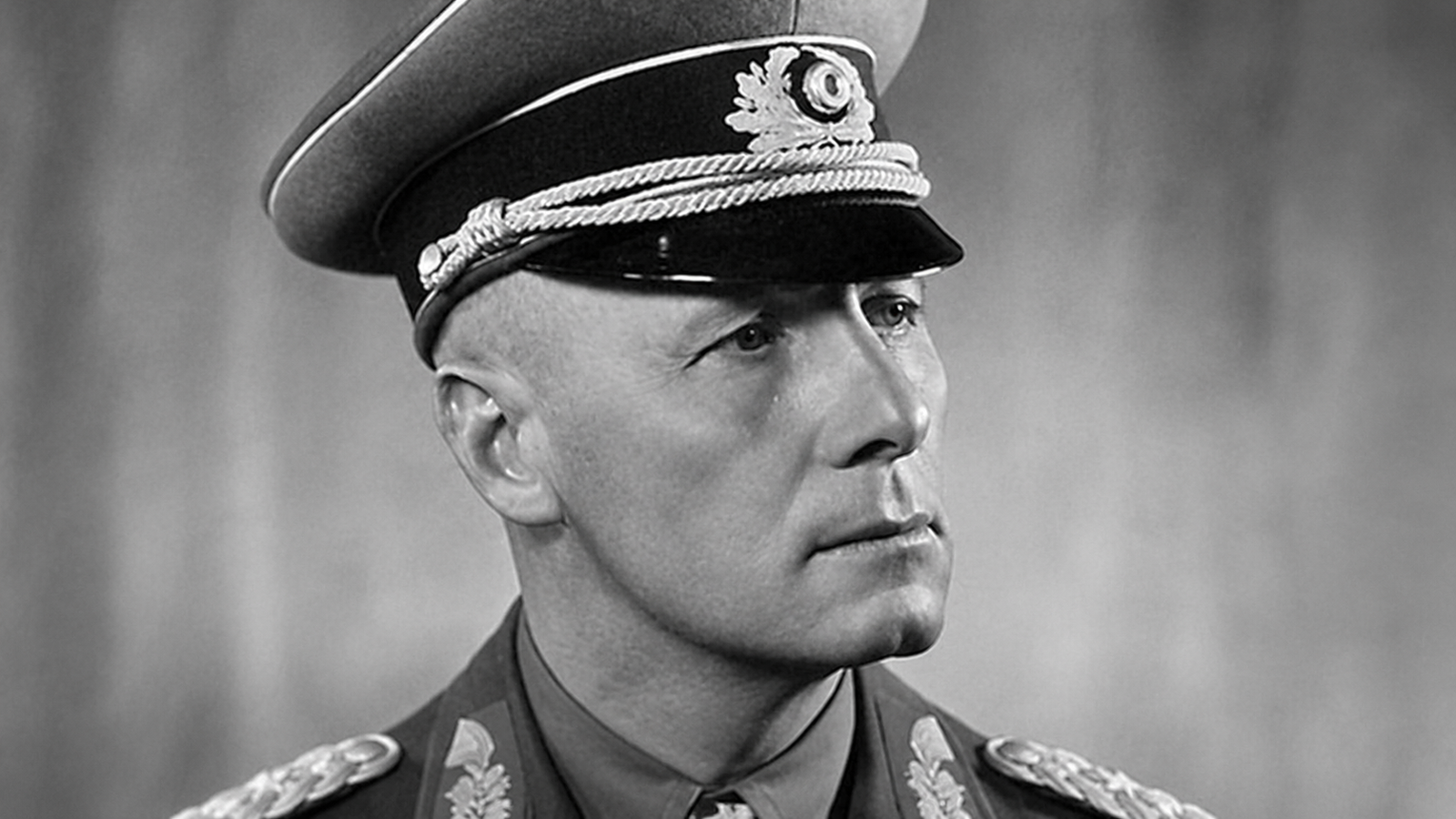

The German commander gained international recognition for his mobile tank warfare in North Africa before falling out of favour with Adolf Hitler during World War II.
News Article
HEIDENHEIM, Germany: Erwin Rommel, one of Nazi Germany’s best-known military commanders during World War II, earned international recognition for his armoured warfare tactics in North Africa, where his battlefield manoeuvres won him the nickname “Desert Fox.”
Born on Nov. 15, 1891, in Heidenheim, Württemberg, Germany, Rommel joined the German army in 1910 and served during World War I. His military career advanced further during World War II, when he commanded the 7th Panzer Division during Germany’s 1940 invasion of France.
In February 1941, Rommel was appointed commander of German forces in North Africa, where he led the Deutsches Afrikakorps. His rapid movements, surprise attacks and use of armoured formations brought him considerable attention during the campaign against British-led Allied forces.
Rommel achieved several early victories, including the capture of Tobruk in June 1942 following the Battle of Gazala. His aggressive battlefield tactics earned him the nickname “Desert Fox,” which became widely associated with his military reputation. He was promoted to field marshal that month.
However, the Axis position in North Africa deteriorated as Allied forces gained strength and German troops faced growing logistical difficulties. Following the defeat at the Second Battle of El Alamein in October 1942, Rommel’s forces retreated westward. Allied operations in North Africa eventually forced Germany and Italy to abandon the campaign in 1943, and Rommel was recalled to Europe.
His next major assignment involved preparing German coastal defences in northern France against an anticipated Allied invasion. Rommel played an important role in strengthening the Atlantic Wall, a defensive system designed to prevent Allied forces from landing in Western Europe.
He favoured positioning German armoured units close to the coast to confront an invasion immediately. However, disagreements within the German military command over how to deploy tank formations limited the implementation of his preferred strategy.
When Allied forces landed in Normandy on June 6, 1944, Germany failed to prevent the establishment of an Allied foothold in France. Rommel was seriously injured on July 17, 1944, when Allied aircraft attacked his staff car.
Meanwhile, his relationship with Adolf Hitler had deteriorated as he increasingly doubted Germany’s prospects of winning the war. Rommel also became associated with individuals involved in opposition to Hitler.
Following the failed July 20, 1944, assassination attempt against Hitler, investigators uncovered Rommel’s connections with members of the resistance. However, historical accounts indicate that his precise involvement remains disputed and that he was not a central organiser of the assassination attempt.
On Oct. 14, 1944, two German generals visited Rommel at his home and gave him a choice between facing a public trial and taking his own life. He chose suicide by taking cyanide.
The Nazi government subsequently presented his death as the result of injuries sustained during the war and arranged a state funeral with full military honours.
Rommel’s legacy remains a subject of historical debate. While his military tactics and battlefield reputation attracted admiration, historians have also examined his service under the Nazi regime, his relationship with Hitler and the extent of his knowledge of Nazi crimes.
His life remains closely associated with the military campaigns of World War II and the complicated history of Germany’s wartime leadership.
About The Author