

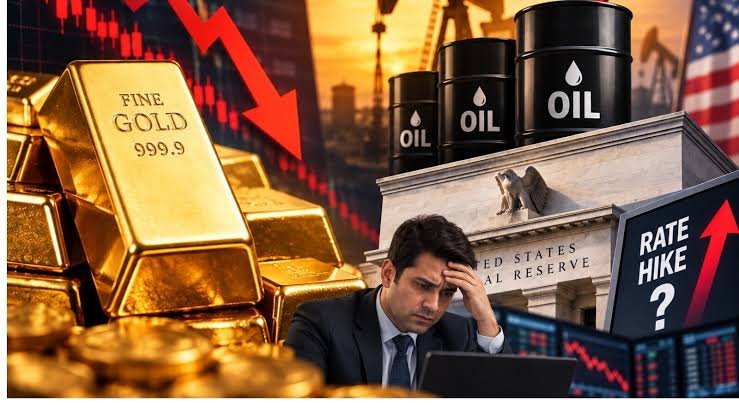

Gold prices face renewed pressure as rising oil costs, inflation fears and stronger bets on U.S. interest rate hikes weigh on demand.
Gold prices are facing renewed pressure as surging oil prices, inflation concerns and rising expectations of higher U.S. interest rates strengthen the dollar and Treasury yields.
According to Bloomberg, gold was trading near $4,300 per ounce after falling more than 1% in the previous session, pushing the precious metal to around a five-week low.
The biggest pressure on gold is currently coming from expectations about the U.S. Federal Reserve’s interest rate path. Rising risks to oil transportation and supply in the Middle East have pushed crude prices above $100 a barrel, raising concerns that higher energy costs could fuel global inflation.
Latest market data showed Brent crude at around $106.96 per barrel, while U.S. West Texas Intermediate was trading near $102.68. Higher oil prices have supported U.S. Treasury yields and the dollar, increasing pressure on non-yielding assets such as gold.
Market expectations have also shifted ahead of the Federal Reserve’s policy meeting scheduled for Sept. 15-16. According to Reuters, a majority of economists now expect a 25-basis-point rate increase, which could take the federal funds rate to a range of 3.75% to 4%.
The market is pricing in about a 93% probability of a rate increase, significantly higher than expectations several days earlier. Rising oil prices, inflationary pressures and stronger U.S. economic data have fueled expectations that the Federal Reserve could maintain a tighter monetary policy to contain inflation.
Higher interest rates are generally considered negative for gold because the precious metal does not pay regular interest or dividends. When interest rates and bond yields rise, investors may favor interest-bearing financial assets, potentially reducing demand for gold.
The U.S. dollar has also strengthened. Reuters reported that the dollar moved close to a two-week high as higher oil prices and rising Treasury yields provided support. The 10-year U.S. Treasury yield also moved above 5%.
The current market environment presents an unusual contrast for gold. Geopolitical tensions in the Middle East would normally support the precious metal because investors often turn to it as a safe-haven asset. However, concerns over oil supply disruptions have intensified inflation and interest-rate risks to such an extent that monetary policy concerns appear to be outweighing gold’s safe-haven appeal.
Investors are now closely watching the Federal Reserve’s decision and signals from its chairman about the future direction of monetary policy. A stronger indication of further rate increases could support the dollar and Treasury yields, putting additional pressure on gold. Conversely, signals of a softer policy stance could provide renewed support to the precious metal.
About The Author