

Pakistan’s Toshakhana Rules 2026 introduce stricter gift valuations, public auctions, independent audits and new restrictions on who can bid for official presents.
ISLAMABAD: Pakistan’s federal government has tightened regulations governing gifts received by public office holders, ending the previous concession that allowed officials to retain gifts worth up to $300 by paying their assessed market value under the earlier procedure.
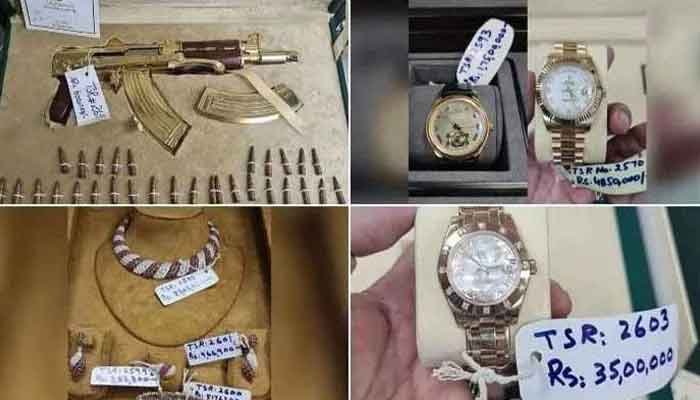
The Toshakhana (Management and Regulation) Rules, 2026, establish a revised framework for receiving, valuing, recording and disposing of gifts presented to government officials. The rules also retain exemptions from public auctions for certain antiques, historically significant items and gifts considered diplomatically or internationally sensitive.
Under the new framework, gifts that cannot be declined for diplomatic or cultural reasons must be deposited in the Toshakhana, the state repository for official gifts. Items eligible for disposal will generally be sold through open public auctions, while antiques and objects of historical or cultural importance will be excluded.
Other high-value gifts and presents considered diplomatically sensitive may also be exempted from auction. Decisions on these exemptions will be made by a committee headed by the cabinet secretary, with senior representatives from the Finance, Foreign Affairs, Law and Culture divisions serving as members.
However, exemption from auction does not automatically give the original recipient the right to retain a gift for personal use. The committee’s classification decisions will determine which items enter the auction process and which qualify for exemptions.
The previous Toshakhana procedure, introduced in 2023, also restricted the private retention of gifts valued above $300, making them state property. It excluded antiques and items with intrinsic historical value from the retention concession and provided for periodic public auctions of gifts unsuitable for retention, donation or official display.
The 2026 rules introduce stricter valuation requirements to improve accountability. The Federal Board of Revenue and an independent private-sector evaluator will assess each gift’s market value. If their assessments differ by more than 25%, a third evaluator will be appointed.
Valuations older than three months cannot be used to determine an auction’s reserve price. The reserve price must also be no lower than the gift’s assessed market value.
To strengthen transparency, the rules require open auctions and prohibit public office holders and their family members from participating in the bidding process. Auctions will also be subject to live media coverage.
Details of gifts, including assessed values, reserve prices and final auction prices, will be published on an online portal updated monthly. However, the identities and countries of the dignitaries who presented the gifts will not be disclosed on the portal.
The framework also requires annual third-party audits of gifts received and disposed of through the Toshakhana. Revenue generated through auctions will be deposited into a separate account dedicated to supporting primary education for girls in the country’s least-developed areas.
The effectiveness of the revised system will depend on consistent application of the exemption criteria, transparent handling of gifts kept outside the auction process and proper public accounting of state assets.
About The Author