
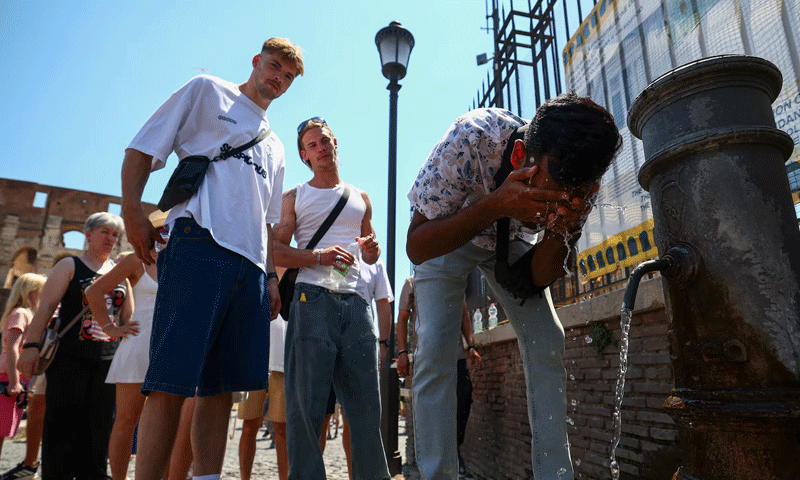

Record-breaking temperatures across Europe have claimed hundreds of lives, disrupted transport and power systems, and intensified warnings that climate change is making extreme heat a recurring crisis.
PARIS: Europe remains in the grip of a historic heatwave as France warned that the number of heat-related deaths could rise beyond the nearly 1,000 excess fatalities already reported. Health officials said most victims were elderly people, while additional deaths in care homes and private residences are still being assessed.
The extreme weather, which began on June 20, has pushed temperatures to around 40°C across several European countries. Scientists describe it as the most severe heatwave ever recorded on the continent, overwhelming healthcare services, disrupting transportation and electricity supplies, and damaging critical infrastructure.
World Health Organization Director-General Tedros Adhanom Ghebreyesus said nearly 150 million people are currently exposed to dangerous heat conditions. He warned that climate change has turned once-rare heatwaves into almost annual events, while many European homes, schools and workplaces remain poorly prepared for prolonged extreme temperatures.
Climate experts said the event would have been virtually impossible without human-caused climate change, noting that exceptionally hot nights are now around 100 times more likely than they were two decades ago.
The heat has also disrupted daily life across Europe. Germany reduced rail services in parts of North Rhine-Westphalia, while tram operations were suspended in Leipzig. Austria, Poland and the Czech Republic recorded new temperature highs, and thunderstorms triggered transport disruptions and power outages in parts of France.
Europe’s waterways have also suffered. Hungary’s Paks nuclear power plant reduced electricity output after the Danube River became too warm for cooling, while Italy’s Po River reached critically low levels, threatening agriculture and wetlands as seawater pushed nearly 18 kilometres inland.
Authorities also reported dozens of drowning incidents involving people attempting to escape the heat in rivers and lakes. In Italy, rescue teams continued searching for the husband of cabinet minister Eugenia Roccella after he disappeared while swimming in Lake Vico.
About The Author