

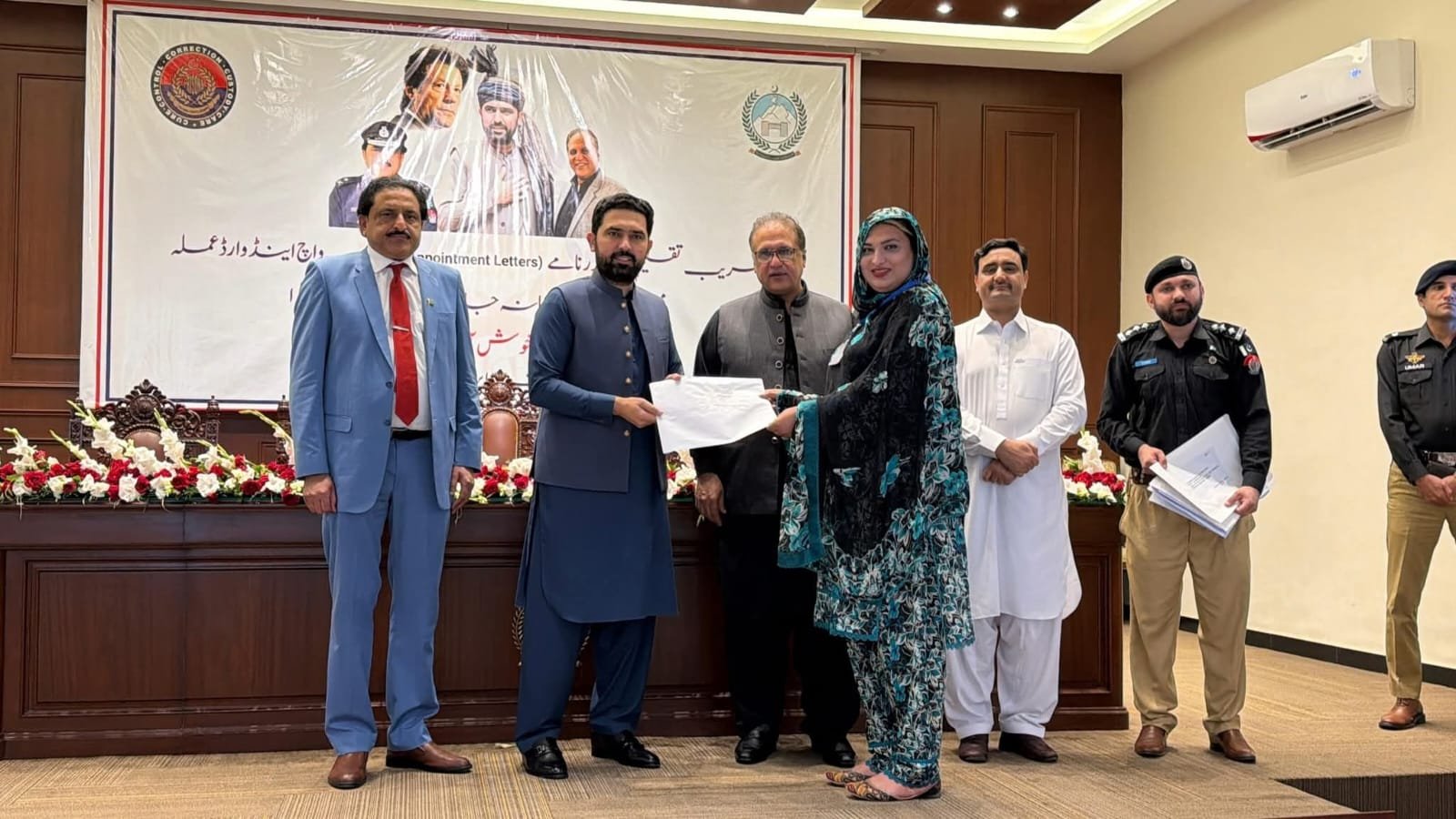

Appointment of Sobia Khan as jail warden in Khyber Pakhtunkhwa is being hailed as a milestone for social inclusion and equal opportunity in public institutions
PESHAWAR: In a landmark development reflecting growing social inclusion in Pakistan, Sobia Khan, also known as “Bebo,” has been appointed as a warden in the Khyber Pakhtunkhwa Prisons Department, becoming the first transgender individual to serve in such a role within the institution.
Officials confirmed that the appointment marks a significant milestone for the Khyber Pakhtunkhwa Prisons Department, highlighting efforts to provide equal employment opportunities across all segments of society, including the transgender community.
The decision has been widely described as a progressive step toward social inclusion, particularly in a province where members of the transgender community have long faced challenges related to identity recognition, employment access, and social acceptance.
Community representatives and social activists have welcomed the appointment, calling it a positive signal for broader institutional change. They argue that such decisions can help restore confidence among marginalized groups and encourage their participation in public sector roles.
According to observers, Sobia Khan’s appointment is not only a personal achievement but also a symbolic moment for the transgender community, representing the possibility of breaking long-standing barriers in government service.
Speaking on the development, representatives from civil society organizations praised senior officials of the provincial administration, including the Chief Minister, Home Department, and prison authorities, for supporting the inclusion initiative and facilitating the appointment process.
Social commentators note that this step aligns with broader discussions on equality and representation in Pakistan’s public institutions. They suggest that sustained implementation of inclusive policies could improve social cohesion and reduce discrimination over time.
The appointment is also being viewed as part of a gradual shift in policy approaches that aim to integrate transgender individuals into mainstream employment sectors, offering them dignity, stability, and professional recognition.
Analysts emphasize that while this is a significant milestone, continued efforts will be necessary to ensure that such opportunities are expanded across other departments and regions.
Overall, the development is being celebrated as a symbolic breakthrough, reinforcing the idea that institutional barriers can be addressed through deliberate policy action and inclusive governance.
About The Author