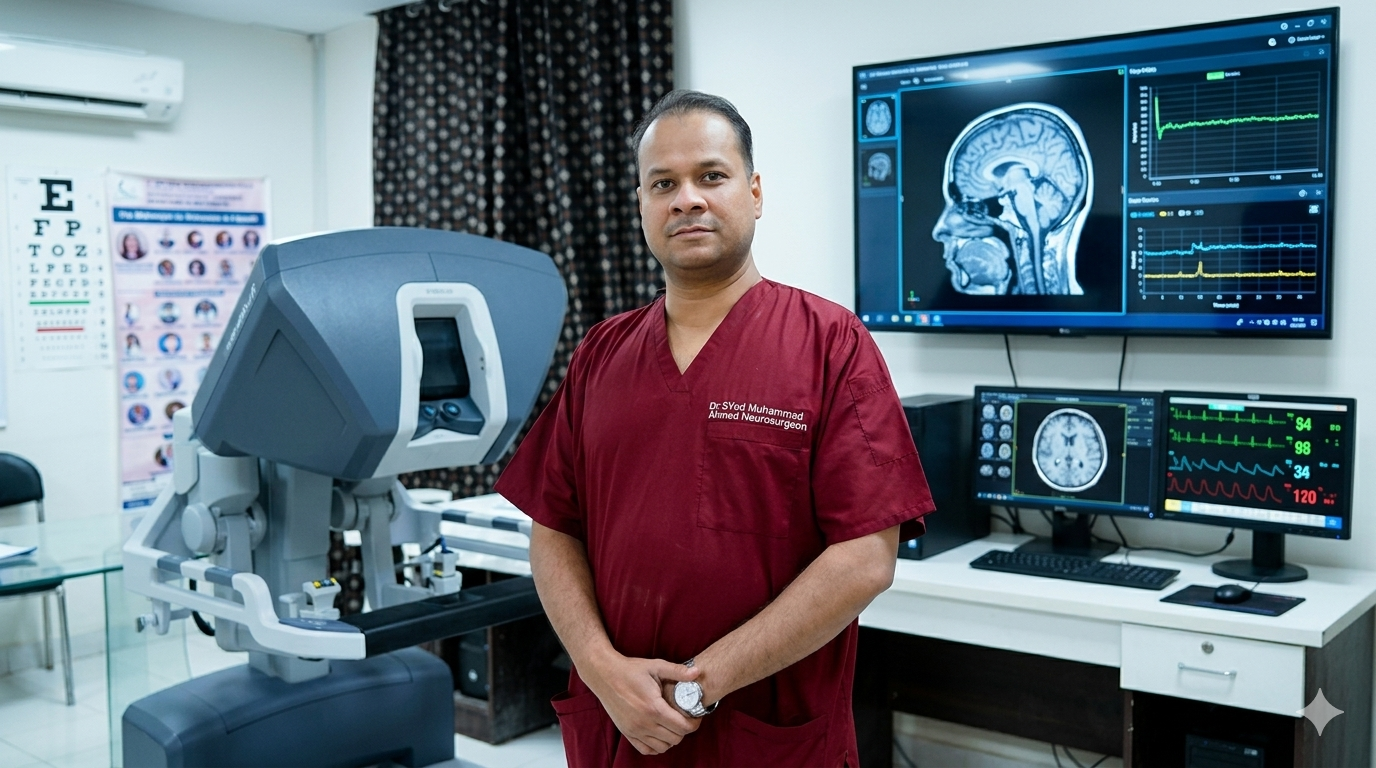

A multidisciplinary medical team at Nishtar Hospital successfully removes a wooden fragment lodged from a patient’s eye into his brain, showcasing advanced surgical expertise in Pakistan’s public healthcare system.
MULTAN: In a rare and high-stakes medical emergency, doctors at Nishtar Hospital performed a complex surgery to save the life of a 20-year-old man after a wooden fragment penetrated his eye and reached his brain in a traffic accident.
According to hospital officials, the critically injured patient, identified as Muhammad Faheem, was rushed to the emergency department in a precarious condition. Medical examinations revealed that a nearly five-inch piece of wood had entered through his eye socket and extended deep into the brain, a scenario described by experts as both life-threatening and extremely delicate.
Recognizing the severity of the case, Principal of Nishtar Medical College Professor Dr. Rashid Qamar Rao immediately constituted a specialized team from the ophthalmology department to assist in the operation. Simultaneously, the head of neurosurgery, Professor Dr. Liaqat Jalal, assigned a team led by senior neurosurgeon Dr. Ahmad Shah to undertake the intricate procedure.
The hours-long surgery required precise coordination between neurosurgeons and ophthalmologists. During the operation, Dr. Ahmad Shah, along with Dr. Abdullah Umar and their team, carefully extracted the wooden fragment without causing damage to critical structures of the eye or brain, a feat that significantly reduced the risk of permanent disability or death.
Hospital spokespersons confirmed that Professor Rao remained actively involved throughout the procedure, guiding the ophthalmology team to ensure the patient’s vision was preserved as much as possible. The successful removal of the object without neurological compromise marked a major clinical achievement.
Following the operation, Vice Chancellor of Nishtar Medical University Professor Dr. Mehnaz Khakwani and Medical Superintendent Dr. Rao Amjad Ali Khan congratulated the surgical teams, calling the procedure a testament to the hospital’s growing medical capabilities.
Officials emphasized that the case highlights the importance of rapid emergency response, interdisciplinary collaboration, and advanced surgical expertise within Pakistan’s public healthcare system. Medical experts note that such injuries often result in fatal outcomes or severe disabilities, making this successful intervention particularly significant.
The patient is currently under close observation, with doctors expressing cautious optimism about his recovery.
About The Author