

As Pakistan’s dairy sector struggles under a heavy tax regime, US officials highlight investment opportunities abroad while warning of bureaucratic hurdles at home.
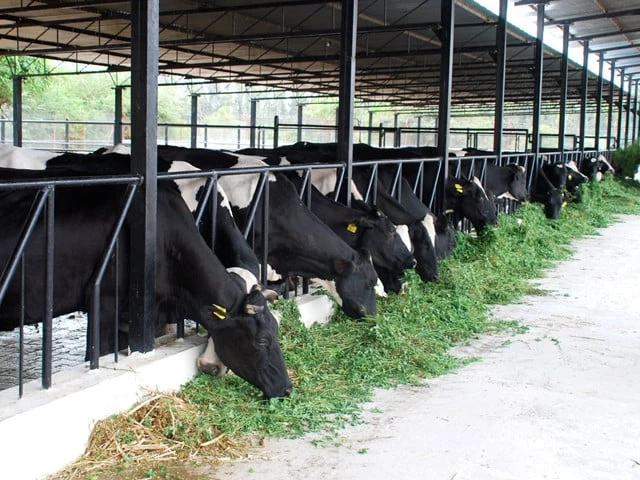
ISLAMABAD: Pakistan’s dairy sector has intensified pressure on the government to reduce the standard sales tax from 18% to 10%, warning that the current taxation structure is stifling growth and complicating business operations across the supply chain.
Industry stakeholders argue that the cumulative tax burden has surged to nearly 25%, factoring in additional levies imposed on transactions involving unregistered retailers. These include a 4% further tax and a 2.5% withholding tax, which companies say unfairly penalize documented businesses while failing to bring informal players into the tax net.
To address the issue, dairy companies have proposed shifting to a taxation model under the Third Schedule, where sales tax is applied on printed retail prices. This approach, already used for fast-moving consumer goods worth over Rs2.5 trillion, is seen as a way to reduce tax evasion by making pricing transparent and limiting manipulation through supply chain practices such as transfer pricing and undervaluation.
However, if the government does not adopt the printed price mechanism, the industry is pushing for a direct reduction in the sales tax rate to 10%. Companies say such a move would ease financial pressure, improve compliance, and support long-term sectoral growth.
The debate comes as Pakistan remains bound by commitments with the International Monetary Fund (IMF), restricting its ability to lower taxes without identifying alternative revenue streams. This constraint makes structural changes, rather than outright tax cuts, a more likely path forward.
Compounding domestic challenges, US officials have encouraged Pakistani firms to explore investment opportunities through the SelectUSA Investment Summit, scheduled to take place in Maryland from May 3 to 6, 2026. The event, a flagship initiative to attract foreign direct investment, is expected to draw thousands of global participants and facilitate hundreds of billions of dollars in business deals.
Despite the opportunity, US embassy officials noted that Pakistani companies face significant hurdles in investing abroad due to complex documentation requirements and lengthy approval processes. These bureaucratic barriers, coupled with high domestic taxes, rising energy costs, and regulatory delays, are cited as key deterrents to both local expansion and international investment.
The dairy sector, which has faced sustained financial pressure over the past four years, warns that without timely intervention, the existing tax regime could further erode profitability and discourage formalization. Industry leaders emphasize that simplifying the tax structure and reducing excessive levies are critical to improving the ease of doing business and ensuring sustainable growth.
About The Author