

A high-stakes diplomatic showdown between Donald Trump and Xi Jinping in Beijing ended Friday with competing narratives—Washington highlighting economic gains while Beijing issued stark warnings over global security flashpoints including Iran and Taiwan.
The talks, held during Trump’s first presidential visit to China since 2017, were framed by the U.S. leader as a moment of “fantastic” trade progress, even as underlying geopolitical tensions remained unresolved. Trump said both sides had reached “great for both countries” trade understandings, signaling momentum ahead of key domestic political battles back home.
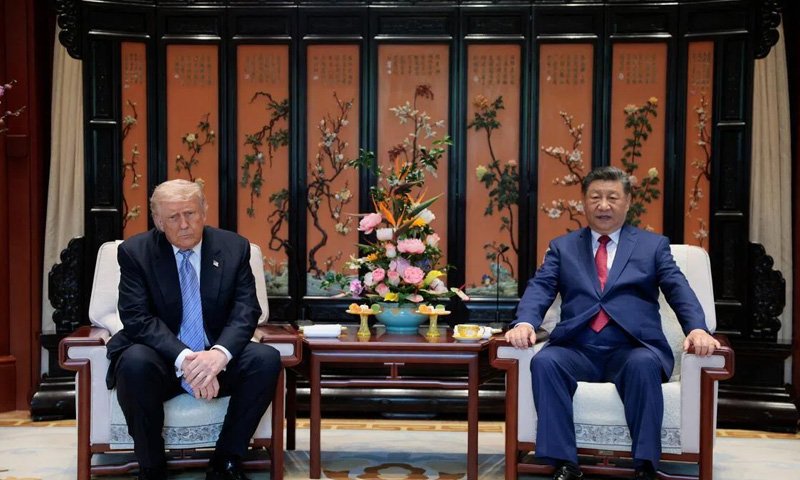
Xi, seated alongside Trump in the leadership compound at Zhongnanhai, maintained a more guarded tone. While state media highlighted cordial exchanges—including a walk through the compound gardens and symbolic hospitality at a state lunch—Chinese officials simultaneously escalated concerns over the Iran conflict, warning it could destabilize global energy markets and should not continue.
Beijing’s foreign ministry issued one of its most pointed statements of the summit, describing the ongoing Iran crisis as a preventable escalation with far-reaching consequences. Chinese officials emphasized support for diplomatic efforts to restore stability, reflecting Beijing’s broader strategy of positioning itself as a mediator in global conflicts while protecting its strategic partnerships.
Trade remained the centerpiece of the discussions. U.S. officials said agreements covered agricultural goods, beef, and energy sectors, with frameworks outlined for future trade coordination. Both sides also discussed identifying roughly $30 billion in non-sensitive goods for exchange. However, expectations of breakthroughs in advanced technology exports—particularly semiconductor-related items—fell short, with no deal announced on high-end AI chips.
Trump separately claimed China had agreed to purchase 200 Boeing aircraft, though the announcement fell below earlier market expectations. The news triggered a decline in Boeing shares, reflecting investor disappointment over the scale of commitments.
Analysts described the outcome as diplomatically stabilizing but economically underwhelming, suggesting the summit reinforced an existing trade truce rather than producing transformative agreements. The fragile arrangement, which had eased tariffs and export restrictions on both sides, remains set for review later this year.
Security tensions surfaced prominently during the talks, particularly over Taiwan. Xi warned that mishandling the issue could risk confrontation, underscoring one of the most sensitive fault lines in U.S.-China relations. Washington reiterated its longstanding position that its Taiwan policy remains unchanged, with officials emphasizing continued defensive support obligations.
U.S. Secretary of State Marco Rubio said Trump also raised the case of imprisoned Hong Kong media tycoon Jimmy Lai, signaling continued U.S. pressure on human rights issues despite broader economic engagement. Beijing has consistently rejected external involvement in its judicial affairs.
Despite the ceremonial warmth—symbolic gestures, curated hospitality, and carefully staged public appearances—the summit underscored a familiar reality: limited economic progress paired with deep strategic mistrust. Both leaders signaled interest in maintaining communication channels, but key disputes over trade technology, regional security, and political sovereignty remain unresolved.
About The Author