
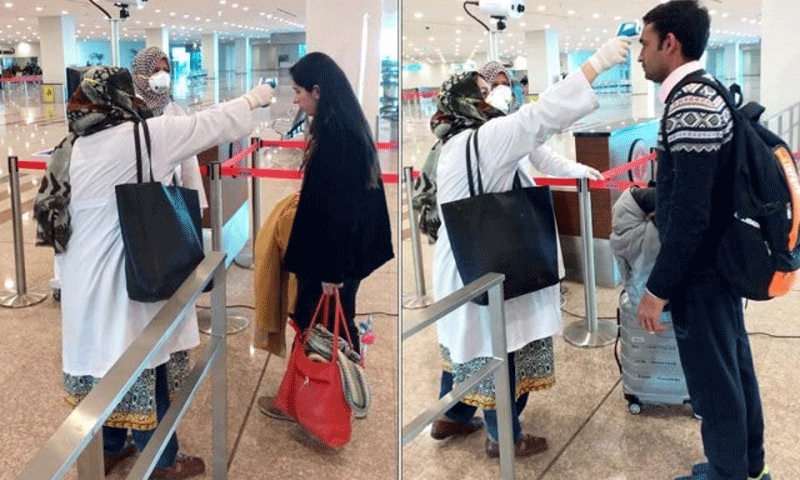

ISLAMABAD: Pakistan has stepped up health surveillance and tightened screening protocols at all international airports after the World Health Organization (WHO) declared the worsening Ebola outbreak in parts of Africa a global health emergency, raising concerns over the potential international spread of the deadly virus.
The emergency measures were introduced on the directives of Federal Health Minister Mustafa Kamal, who ordered civil aviation and border health authorities to immediately strengthen precautionary checks for incoming international passengers. The move aims to protect Pakistan from any possible transmission of the Ebola virus as the outbreak intensifies in the Democratic Republic of Congo and Uganda.
According to officials from the Ministry of National Health Services, Regulations and Coordination, the current Ebola outbreak remains confined to the African continent, with no confirmed cases reported outside Africa during this phase of the crisis.
Health authorities stressed that Pakistan currently faces a very low risk due to the limited number of direct flights and relatively low travel volume between Pakistan and the affected African regions. Officials also highlighted that the country has never reported a confirmed Ebola case in its history.
Despite the low immediate threat, the government has opted for a preventive strategy aligned with WHO recommendations, focusing on enhanced surveillance rather than waiting for the virus to pose a direct danger domestically.
The National Institute of Health (NIH) has been placed on high alert and is maintaining continuous coordination with international health agencies to closely monitor developments related to the outbreak in East and Central Africa.
Provincial health departments and border health services across the country have also been instructed to review emergency preparedness plans and remain vigilant for any suspected cases.
Officials further reassured the public that Pakistan possesses the laboratory infrastructure necessary to rapidly diagnose Ebola infections if required. Isolation facilities, emergency response mechanisms, and medical countermeasures are reportedly fully operational in preparation for any potential health emergency.
Meanwhile, citizens planning to travel to African countries have been advised to carefully follow international health advisories and adopt all recommended precautionary measures before departure.
The Ebola virus is considered one of the world’s deadliest infectious diseases, often causing severe fever, internal bleeding, and organ failure. Past outbreaks in Africa have resulted in thousands of deaths, prompting global health agencies to maintain strict monitoring whenever new clusters emerge.
About The Author