
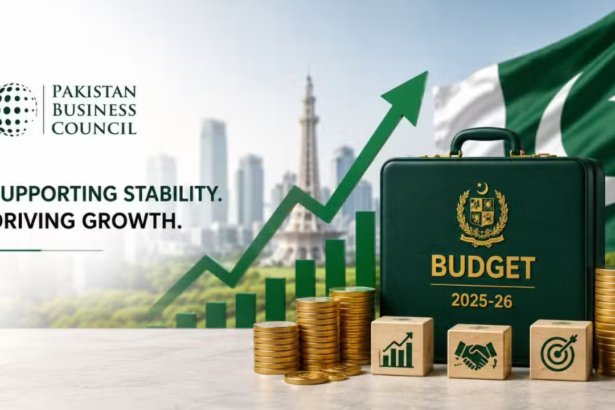

Pakistan Business Council welcomes key relief measures in the federal budget while emphasizing tax reforms, energy sector improvements, and policy consistency to sustain long-term economic growth.
KARACHI: The Pakistan Business Council (PBC) has welcomed the Federal Budget 2026-27, describing it as a constructive step toward economic stability and sustainable growth, while urging the government to maintain momentum on structural reforms critical for long-term prosperity.
In its official response, the PBC praised several business-friendly initiatives announced in the budget, stating that they reflect a stronger focus on economic expansion, investment promotion, and support for productive sectors despite ongoing fiscal challenges.
PBC Chairperson Dr. Zeelaf Munir said the budget signals a shift toward long-term economic development and contains meaningful relief measures for both businesses and citizens. However, she emphasized that the measures should be viewed as the starting point of a broader reform agenda rather than a final achievement. She stressed that policy continuity and consistency will remain essential for maintaining investor confidence and economic progress.
The council particularly welcomed reductions in the tax burden on exporters, relief for salaried individuals, and revisions to the Super Tax framework. PBC Chief Executive Officer Javed Kureishi noted that these measures address several long-standing concerns of the business community and indicate improved engagement between policymakers and formal-sector stakeholders.
Kureishi also acknowledged the efforts of Prime Minister Shehbaz Sharif and the government’s economic team in preparing the budget, expressing optimism that cooperation between the public and private sectors would continue throughout the implementation process.
While appreciating the announced measures, the PBC highlighted the need to broaden the tax base by integrating untaxed and under-taxed sectors into the formal economy. The council further called for accelerated energy sector reforms to reduce industrial electricity costs, faster privatization of loss-making state-owned enterprises, and the introduction of a multi-year reform framework to provide greater certainty for investors.
About The Author