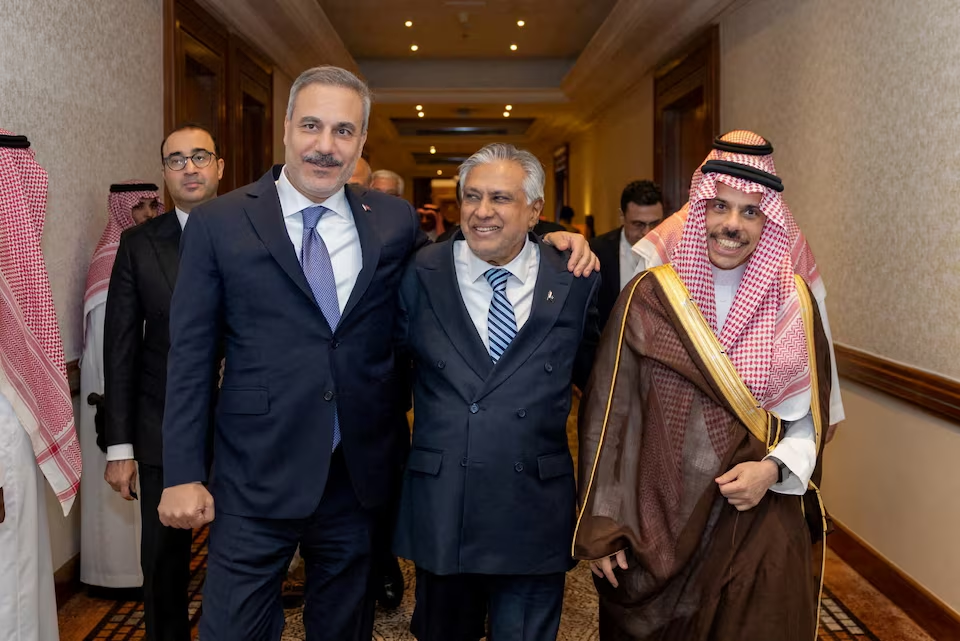

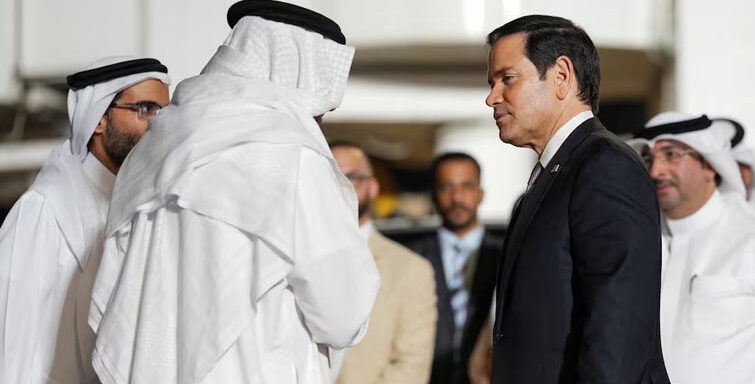

US Secretary of State Marco Rubio concludes a high-stakes Gulf tour in Bahrain as regional allies seek clarity on Washington’s proposed peace framework with Iran.
The Trump administration’s emerging Iran peace framework is facing growing skepticism across the Gulf as US Secretary of State Marco Rubio arrived in Manama on Wednesday to conclude a whirlwind diplomatic tour aimed at reassuring America’s closest regional partners.
Rubio’s visit to Bahrain, home to the US Navy’s Fifth Fleet, follows stops in the United Arab Emirates and Kuwait. The trip comes amid mounting concerns that Washington’s efforts to normalize relations with Iran could shift the region’s delicate security balance.
Speaking before arriving in Bahrain, Rubio emphasized that the United States would not pursue any agreement that compromises the security of its long-standing allies. However, questions continue to surround the proposed framework, particularly after conflicting statements from US President Donald Trump and Iranian officials regarding nuclear inspection commitments.
The draft memorandum has also sparked debate over a reported $300 billion reconstruction fund. While the proposal suggests potential regional involvement, Rubio clarified that Gulf states are not currently being asked to provide financial support.
Security experts remain concerned that the agreement does not address Iran’s ballistic missile program and leaves unresolved questions about Tehran’s influence over the strategically vital Strait of Hormuz, a key artery for global energy supplies.
For the six-member Gulf Cooperation Council—comprising Saudi Arabia, the UAE, Qatar, Oman, Kuwait, and Bahrain—the stakes are significant. Several Gulf nations recently provided logistical support to US operations and reportedly faced direct threats from Iran during regional tensions.
About The Author