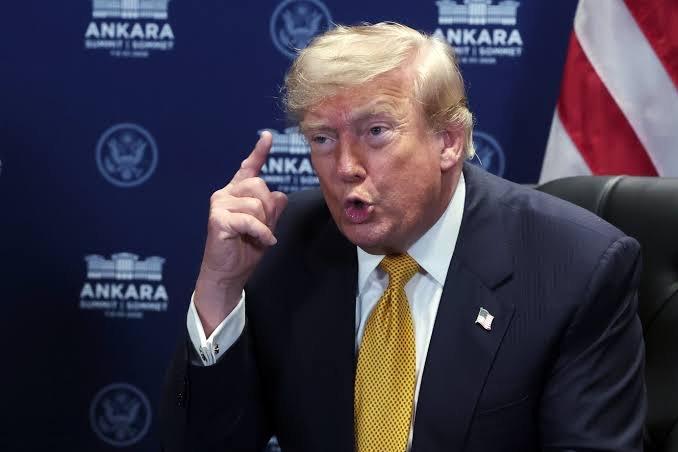

Trump says limited negotiations with Iran are underway as Washington weighs diplomacy, economic pressure and the risks of further military escalation.
WASHINGTON: US President Donald Trump says limited negotiations with Iran are underway, signaling that Washington is currently favoring diplomatic and economic pressure rather than immediately pursuing another major military escalation.
Trump’s remarks come as tensions between the United States and Iran remain high and international attention focuses on efforts to prevent the confrontation from widening. Reports have also pointed to diplomatic contacts involving Iran and Oman, although no final agreement has been announced.
Trump said Washington was maintaining a relatively low profile while engaging in what he described as limited negotiations with Tehran. He also pointed to Iran’s economic difficulties, arguing that financial pressure remains an important part of the US strategy.
The president has repeatedly linked economic pressure with his broader approach to Iran, while suggesting that negotiations could eventually provide a path toward resolving the dispute. He characterized the confrontation as a complex strategic contest and compared it to a game of chess.
The diplomatic developments are also being closely watched by global energy markets. The Strait of Hormuz remains a critical route for international oil shipments, meaning any escalation that threatens shipping could have consequences for crude prices and energy supplies.
Conversely, meaningful progress in negotiations could ease concerns over disruptions and potentially reduce pressure on energy markets. Investors are therefore monitoring diplomatic signals alongside developments involving the US, Iran and regional partners.
Iran-Oman contacts have reportedly focused on efforts to address the wider dispute, but important differences remain unresolved. The extent and nature of direct US-Iran negotiations have also not been uniformly confirmed by all parties.
For Washington, the challenge is to maintain pressure on Tehran while avoiding a wider conflict that could carry significant military, economic and geopolitical costs. For Iran, continued economic pressure and regional tensions add to the importance of any potential diplomatic opening.
About The Author