
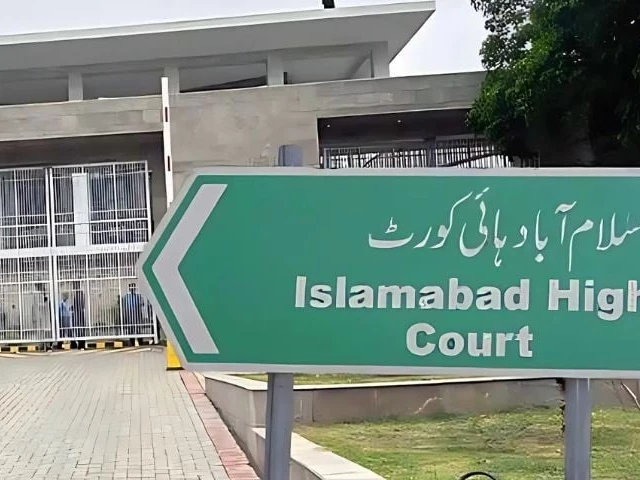

IHC Chief Justice Sarfraz Dogar says a sharp increase in daily case filings reflects growing public confidence in the judiciary and access to justice.
ISLAMABAD: Public reliance on the judiciary has increased significantly, with the Islamabad High Court now receiving around 250 cases a day compared with fewer than 50 in the past, Chief Justice Sarfraz Dogar said during an Independence Day ceremony.
Addressing the gathering at the Islamabad High Court, Dogar said the nearly fivefold increase in case filings was an important indicator of growing public confidence in the high court and district courts. He said the rising number of litigants suggested that citizens were increasingly looking to the legal system to resolve disputes and seek relief.
The chief justice acknowledged that the judiciary continues to face major challenges, including a shortage of judges. Despite these constraints, he said courts were carrying out their responsibilities with dedication and remained committed to providing justice.
Dogar stressed that every deserving person should receive justice through a process that is fair, impartial and transparent. He also emphasized the importance of cooperation between judges and lawyers, describing the bench and bar as two essential pillars of the judicial system.
According to the chief justice, stronger coordination between the two sides is necessary to improve the administration of justice and ensure that citizens receive timely relief.
Call for Unity and Stability
Speaking about Pakistan’s future, Dogar said maintaining the country’s stability and protecting its institutions was a collective responsibility. He urged citizens to reject conflict, disorder, extremism and politics driven by hatred.
He said national progress required sincerity, mutual respect, unity and constructive contributions from all sections of society.
The chief justice also highlighted what he described as Pakistan’s diplomatic and defence achievements over the past two years. He said effective diplomatic engagement had strengthened the country’s international position and contributed to Pakistan emerging as an important voice for peace.
Dogar particularly referred to growing defence cooperation among Muslim countries, calling efforts to establish a common platform for cooperation a historic development. He linked the broader idea of Muslim unity and cooperation to the vision previously advocated by former prime minister Zulfikar Ali Bhutto.
Rule of Law and Institutional Confidence
Dogar said national institutions have a critical role in strengthening Pakistan and maintaining public confidence. He emphasized that institutions must operate within constitutional principles, uphold the rule of law and serve national interests.
He concluded with a call for greater tolerance, unity and mutual respect, saying Pakistan’s progress depended on institutions and citizens working together to promote justice, stability, peace and development.
About The Author