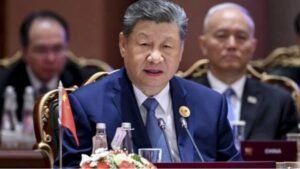

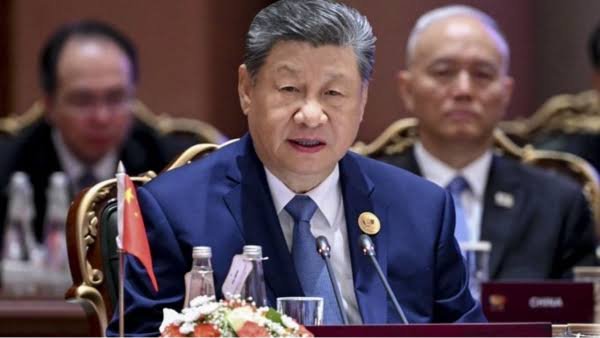

Chinese President Xi Jinping’s absence from a vegetarian BRICS dinner hosted by Prime Minister Narendra Modi has sparked debate online, although Indian officials attributed it to travel fatigue.
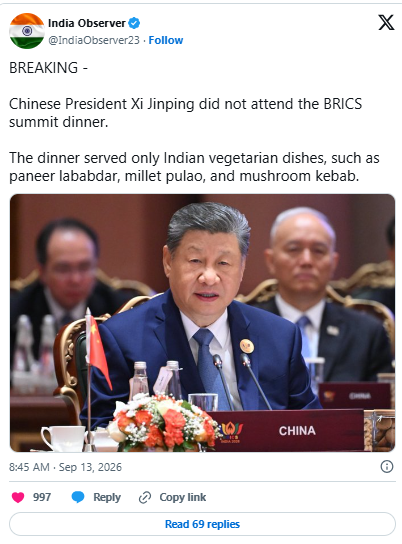
Chinese President Xi Jinping’s absence from a vegetarian dinner hosted by Indian Prime Minister Narendra Modi during the BRICS summit has sparked debate on social media, with questions raised over the menu and India’s approach to diplomatic hospitality.
The dinner, hosted by Modi on Sept. 12, featured an entirely vegetarian menu, including paneer lababdar, millet pulao and mushroom kebabs. No meat, fish or egg-based dishes were reportedly served at the table prepared for the visiting leaders.
Xi did not attend the dinner, prompting speculation on social media about whether the menu had played a role in his absence. Some viral posts went further, claiming without evidence that the Chinese president’s convoy had turned back near the Taj Palace so he could eat mutton karahi and chapli paratha.
There is no verified evidence presented in the information available to support that claim.
Reason for Xi’s absence
Indian media reports sought to clarify that Xi’s absence was not linked to the vegetarian menu. According to the explanation cited in the reports, the Chinese president was tired after a long flight and a demanding first day of engagements.
His schedule included the main BRICS summit and a bilateral meeting with Modi, adding to the day’s workload.
Russian President Vladimir Putin and other BRICS leaders, federal ministers and several chief ministers attended the dinner.
The episode has nevertheless revived discussion about food and cultural diplomacy at major international gatherings. Menus served at official diplomatic events can carry cultural and symbolic significance, while also requiring hosts to consider the dietary preferences of international guests.
India’s decision to serve a vegetarian menu was described in the supplied information as part of its cultural branding and soft-power approach. Some commentators also linked the choice to the religious and political positioning associated with Modi’s government. Such interpretations, however, are matters of opinion and should not be presented as established fact.
Diplomatic hospitality generally requires a balance between showcasing a host country’s culinary identity and ensuring that visiting delegations have suitable alternatives.
About The Author