

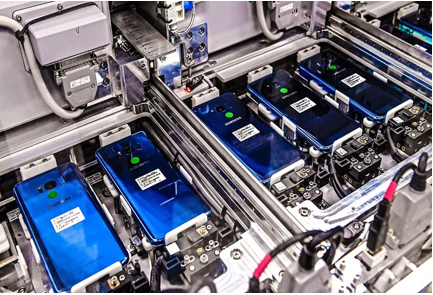

Pakistan’s local mobile phone assembly remained dominant in 2026, but a sharp August decline in 5G handset output highlights a growing industry gap.
Pakistan’s local mobile phone assembly industry produced 18.66 million handsets in the first eight months of 2026, far exceeding the 2.74 million phones imported through commercial channels during the same period, according to official data.
The figures show that locally assembled devices continue to account for the majority of phones entering the market. However, the data also highlights a significant weakness in 5G production, which fell sharply in August compared with the same month last year.
Local manufacturing and assembly plants produced 18.66 million handsets from January through August, representing about 87% of the combined total of locally assembled and commercially imported phones.
In comparison, local plants produced 30.21 million handsets throughout 2025, while commercial imports stood at 2.37 million. Local assembly therefore accounted for about 93% of the combined total last year.
The monthly pace, however, has slowed. Local plants averaged about 2.33 million handsets per month during the first eight months of 2026, compared with about 2.52 million per month in 2025, a decline of roughly 7%.
Commercial imports moved in the opposite direction. Monthly imports averaged about 340,000 units in 2026, compared with around 200,000 in 2025, an increase of roughly 70%.
The locally assembled total includes about 8 million smartphones and 11 million 2G phones, according to the official figures. The large share of 2G devices indicates that feature phones remain an important part of Pakistan’s mobile market.
Pakistan Telecommunication Authority data shows that smartphones account for 71% of mobile devices in use, while 2G handsets make up the remaining 29%.
The sharpest change came in 5G production. Pakistan assembled 134,501 5G-enabled handsets in August 2026, compared with 553,079 in August 2025. That represents a year-on-year decline of about 76%.
The available data does not identify a specific reason for the fall. Consumer demand, device prices, inventory levels and the timing of 5G service development could all affect production, but the figures alone do not establish a cause.
Meanwhile, Pakistan’s mobile phone import bill declined 8.85% in July-August of the current fiscal year to $274.129 million from $300.741 million a year earlier, according to the Pakistan Bureau of Statistics. In rupee terms, imports fell 10.53% to Rs76.267 billion from Rs85.245 billion.
Telecom equipment imports followed a different trend, rising 8.95% to $432.044 million during the same period.
About The Author