


Pakistani actor Imran Abbas highlights subtle yet impactful differences in Urdu pronunciation across borders, calling it a reflection of cultural diversity.
Pakistani actor Imran Abbas has shed light on an unexpected challenge he faced while working in India navigating subtle yet significant differences in Urdu pronunciation that led to on-set debates and linguistic adjustments.
Known for his extensive work in Pakistani television and films, Imran Abbas has also made notable appearances in Indian cinema. However, beyond the glamour of cross-border collaborations, the actor revealed that language variations posed an intriguing hurdle during his projects.

Speaking at the Jashn-e-Rekhta event hosted by Adeel Hashmi, Abbas recalled how differences in Urdu dialect between Pakistan and India became evident early in his Bollywood journey. He explained that certain sounds and pronunciations, particularly influenced by Hindi linguistic patterns, often created confusion.

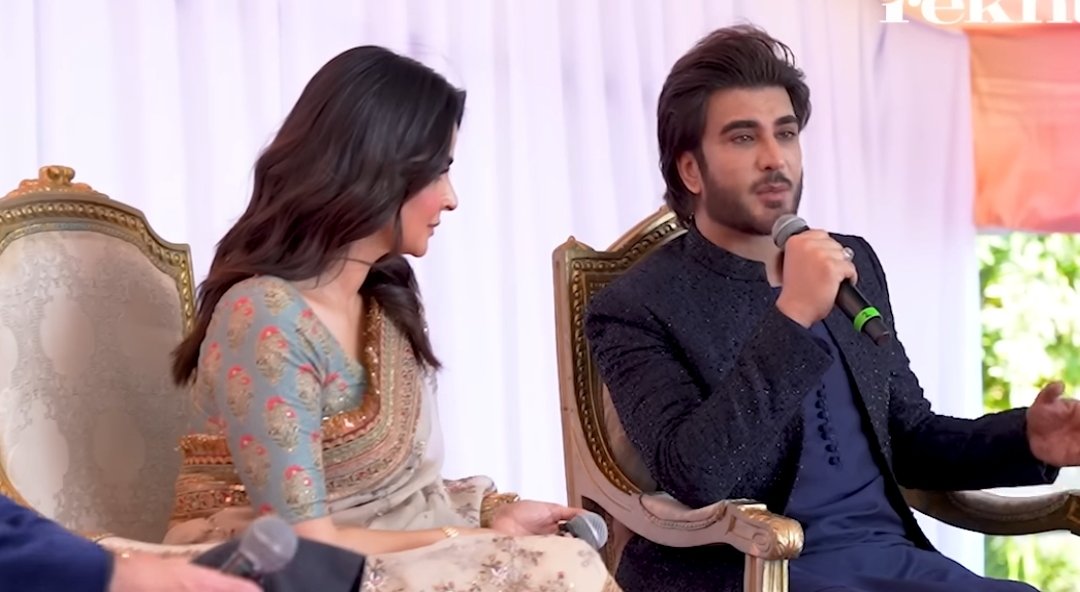

“One key difference was in the pronunciation of the Urdu alphabet ‘Khay’,” Abbas said. “In India, it is often pronounced closer to ‘Ki’ instead of ‘Kay’. During my first film, I was asked to adapt, but I insisted on maintaining the original pronunciation, which led to a discussion on set.”
He further elaborated on his experience while working alongside Indian actors, including during the filming of Ae Dil Hai Mushkil. According to Abbas, even simple words like “bewaqoof” became points of contention due to differing phonetic interpretations. “We would say ‘bewaqoof’, while they pronounced it ‘bewakhuf’. These were small but noticeable differences,” he added.
Despite these challenges, Abbas maintained a positive outlook, emphasizing that such variations are a natural reflection of regional diversity. He noted that language evolves differently across borders and should be appreciated rather than criticized.
The actor’s remarks have sparked conversations online, with many users acknowledging the nuanced distinctions between Urdu as spoken in Pakistan and its adaptation within India, often influenced by Hindi vocabulary and pronunciation.
Imran Abbas, who enjoys a strong fan following on social media, continues to bridge cultural gaps through his work, while also highlighting the richness and diversity embedded within shared linguistic traditions.
About The Author