

Preliminary Israeli election projections show Netanyahu’s bloc with 53 seats, while opposition and Arab parties could play a key role in determining the next government.
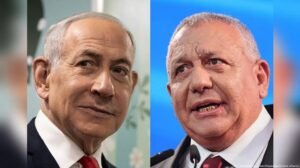
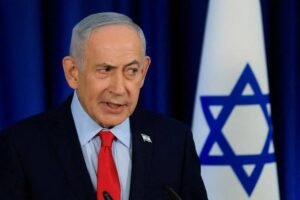
TEL AVIV: Israeli Prime Minister Benjamin Netanyahu faces uncertainty over his political future after preliminary election projections showed his alliance falling short of a majority in the 120-member Knesset, potentially leaving government formation dependent on negotiations among rival political groups.
With approximately 90% of votes counted, Netanyahu’s bloc was projected to win 53 seats, compared with 48 for opposition parties, according to figures reported Thursday. Arab political groups were expected to secure a combined 19 seats, potentially giving them an influential position in discussions over the formation of the next government.
Netanyahu’s Likud party remained the largest individual party in the reported projections, with 26 seats. However, its position alone would not guarantee another term in office, as a governing majority requires sufficient support from other parliamentary groups.
The Joint List was projected to win 12 seats, while the United Arab List was expected to secure seven. Despite their combined strength, cooperation between Arab parties and either of the main political blocs could face significant political obstacles.
Netanyahu’s hardline allies face projected losses
The preliminary figures also suggested setbacks for two prominent allies of Netanyahu: National Security Minister Itamar Ben-Gvir and Finance Minister Bezalel Smotrich.
Their parties, which have strongly supported Israel’s military operations in Gaza, previously held a combined 20 seats in parliament. The latest projections indicated that their total could fall to 13, potentially reducing their influence within Netanyahu’s political camp.
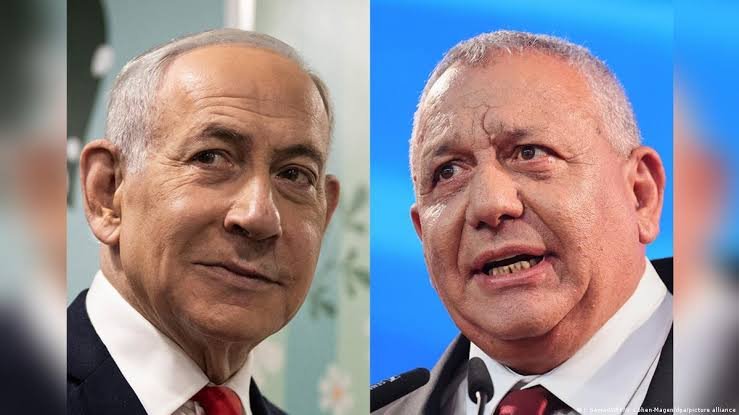
Meanwhile, former Israeli military chief Gadi Eisenkot’s new Yashar party was projected to win 21 seats, making it a significant force in the opposition camp.
Parties associated with opposition leader Yair Lapid and former Prime Minister Naftali Bennett were collectively expected to secure another 12 seats, according to the reported figures.
Opposition challenges Netanyahu’s leadership
Eisenkot claimed that voters had rejected Netanyahu, signalling the opposition’s intention to challenge the prime minister’s continued leadership.
He also warned Netanyahu against using the Israeli military for political purposes, highlighting tensions surrounding the election outcome.
However, the preliminary projections do not determine who will become prime minister. The final distribution of seats and subsequent negotiations between political parties will be crucial in deciding whether Netanyahu can form a government or whether rival groups can assemble an alternative coalition.
High turnout highlights Arab voters’ role
Voter turnout reportedly reached 78%, with Arab citizens of Israel participating in significant numbers. The reported results suggested that Arab political groups could hold greater influence during the post-election negotiations.
Israel uses a proportional representation system in which voters cast ballots for political parties rather than individual constituency candidates. Parliamentary seats are distributed according to parties’ share of the vote, making coalition negotiations central to government formation.
In 2021, former Prime Minister Naftali Bennett included an Arab party in his governing coalition, demonstrating that such cooperation is possible, although political challenges remain.
With final results still pending, the reported projections leave Netanyahu’s alliance short of a parliamentary majority. The outcome of coalition negotiations will determine whether he remains in power or opposition parties can establish an alternative government.
About The Author