
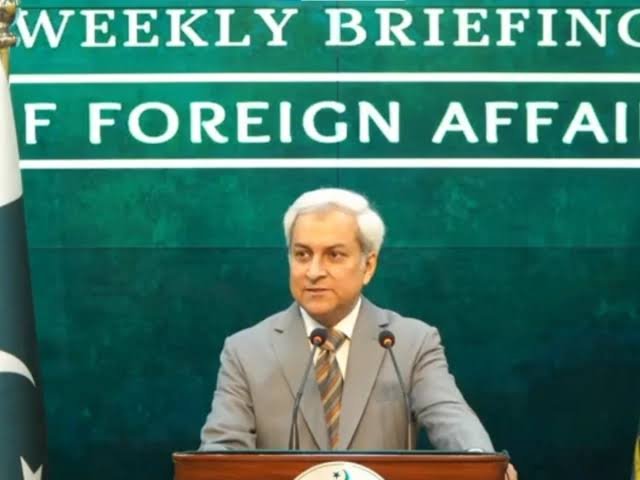

Foreign Office spokesperson Tahir Andrabi says Azad Jammu and Kashmir elections are being conducted transparently while reaffirming Pakistan’s stance on the Kashmir dispute.
ISLAMABAD: Pakistan’s Foreign Office on Thursday firmly rejected India’s criticism of the ongoing legislative elections in Azad Jammu and Kashmir (AJK), saying New Delhi lacks both the legal standing and moral authority to question the democratic process in the region.
Speaking at the weekly media briefing, Foreign Office spokesperson Tahir Andrabi described India’s remarks labeling the AJK elections a “farce” as baseless and politically motivated. He said the electoral process is being conducted under the constitutional and legal framework of Azad Jammu and Kashmir and reflects the democratic aspirations of its people.
According to Andrabi, the elections are taking place in a peaceful, transparent and orderly manner despite security challenges. He reiterated Pakistan’s commitment to ensuring free and fair elections across the territory.
The spokesperson said India’s criticism coincides with the observance of the seventh anniversary of New Delhi’s August 5, 2019 decision to revoke the special constitutional status of Indian Illegally Occupied Jammu and Kashmir (IIOJK). He maintained that those measures violated international law, relevant United Nations Security Council (UNSC) resolutions and India’s international commitments.
Reaffirming Pakistan’s longstanding position, Andrabi said Jammu and Kashmir remains an internationally recognized disputed territory whose final status should be decided through a UN-supervised plebiscite in accordance with relevant UNSC resolutions and the wishes of the Kashmiri people.
Responding to questions about recent Indian statements regarding Deputy Prime Minister and Foreign Minister Ishaq Dar’s remarks on Youm-e-Istehsal, Andrabi accused India of attempting to justify its policies in occupied Kashmir. He also alleged that continued security measures, demographic changes and restrictions on political freedoms have affected the region, while arguing that development initiatives cannot replace the Kashmiri people’s right to self-determination.
About The Author