
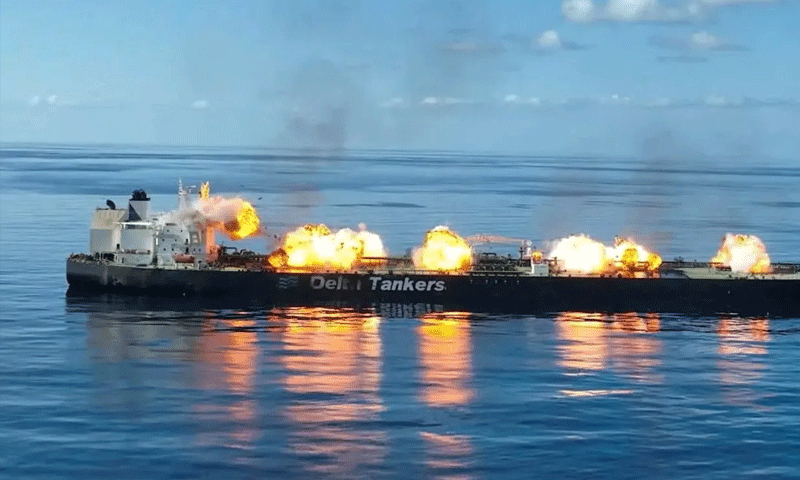

Houthi forces in Yemen have announced a comprehensive ban on Israeli-linked maritime traffic in the Red Sea, intensifying regional tensions and raising concerns over global trade disruptions.
Yemen’s Houthi movement has significantly escalated regional tensions by announcing a complete ban on Israeli maritime navigation in the Red Sea, declaring that any vessel connected to Israel will be considered a legitimate military target.
The announcement, issued by the group’s military wing, applies to ships flying the Israeli flag as well as vessels operated or owned by Israeli companies and individuals. Houthi authorities warned international shipping firms against cooperating with Israel and advised vessels to avoid designated maritime zones to reduce the risk of confrontation.
The move comes amid growing instability across the Middle East, where geopolitical tensions have heightened concerns about the possibility of a broader regional conflict. Analysts say the latest development could have far-reaching implications for international shipping and energy markets.
The Red Sea and the strategically important Bab al-Mandab Strait are among the world’s most critical maritime routes, facilitating nearly 12 percent of global trade. Massive volumes of crude oil, liquefied natural gas, and commercial goods pass through the corridor each year.
Security experts caution that if the blockade is aggressively enforced, shipping companies may be forced to reroute vessels around the Cape of Good Hope in southern Africa. Such diversions would increase transit times, raise fuel consumption, and drive up freight costs for businesses worldwide.
International maritime security agencies have already urged vessels operating in the region to maintain heightened vigilance and implement additional protective measures. Meanwhile, several Western nations have criticized the announcement, arguing that it threatens freedom of navigation and international maritime stability.
Diplomatic efforts are reportedly underway to prevent further escalation. However, observers warn that any attack on a commercial vessel could trigger a wider military response, potentially drawing additional regional and global powers into an already volatile situation.
About The Author