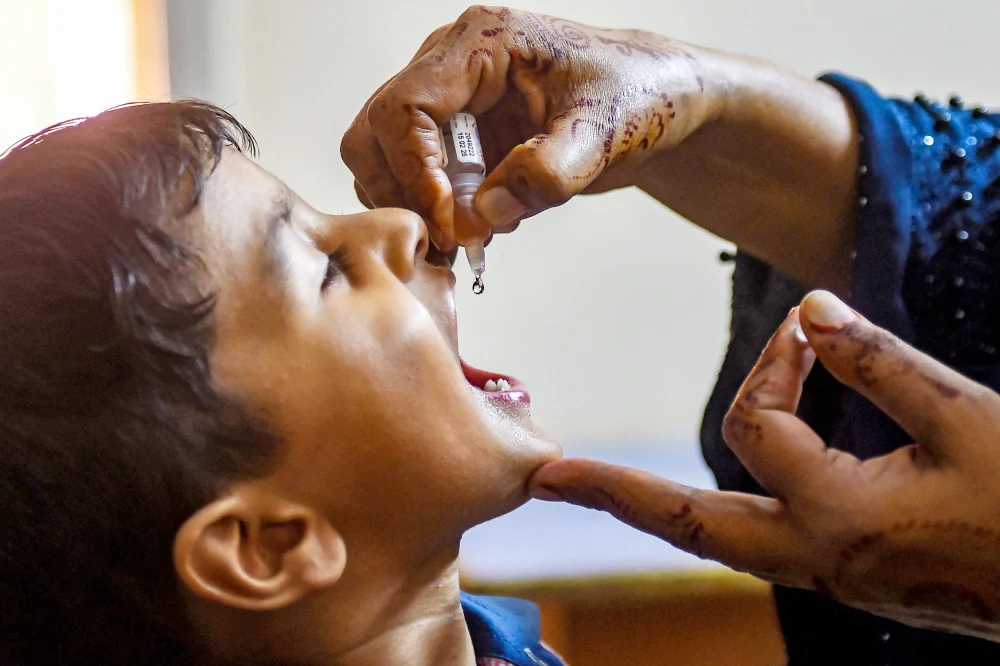

Pakistan has moved toward stricter legal measures to eliminate polio after a new “Polio Eradication and Rehabilitation Bill 2026” was presented in the National Assembly, proposing harsh penalties for parents refusing vaccination and for individuals obstructing anti-polio campaigns.
According to the proposed legislation, parents or guardians who deliberately refuse to administer polio drops to their children could face fines ranging from Rs50,000 to Rs100,000. The move signals the government’s growing concern over vaccine refusals, which health authorities believe continue to hinder Pakistan’s efforts to eradicate the crippling disease.
The draft bill also includes strict punishments for attacks, threats, or intimidation against frontline polio workers. Under the proposed law, anyone found threatening or assaulting anti-polio staff may face up to seven years in prison. Meanwhile, individuals creating hurdles during vaccination campaigns could receive up to three months imprisonment along with a fine of Rs100,000.
Pakistan remains one of the few countries in the world where polio cases are still being reported, despite decades of nationwide vaccination drives supported by international health organizations. Health officials have repeatedly warned that misinformation, security threats, and refusal to vaccinate children are major obstacles to completely eradicating the virus.
The proposed legislation is being viewed as part of a broader strategy to strengthen the country’s public health response and provide legal protection to thousands of frontline workers participating in door-to-door vaccination campaigns across high-risk areas.
If passed, the bill could mark one of the toughest legal frameworks introduced in Pakistan against vaccine refusal and interference in public health operations, potentially reshaping how anti-polio campaigns are enforced nationwide.
About The Author